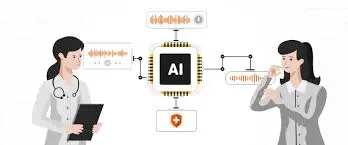
Medical records represent some of the most dense, unstructured, and difficult-to-read documents in existence. For decades, professionals who need to review these files—from healthcare providers to legal teams—have struggled to extract meaningful information from hundreds of pages of clinical shorthand, inconsistent formatting, and highly technical jargon. Today, artificial intelligence and advanced text processing are changing this reality by converting scattered, impenetrable medical data into clear, chronological, and highly readable formats. By applying natural language processing to clinical documents, software can now parse, organize, and simplify medical histories in a fraction of the time it takes a human reader.
The Readability Problem in Healthcare Documentation
To understand the value of text processing in this space, one must first look at the sheer volume and density of medical documentation. A typical patient file for a chronic condition or a serious injury can easily exceed 800 pages. These pages are rarely cohesive. They consist of a mix of typed reports, handwritten physician notes, lab results, and discharge summaries, often spanning multiple healthcare facilities and electronic health record systems.
The primary barrier to comprehension is the language itself. Medical professionals use a highly specialized vocabulary, heavily reliant on acronyms and abbreviations that frequently lack standardization. For instance, the abbreviation “PT” might mean physical therapy, patient, or prothrombin time, depending entirely on the context of the sentence. A human reader must use deductive reasoning to determine the correct meaning, which slows down reading speed significantly.
Research highlights the burden this documentation places on professionals. According to a study published by the National Institutes of Health, physicians spend roughly two hours interacting with electronic health records for every one hour of direct patient care. This 2:1 ratio illustrates just how time-consuming it is to read, write, and process medical text. When non-medical professionals are forced to review these same documents, the time required increases exponentially. A paralegal or insurance adjuster might spend 15 to 20 hours reading a single 500-page file just to understand the basic timeline of a patient’s treatment.
How Natural Language Processing Decodes Medical Jargon
The core technology making these documents more accessible is natural language processing. Unlike basic keyword matching or standard optical character recognition, modern text processing algorithms are capable of semantic understanding. They do not just identify words on a page; they analyze the grammatical structure of sentences and the contextual relationships between terms.
When a text processing system ingests a medical record, it performs several distinct operations. First, it standardizes the text, correcting typographical errors and expanding recognized abbreviations into their full forms. Next, it categorizes the information using named entity recognition. This process tags specific words or phrases as medications, diagnoses, procedures, or anatomical references.
The speed of this processing is a major advantage. While a proficient human reader might process highly technical text at a rate of 200 to 250 words per minute, a specialized text processing algorithm can analyze upwards of 15,000 words per minute. This capability allows systems to review massive document dumps almost instantly. Furthermore, because the AI understands the context, it can accurately distinguish between historical conditions (e.g., “patient has a family history of diabetes”) and current active diagnoses, a distinction that is crucial for accurate record review.
Structuring Unstructured Data for Legal and Medical Professionals
One of the most practical applications of this text processing technology is the conversion of unstructured narrative text into structured, searchable data. In many specialized fields, professionals do not need to read a medical record like a book from start to finish; they need to extract specific events and place them in a logical order.
This is particularly true in the legal industry. Law firms handling injury claims must constantly review extensive medical histories to build their cases. Traditionally, this required a staff member to read every page and manually type out a timeline of events. Now, software solutions use text processing to automate this exact workflow. By generating AI-generated medical chronologies for personal injury cases, these systems extract dates, providers, and diagnoses from the raw text and arrange them into a clear, sequential timeline.
This restructuring fundamentally changes how the information is consumed. Instead of wading through a 600-page PDF filled with repetitive boilerplate text, a reader can review a concise, 15-page chronological summary. Data points show that this structured approach reduces document review time by up to 70 percent. It eliminates the need to constantly flip back and forth between pages to verify dates or cross-reference physician names, presenting the text in a format that prioritizes readability and logical flow.
Improving Accessibility Through Abstractive Summarization
Beyond organizing data into timelines, text processing is also improving accessibility through advanced summarization techniques. There are generally two types of text summarization: extractive and abstractive. Extractive summarization simply pulls the most important sentences from a document and presents them together. While useful, this method often results in disjointed paragraphs that retain the original, dense jargon.
Abstractive summarization, on the other hand, involves the AI generating entirely new sentences to convey the original meaning, much like a human would when explaining a concept to a colleague. This is where text processing has a profound impact on readability. The software can take a highly technical operative report and rewrite it into a plain-language summary.
By doing so, the AI actively lowers the reading grade level of the text. A clinical pathology report might originally score at a 16th-grade reading level on the Flesch-Kincaid readability scale, making it accessible only to those with postgraduate education. Through abstractive summarization, the text processing system can translate that same report into an 8th-grade reading level. This translation is vital for patients trying to understand their own health records, as well as for administrative staff who need to grasp the core concepts without getting bogged down in clinical specifics.
Overcoming the Limitations of Legacy OCR Technology
To appreciate the current state of AI text processing, it is helpful to compare it to the legacy systems that preceded it. For years, the standard method for digitizing medical records was standard optical character recognition. Traditional OCR was strictly visual; it attempted to match the shapes of letters on a scanned page to a digital font library.
This approach was highly flawed when applied to medical documents. Scanned faxes, low-resolution photocopies, and handwritten notes often resulted in garbled text. A traditional OCR system might read the dosage “1.0 mg” as “10 mg” due to a stray mark on the paper, introducing a dangerous error into the text. The error rates for legacy OCR on degraded medical documents frequently hovered between 12 and 18 percent, requiring extensive manual proofreading.
Modern AI-driven document parsing integrates computer vision with natural language processing to dramatically reduce these errors. If the visual component of the software is unsure whether a character is a “0” or an “O,” the language model analyzes the surrounding text to determine which character makes grammatical and contextual sense. This combined approach has driven error rates down to under 2 percent in leading systems. The result is a much cleaner, more accurate base text that can then be reliably summarized, searched, and analyzed.
The Financial and Operational Impact of Automated Reading
The shift toward automated text processing carries significant financial implications for organizations that handle high volumes of medical documentation. Manual document review is an expensive, labor-intensive process. When highly paid professionals—whether they are registered nurses, specialized paralegals, or claims adjusters—spend the majority of their day reading, operational costs soar.
Consider a mid-sized organization that processes 500 medical files per month. If each file requires an average of four hours of human reading time, that equates to 2,000 hours of labor monthly. At a conservative estimate of $45 per hour for specialized review staff, the organization spends $90,000 every month simply reading text.
By implementing AI text processing, organizations can redirect human effort toward analysis rather than basic reading comprehension. The software handles the initial pass, extracting the necessary data and presenting a readable summary. Human reviewers then step in to verify the information and make strategic decisions based on the organized text. This workflow adjustment often results in a 40 to 50 percent reduction in review costs, allowing organizations to scale their operations without proportionally increasing their headcount.
Ensuring Privacy and Security in Text Processing
Handling medical text requires strict adherence to privacy regulations, most notably the Health Insurance Portability and Accountability Act (HIPAA) in the United States. Early text processing tools were often cloud-based consumer applications that lacked the necessary security protocols to handle protected health information. Feeding a patient’s medical history into a public AI model was, and remains, a severe compliance violation.
Today, specialized text processing platforms are built specifically for sensitive data. These systems utilize enterprise-grade encryption and isolated processing environments. When a medical record is uploaded for text analysis, the data is processed securely and is not used to train external, public language models.
Furthermore, text processing itself can be used to enhance privacy. Automated redaction features use natural language processing to identify and obscure personally identifiable information—such as names, Social Security numbers, and dates of birth—before the document is shared with third parties. This automated redaction is significantly faster and more accurate than a human reviewer using a black marker or a basic PDF redaction tool, ensuring that sensitive text remains protected.
The Future of Document Parsing in Specialized Fields
As text processing technology continues to advance, its application to medical records will become even more sophisticated. Future iterations of these systems will likely integrate multimodal capabilities, allowing the software to read the text as well as interpret medical imaging and charts embedded within the documents.
Additionally, we can expect to see deeper integration between text processing software and the systems of record used by healthcare and legal professionals. Instead of manually uploading a PDF to a parsing tool, the text analysis will happen automatically in the background as soon as a document is received. The software will instantly generate a readable summary, update the patient’s timeline, and flag any critical information for immediate human review.
The challenge of dense, unstructured medical text is a problem of readability and organization. By leveraging artificial intelligence to parse, restructure, and summarize these documents, text processing tools are bridging the gap between clinical jargon and plain language. This technology is fundamentally changing how professionals interact with medical data, replacing hours of tedious reading with instant access to clear, actionable information.