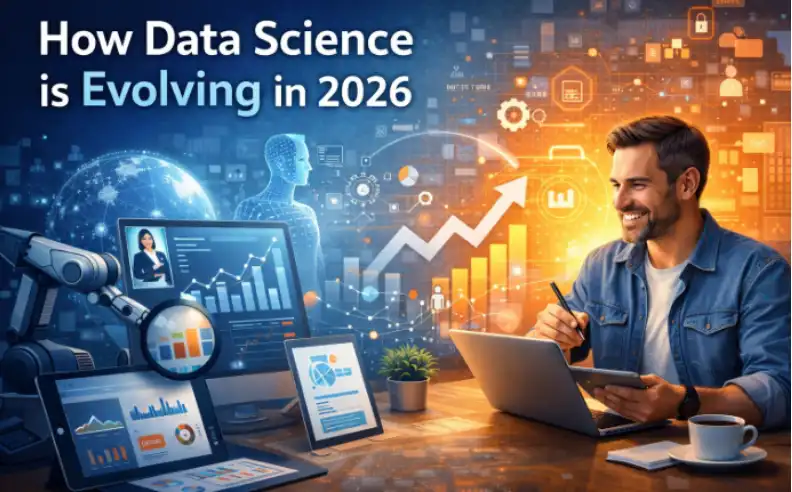
If you asked someone about data science a few years ago, they would probably say it is all about coding, complex models, and big companies doing big things.
That idea is changing.
In 2026, data science feels more human than ever. It is not just about numbers and algorithms anymore. It is about understanding people, making better decisions, and solving real problems in a simple way.
If you are someone who feels curious about data but also a bit confused by it, this will make things clearer. Think of this like a casual conversation where we break things down without making it complicated.
Data Science is Becoming More Accessible
Earlier, data science felt like something only experts could do. You needed strong coding skills, deep technical knowledge, and a lot of time.
Now things are different.
Many tools are designed for everyday users. You can create dashboards, analyze trends, and even build simple predictions without writing heavy code.
For example, a small business owner running a clothing page on social media can now easily track which posts are getting more attention and why. They can adjust their content without hiring a full team.
This shift is important. It means more people can use data to make decisions, not just analysts sitting in big offices.
It is Less About Data and More About Decisions
One big change in 2026 is how people think about data science.
Before, the focus was on collecting as much data as possible. Now the focus is on using the right data to make better decisions.
Let me give you a simple example.
A food delivery business might have thousands of data points. Orders, locations, timings, customer preferences. But instead of looking at everything, they focus on one key question Why are late night orders dropping
By focusing on that one question, they might discover that delivery times are too long after a certain hour. Fix that, and the problem improves.
So data science is becoming more focused. It is not about more data. It is about meaningful data.
Real Time Insights Are Becoming Normal
In the past, businesses would look at reports at the end of the week or month.
In 2026, many decisions are made in real time.
For example, if an online store notices that a product is suddenly trending, they can promote it instantly. If a campaign is not performing well, they can pause it quickly instead of wasting money.
Even small businesses are using real time insights now.
A friend who runs a cafe told me he checks his daily sales patterns every evening. He noticed that certain items sell more during specific hours. He adjusted his menu display based on that and saw better results.
These small changes add up.
Data Analytics Consulting is More Relevant Than Ever
As data grows, so does confusion.
Even though tools are easier, many people still struggle to connect the dots. This is where data analytics consulting plays a big role.
It is not just for big companies anymore.
Even startups and small businesses are reaching out for help when they feel stuck.
Think of it like this. You can go to the gym on your own. But sometimes, a trainer helps you see what you are doing wrong.
A consultant can help you Understand what data actually matters Fix tracking issues Find hidden patterns Turn insights into actions
For example, a startup might think their problem is low traffic. But a consultant might show them that traffic is fine, the issue is poor user experience on their website.
That one shift in thinking can change everything.
Artificial Intelligence is Becoming a Support System
We cannot talk about data science in 2026 without mentioning artificial intelligence.
But here is the interesting part.
AI is no longer just a fancy concept. It is becoming a quiet helper in the background.
It suggests insights, highlights trends, and even explains what might be happening in simple language.
For example, instead of manually finding patterns, tools can now tell you Your sales dropped because fewer users returned this week Your engagement increased because of video content
This saves time and reduces guesswork.
But it is important to understand that AI is a support system, not a replacement. Human thinking still matters the most.
Storytelling is Becoming a Key Skill
One of the biggest shifts in data science is the importance of storytelling.
Numbers alone do not create impact. People understand stories better.
If you walk into a meeting and say Our conversion rate dropped by 10 percent
It sounds important, but it does not connect emotionally.
Now imagine saying Out of every 100 people visiting our site, 10 fewer are completing a purchase compared to last month
That feels real.
In 2026, people who can explain data in simple and relatable ways are more valuable than those who only understand complex models.
Data Privacy is Getting More Attention
People are becoming more aware of their data.
They want to know how it is used and where it goes.
Because of this, businesses are becoming more careful and transparent.
For example, apps now clearly ask for permissions and explain why they need certain data. Users are also more likely to trust brands that respect their privacy.
This means data science is not just about collecting information. It is about using it responsibly.
Smaller Teams Are Doing Bigger Work
Another interesting change is how small teams are achieving big results.
Earlier, you needed a full team of analysts, engineers, and data scientists. Now, with better tools and smarter systems, smaller teams can handle a lot more.
For example, a two person marketing team can track campaigns, analyze performance, and optimize results without depending on a large data team.
This makes businesses more flexible and faster.
Learning Data Science Feels More Practical
The way people learn data science is also changing.
Instead of focusing only on theory, there is more focus on real world application.
People are learning by doing.
They are analyzing their own business data, running small experiments, and solving actual problems.
For example, someone learning data science might start by analyzing their own website traffic or social media performance. This makes learning more meaningful and less overwhelming.
Final Thoughts
Data science in 2026 is not about being a genius with numbers.
It is about being curious, asking the right questions, and using simple insights to make better decisions.
You do not need to know everything.
You just need to start somewhere.
Focus on what matters Keep things simple Learn from real situations Ask for help when needed
And most importantly, remember that behind every data point, there is a real person.
When you keep that in mind, data science becomes less confusing and more meaningful.
FAQs
What is data science in simple words
Data science is the process of using data to understand what is happening and make better decisions. It helps you find patterns, solve problems, and improve outcomes.
How is data science different in 2026 compared to before
In 2026, data science is more accessible, more focused on decisions, and easier to use. Tools are simpler, and even small businesses can use data effectively.
What is the role of data analytics consulting
Data analytics consulting helps businesses understand their data better. It provides expert guidance, fixes issues, and helps turn data into clear actions.
Do I need coding skills to start with data science
Not necessarily.
Many tools today allow you to analyze data without deep coding knowledge. You can start simple and learn gradually if needed.
Why is data privacy important in data science
Data privacy builds trust. People want to know their information is safe. Businesses that respect privacy are more likely to build strong relationships with their users.
Can small businesses benefit from data science
Yes, absolutely.
Even simple insights can make a big difference. Small businesses can use data to understand customers, improve services, and grow faster.
Is artificial intelligence replacing data scientists
No.
AI is helping data scientists work faster and smarter. But human thinking, creativity, and decision making are still very important.
How can I start learning data science today
Start with your own data.
Look at your website, social media, or business numbers. Try to understand patterns and ask simple questions. Learning by doing is the best way to begin.