There’s a particular kind of energy that comes with the change of season. The urge we all feel to open windows, move things around, clear out all the clutter that somehow accumulated over winter — it’s real, and it’s worth acting on.
A summer refresh doesn’t have to mean buying lots of new things. More often, it’s about stripping back, swapping a few key pieces, and letting the room breathe. But to make it effective, you need a system.
Here’s how to think about it room by room.
The living room
Start by taking the heavy throws and cushions off the sofa. Wool and chunky knit textures that feel right in February make a room look heavier than it needs to in June. Replacing them with something lighter — linen, cotton, a bit of texture but not too much weight — immediately shifts the mood.
If you have rugs, summer is a good time to either clean them properly or swap them out for something flatter. Jute and seagrass have become popular for a reason — they sit well in a lighter, more pared-back space and don’t trap heat the way thicker pile rugs can.
Plants are an easy win. If yours have been sitting in the same spot all year, moving them towards better light and giving them a feed will make a visible difference. And if you’ve been meaning to add one or two, now’s the time — the growing season means they’ll establish quickly.
The bedroom
The duvet is the obvious one. If you’re still sleeping under a winter-weight tog, switch it out — a 4.5 or 7.5 tog is much more comfortable through the warmer months and makes a real difference to sleep quality. A summer and winter duvet is worth having rather than relying on one year-round.
Beyond that, summer bedrooms benefit from the same logic as living rooms — less on the surfaces, lighter colours, better air circulation. Heavy curtains kept open during the day, a room that actually airs out — it makes the space feel less closed-in without doing much at all. Blackout blinds are worth it if early morning light is an issue. One of those things that seems unnecessary until you have them.
A small bowl of dried lavender or a sachet in a drawer is a low-effort touch that makes the room smell clean without being overdone.
The bathroom
Bathrooms get used differently in summer. More showers, more people passing through, more reason to keep things fresh and functional rather than just fine.
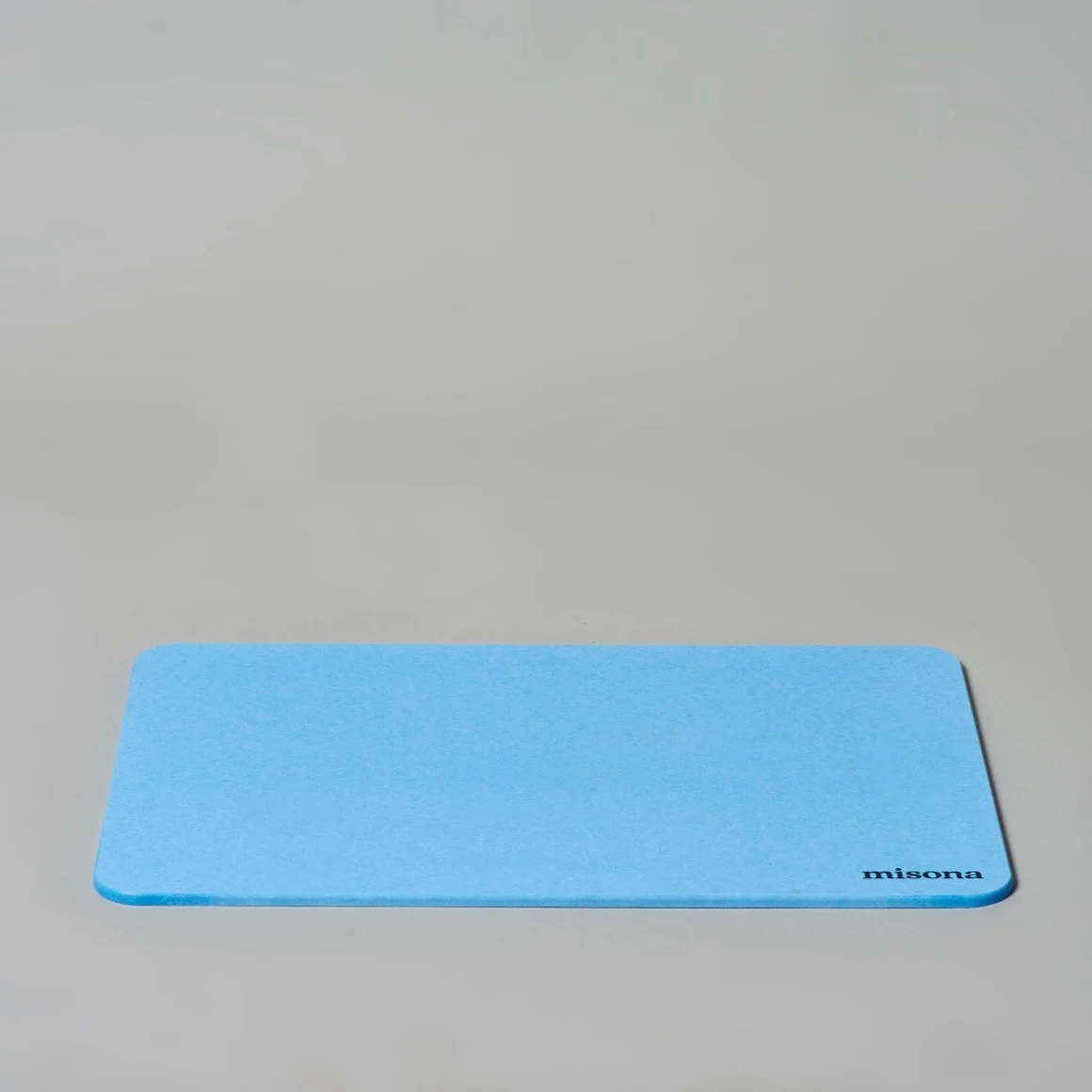
If your bath mat is looking tired, replace it. A diatomite bath mat is well suited to warmer months — it dries almost immediately after use, so there’s no damp smell building up in a warm room, which is a genuine issue with fabric mats in summer. No washing required either, which is a bonus.
Clear the surfaces while you’re at it. Bin anything expired, consolidate where you can, give the space room to breathe. And if your towels are getting thin or rough, sort them before summer properly kicks in rather than thinking about it in the middle of July.
The kitchen
Summer kitchens are about ease. Clear the worktops back to just what you use daily — it makes cooking feel less like a chore. A fruit bowl that’s actually being used, good olive oil within reach, fresh herbs on the windowsill if you can manage it. Small things that shift how the room feels.
If you have a garden or terrace, think about how the kitchen connects to it. A dedicated spot for the things you need outside — a tray, a basket, whatever works — means moving between inside and outside feels natural rather than like a production.
The hallway
Hallways accumulate in winter — coats, scarves, boots, bags. A summer clear-out here is straightforward and satisfying. Pack away anything winter-specific, pare the hooks back to what you’ll actually use, and make room for the things summer actually needs: sunscreen, sunglasses, a decent bag for days out.
The garden or outdoor space
If you have outdoor space, summer is when it earns its keep. Beyond cleaning the furniture and getting the garden into shape, think about what you actually need out there for it to work properly. Decent cushions for garden chairs, a proper outdoor rug if you have a terrace, a good striped beach towel that does double duty for pool days and lounging in the garden — the things that get used constantly once they’re there but get overlooked when you’re thinking about the space in the abstract.
Lighting matters too. String lights, a decent lantern, candles that’ll actually stay lit outside — they extend the usable hours of a space considerably and make it feel like somewhere considered rather than just somewhere you happen to have a table.
A few general principles
Summer homes feel better when they’re lighter, less cluttered, and set up for how you actually live rather than carrying over the habits of winter. That means different things in different rooms, but the logic is the same throughout.
Pick the room that will make the biggest difference to your daily life and start there.
The rest will follow.