When you sit down for a checkup today, the visit feels very different from what you remember as a child. General dentists now use scanners, cameras, and digital charts to see more, catch problems earlier, and plan your care with less guesswork. You may not notice every tool by name. Yet each one changes how your dentist studies your teeth, gums, and bite. A north Scottsdale dentist can zoom in on a tiny crack, measure bone loss, or track wear over time with clear images instead of rough sketches. This technology does not replace skill. It strengthens each choice your dentist makes. That means fewer surprises, fewer repeat visits, and treatment that fits your mouth, not a template. This blog explains how general dentists bring these advanced tools into routine exams so you know what is happening and why it matters for your daily comfort.
Why exams changed and what that means for you
Dental exams used to rely on sharp tools, film X rays, and quick notes. Today your dentist has clearer pictures and stronger data. You get:
- Earlier warning about tooth decay and gum disease
- Less pain during exams and many treatments
- Care that fits your exact mouth and health history
Modern tools do not replace careful hands. They give your dentist a clearer view. That clear view protects you.
Digital X rays and 3D images
Most general dentists now use digital X rays instead of film. These images appear on a screen in seconds. Your dentist can enlarge them, change contrast, and share them with specialists when needed.
The Centers for Disease Control and Prevention explains how dental X rays help find decay, bone loss, and infection that eyes alone cannot see. You can read more on the CDC page on dental radiography.
Some offices also use 3D cone beam scans. These scans show teeth, roots, nerves, and bone in three dimensions. Your dentist may use cone beam images to plan implants, root canals, or extractions. You might stand or sit while a camera circles your head. The scan is quick and painless.
Key benefits for you:
- Lower radiation than old film in many cases
- Clearer pictures of hidden decay and infections
- Stronger planning for complex work
Intraoral cameras inside your mouth
Intraoral cameras are small cameras that fit inside your mouth. Your dentist or hygienist moves the camera over teeth and gums. Images appear on a screen in real time.
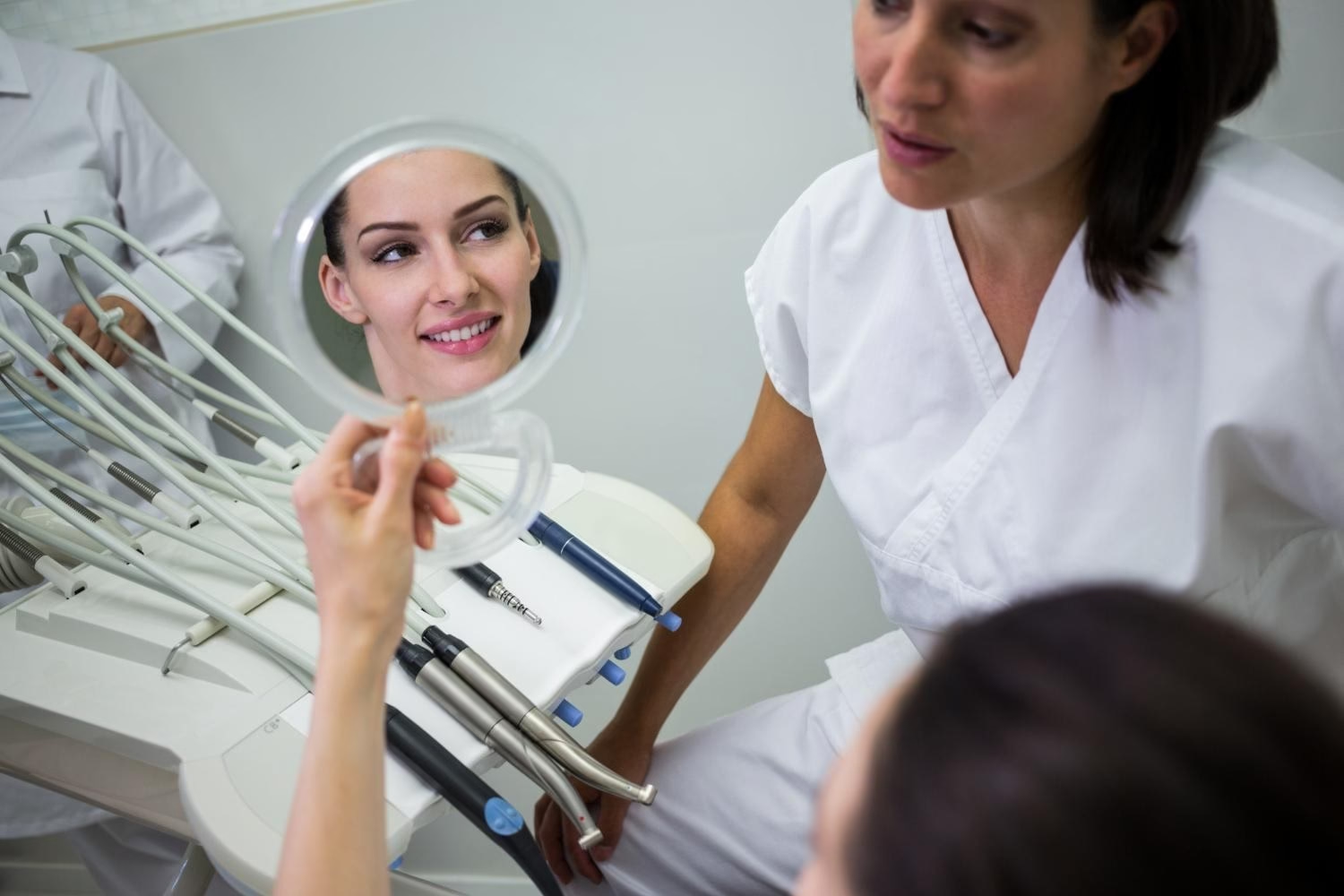
These cameras help you see what your dentist sees. You might see cracks in fillings, red swollen gums, or plaque build up on back teeth. That view can change how you feel about treatment. You are not guessing. You are looking at the same picture.
Intraoral cameras support three things.
- Clear proof of problems and progress
- Better home care because you see the spots you miss
- Records over time so your dentist can compare visits
Digital scanners instead of gooey impressions
Many people remember trays of thick impression material. That process was messy and uncomfortable. Digital scanners now replace those trays in many offices.
Your dentist moves a wand over your teeth. The scanner builds a 3D model on a screen. That model can guide crowns, bridges, aligners, and guards.
For you this means:
- No gagging from impression trays
- Faster, smoother visits
- Restorations that match your bite more closely
Comparing older tools and newer tools
| Exam step | Older tool or method | Advanced tool now used | What you feel or notice |
|---|---|---|---|
| Checking for decay | Metal explorer and film X rays | Digital X rays and laser cavity checkers | Less poking on teeth and clearer images |
| Taking impressions | Goo filled trays | Digital 3D scanner | No gagging and quicker scans |
| Explaining findings | Spoken descriptions and paper charts | Intraoral photos on a screen | Visual proof of cracks, stains, and wear |
| Tracking gum health | Paper charting with a probe | Digital charting and images | Faster charting and clear progress over time |
| Planning complex care | 2D X rays and study models | 3D cone beam scans and digital models | Fewer surprises during treatment |
Digital records and safer care
Most general dentists use electronic health records. These systems hold your medical history, allergies, medicines, images, and notes in one place. That helps your dentist spot patterns. For example, dry mouth from a medicine can raise your risk for decay.
The National Institute of Dental and Craniofacial Research shares clear information on how health issues affect your mouth. You can use this resource to understand why your dentist asks about heart disease, diabetes, or pregnancy during a routine exam.
Digital records help your care in three ways.
- Fewer errors from missing or hard-to-read notes
- Faster sharing with medical doctors when needed
- Better tracking of changes across many years
What this means for your family
Children, adults, and older adults all gain from these tools. Children get gentle exams and early help with crowding or weak enamel. Adults get strong planning for crowns, implants, and gum care. Older adults get close to watching of bone loss, dry mouth, and wear from grinding.
You can support this progress by:
- Asking your dentist to show images and explain them
- Sharing your full health and medicine list
- Keeping regular exam visits so changes are caught early
Key questions to ask at your next exam
At your next visit, you can ask three simple questions.
- What tools are you using to check my teeth and gums today
- Can you show me the images and explain what you see
- How will these tools guide my care over the next year
These questions invite clear answers. You gain control and calm. Your dentist gains a true partner in your care.