The landscape of digital content has shifted. We are no longer asking if AI can write; we are asking how we can make AI-generated text indistinguishable from the human hand. For students and content creators alike, the rise of Large Language Models (LLMs) has been a double-edged sword. On one hand, productivity has soared. On the other, the “AI-generated” label has become a modern-day scarlet letter, often associated with low quality, lack of originality, or academic dishonesty.
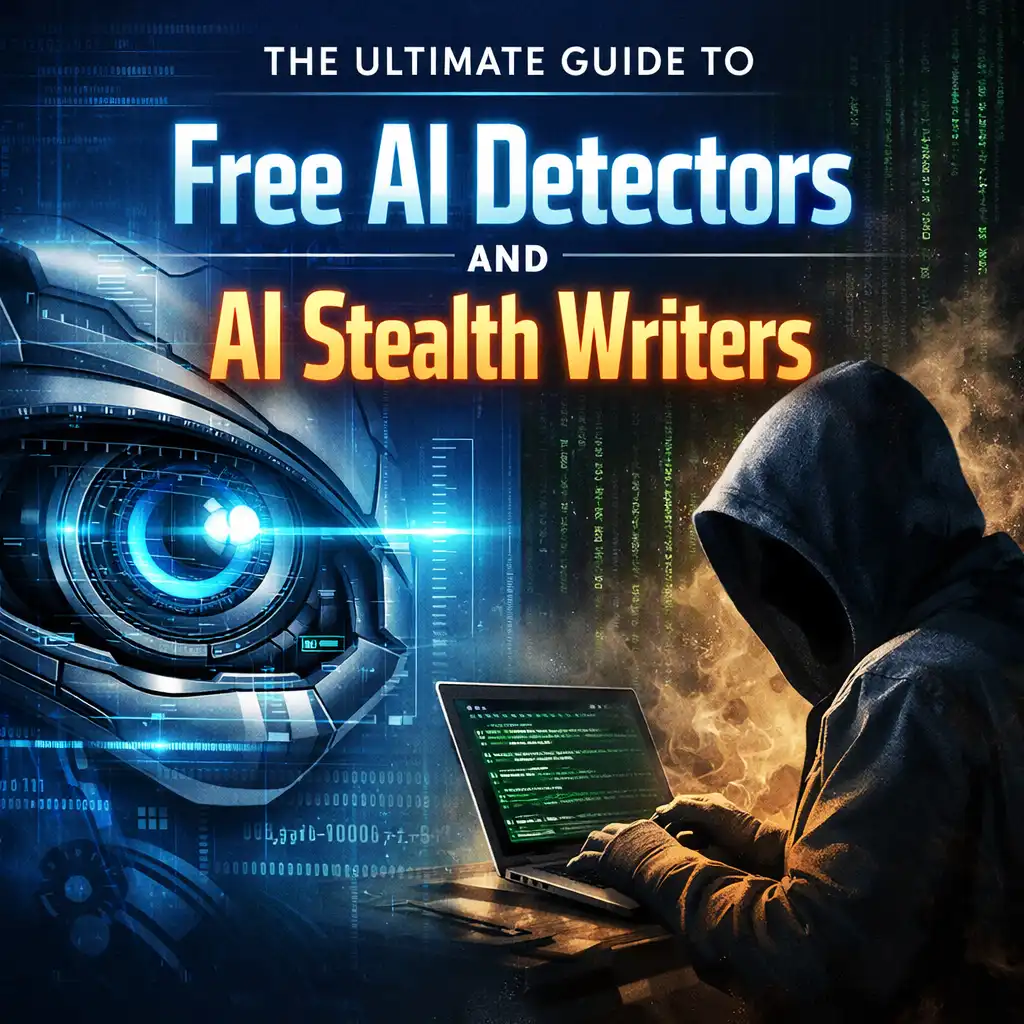
Enter the era of the Free AI Detector and the AI Stealth Writer. These two tools have become the essential kit for anyone looking to harness the power of artificial intelligence while maintaining the soul and authenticity of human prose.
In this comprehensive guide, we will explore how to use these tools effectively to optimize your blogs, essays, and articles for both search engines and human readers.
1. The Cat-and-Mouse Game: Why AI Detection Matters
Before we dive into the tools, we must understand the “why.” Why does it matter if a piece of text is flagged as AI?
For Students: Academic Integrity
Universities and schools have integrated AI detection software into platforms like Canvas and Turnitin. A high “AI probability” score can lead to accusations of plagiarism or academic misconduct, even if the student only used AI for brainstorming or structural help.
For Content Creators: Google and SEO
Google’s stance on AI content has evolved. While they don’t penalize AI content just for being AI, they do penalize content that lacks E-E-A-T (Experience, Expertise, Authoritativeness, and Trustworthiness). Often, raw AI output is repetitive and lacks the unique insights that Google’s “Helpful Content” updates prioritize.
2. What is a Free AI Detector?
A Free AI Detector is a specialized software designed to analyze text and determine the likelihood that it was generated by an AI model (like GPT-4 or Claude).
How Do They Work?
Most detectors look for two primary linguistic markers:
- Perplexity: This measures the randomness of the text. Human writing is often unpredictable and “messy.” AI tends to choose the most statistically probable next word, leading to low perplexity.
- Burstiness: This refers to variations in sentence length and structure. Humans write with a “bursty” rhythm—mixing short, punchy sentences with long, complex ones. AI often produces a monotonous, steady rhythm.
3. The Role of the AI Stealth Writer
If a detector is the “security guard,” the AI Stealth Writer (also known as an AI Humanizer) is the “disguise.”
An AI Stealth Writer isn’t just a simple paraphraser like the tools of a decade ago. It uses advanced algorithms to rewrite AI-generated text by:
- Injecting “burstiness” into the sentence structure.
- Changing vocabulary to include less predictable synonyms.
- Adjusting the tone to sound more conversational, empathetic, or opinionated.
- Removing the common “AI footprints” (e.g., overusing phrases like “In conclusion,” or “It is important to note”).
By using an AI Stealth Writer, you can transform a clinical, robotic paragraph into something that feels like it was written by a person with a cup of coffee and a unique perspective.
4. For Students: How to Use AI Responsibly
Using AI to write your entire essay is a recipe for disaster. However, using a Free AI Detector as a feedback loop is a brilliant way to improve your writing.
The Student Workflow:
- Draft with AI Assistance: Use AI to outline your thoughts or explain complex concepts.
- Add Your Voice: Rewrite the core arguments in your own words.
- Run a Detection Check: Use a free AI detector to see if your work still sounds too “algorithmic.”
- Refine with Stealth Logic: If the score is high, don’t just “spin” the words. Use the insights from the detector to vary your sentence lengths and add personal anecdotes—the one thing AI cannot truly fake.
This process ensures that your final submission is a reflection of your own critical thinking, even if you used AI as a research partner.
5. For Content Creators: SEO and the Human Touch
As a blogger or SEO writer, your goal is to rank on the first page of Google. In 2026, the secret to ranking isn’t just keywords—it’s authenticity.
Why “Raw” AI Content Fails SEO
- Predictability: Google’s algorithms are essentially massive AI detectors themselves. They can recognize patterns that lack original thought.
- Lack of Narrative: AI is great at stating facts but terrible at telling stories.
- Engagement Metrics: If a reader feels they are reading a manual, they will bounce. High bounce rates signal to Google that your content isn’t “helpful.”
Using an AI Stealth Writer for Blogs
When you use an AI Stealth Writer, you are essentially “polishing” your content for the human reader. It helps you break away from the “standard” blog format that AI loves to churn out.
Pro Tip: After using a stealth writer, manually add a “personal take” section. Mention a real-world experience you had related to the topic. This solidifies your E-E-A-T and makes the detection score irrelevant.
6. Step-by-Step: How to Humanize Your Content
If you have a 1,000-word blog post that feels a bit “stiff,” follow this optimization workflow:
Step 1: The Initial Scan
Copy your text into a Free AI Detector. Note the percentage. If it’s over 50% AI-detected, you need to take action.
Step 2: Identify the “Robot” Zones
Detectors often highlight specific sentences that look suspicious. These are usually your introductions and conclusions, where AI tends to be most generic.
Step 3: Apply the AI Stealth Writer
Take those highlighted sections and run them through an AI Stealth Writer. Choose a “Creative” or “Human-like” setting.
Step 4: The Manual Polish (Crucial)
Read the output aloud. If a sentence sounds weird, fix it. Add a rhetorical question. Use a slang term or a metaphor. This “final 10%” of human effort is what bypasses the most sophisticated detectors.
Step 5: Final Verification
Run the new version through the detector again. You should see a significant drop in the AI probability score.
7. The Ethical Boundary: Tool vs. Replacement
As a professional SEO writer, I must emphasize that these tools should be used to enhance your work, not to deceive.
- Transparency: If you are a freelancer, be honest with your clients about your use of AI tools.
- Value-Add: Never publish a “stealth” article that doesn’t actually help the reader. Passing an AI detector is useless if the information is incorrect or boring.
- Fact-Checking: AI Stealth Writers can sometimes change the meaning of a sentence while trying to make it sound human. Always double-check your facts and data points.
8. Conclusion: The Future of Writing
The distinction between “AI writing” and “human writing” is blurring. In the coming years, we will likely stop talking about “bypassing detectors” and start talking about Content Quality.
A Free AI Detector is a great diagnostic tool to tell you when your writing has become too lazy or predictable. An AI Stealth Writer is a powerful assistant that helps you break out of those patterns. Together, they allow students to protect their reputations and content creators to build brands that resonate with real people.
The most successful writers of tomorrow won’t be those who avoid AI, but those who know how to use it so well that you can’t tell it’s there at all.