Introduction
In today’s fast-moving digital world, protecting sensitive information has become more critical than ever. Cyberattacks are increasing in both frequency and complexity, making traditional security methods less effective. This is where biometric authentication is changing the game. By using unique human characteristics for identity verification, it offers a smarter and more secure approach to digital security.
What is Biometric Authentication?
Biometric authentication is a method of verifying identity using physical or behavioral traits that are unique to each individual. Unlike passwords or PINs, these traits cannot be easily copied or stolen.
Common types include:
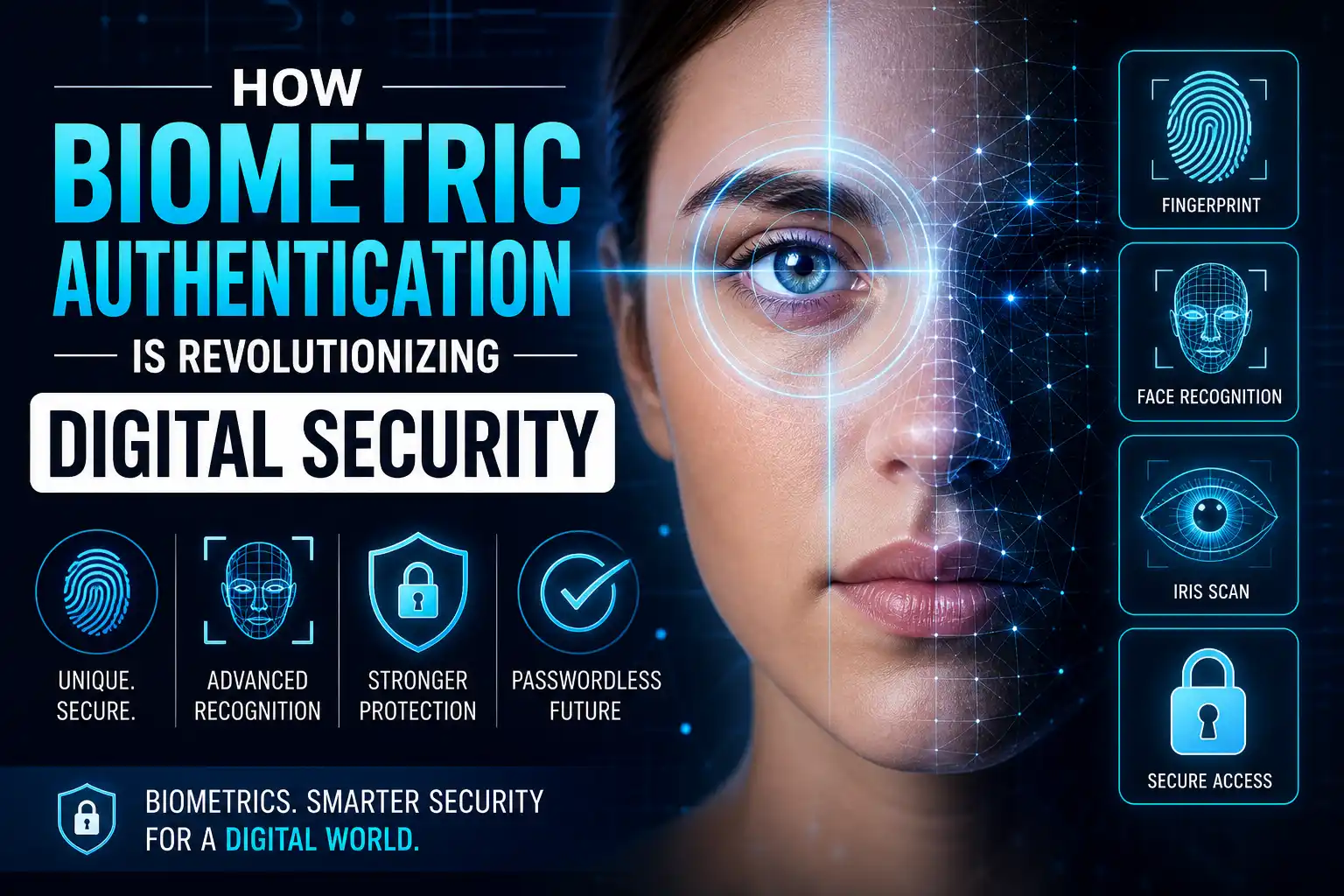
- Fingerprint recognition
- Facial recognition
- Iris scanning
- Voice recognition
These systems form the backbone of modern biometric security systems, offering both reliability and convenience.
The Shift from Passwords to Biometrics
For years, passwords have been the primary method of securing accounts. However, they come with several limitations:
- Users often create weak passwords
- Passwords are reused across multiple platforms
- They can be stolen through phishing or hacking
As cybercriminals continue to evolve, relying solely on passwords is no longer safe. This shift has led to the rise of biometric authentication as a more secure alternative.
How Biometrics Enhance Digital Security
Biometric authentication is revolutionizing digital security by providing a higher level of protection.
Unique Identity Verification
Each person’s biometric data is unique, making it extremely difficult for attackers to replicate.
Real-Time Authentication
Biometric systems verify identities instantly, reducing the chances of unauthorized access.
Reduced Risk of Data Theft
Since there are no passwords to steal, the risk of credential-based attacks is minimized.
Role of AI in Biometric Security Systems
The integration of AI in cybersecurity has significantly improved biometric systems. AI enhances both accuracy and efficiency.
Key contributions of AI:
- Detecting fake biometric inputs like photos or recordings
- Learning user behavior patterns over time
- Improving recognition accuracy in different environments
- Identifying suspicious activities in real-time
AI-powered biometric systems are smarter, faster, and more reliable than ever before.
Real-World Applications
Biometric authentication is already transforming various industries:
Smartphones
Unlocking devices using fingerprints or facial recognition is now standard.
Banking and Finance
Banks use biometrics for secure logins and transaction approvals.
Smart Homes
Controls access to devices and enhances home security systems.
Healthcare
Protects patient data and ensures only authorized personnel can access records.
Workplace Security
Companies use biometric access control for secure entry into offices.
Benefits of Biometric Authentication
Improved Security
Biometrics provide stronger protection compared to traditional methods.
Convenience
Users don’t need to remember complex passwords.
Accuracy
Advanced systems reduce errors and false identifications.
Faster Access
Authentication takes only seconds, improving user experience.
Challenges and Concerns
Despite its advantages, biometric authentication comes with certain challenges:
Privacy Issues
Users may be concerned about how their biometric data is stored.
Data Breach Risks
If biometric data is compromised, it cannot be changed like a password.
High Costs
Implementing biometric systems can be expensive for small organizations.
Addressing these concerns is essential for wider adoption.
Future of Biometric Authentication
The future of biometric authentication looks promising as technology continues to evolve.
Key trends include:
- Contactless biometric systems
- Behavioral biometrics (typing speed, gestures)
- Integration with multi-factor authentication
- Increased use of AI for threat detection
These advancements will further strengthen digital security in the coming years.
Conclusion
Biometric authentication is transforming the way we approach security in the digital age. By replacing traditional passwords with unique human identifiers, it provides a safer and more efficient solution. Combined with advancements in AI in cybersecurity, biometric systems are set to become the foundation of modern digital security.
As cyber threats continue to grow, adopting biometric authentication is no longer an option—it is a necessity for a secure digital future.