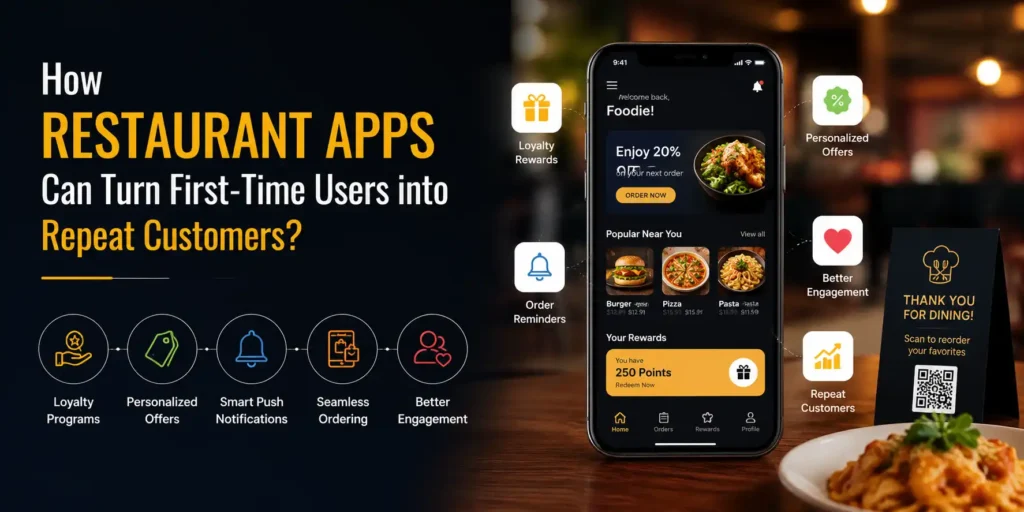
In today’s highly competitive food delivery and dining market, attracting customers is only half the battle. The real challenge begins after the first order. Many restaurants invest heavily in marketing campaigns, discounts, and app visibility, but still struggle to bring customers back again.
Modern users have endless dining options available at their fingertips. If a restaurant app fails to deliver a smooth, engaging, and rewarding experience, customers quickly switch to competitors without hesitation. This makes retention more valuable than acquisition in the long run.
Strong loyalty strategies, personalized experiences, and seamless app interactions play a major role in keeping diners engaged beyond their first visit. Without these elements, even the most visually appealing apps struggle to build a consistent customer base.
This blog will explore why restaurant apps fail to retain users and how smart loyalty features can transform one-time diners into repeat customers.
Why Most Restaurant Apps Fail to Build Customer Loyalty?
Many restaurant apps manage to attract initial downloads but fail to convert users into repeat customers. The problem is rarely about visibility or demand; it is usually about poor post-order experience, lack of engagement strategy, and weak loyalty design that does not encourage users to return.
1. Generic Discounts with No Personalization
Most apps rely heavily on blanket discounts that are shown to every user. While this may attract first-time orders, it does not create a sense of value or relevance for individual customers. Without personalization, users do not feel emotionally connected to the platform, which reduces repeat engagement.
2. Poor User Engagement After the First Order
A major reason users abandon restaurant apps is the lack of communication after their initial purchase. Once the order is completed, many apps fail to re-engage users with meaningful updates, recommendations, or incentives, leading to a drop in long-term retention.
3. Complicated Reward Redemption Systems
Loyalty programs often fail because they are too complex to understand or use. If users need to follow multiple steps to redeem points or rewards, they are less likely to engage with the system again. Simplicity is critical for sustained usage.
4. Lack of Gamification and Repeat-Order Incentives
Without engaging elements like progress tracking, milestones, or achievement-based rewards, users have little motivation to return. Apps that do not include interactive loyalty mechanics struggle to build habitual ordering behavior over time.
5. Weak Customer Communication Strategies
Many apps either over-communicate with irrelevant notifications or under-communicate entirely. Poorly timed or generic messages fail to capture user attention and often result in notification fatigue or complete disengagement.
6. Gaps in Restaurant App Strategy
In many cases, businesses fail to leverage professional services effectively during the planning stage. As a result, essential retention features such as personalization engines, analytics integration, and loyalty frameworks are either missing or poorly implemented.
7. Misunderstanding Process to Develop a Restaurant App
A common mistake is treating app development as a one-time project rather than an evolving product. Businesses that do not properly understand how to develop a restaurant app often overlook the importance of long-term engagement planning, user behavior tracking, and continuous feature optimization, which directly impacts customer retention.
Smart Loyalty Features That Turn One-Time Diners into Regular Customers
Once the core issues behind poor retention are understood, the next step is building meaningful loyalty systems that naturally encourage repeat orders.
The most successful restaurant apps focus on experience-driven engagement rather than relying only on discounts or occasional promotions.
A] Personalized Rewards and Offers
Personalization is one of the strongest drivers of repeat engagement. Instead of showing the same offers to everyone, apps can analyze user preferences, order history, and frequency to deliver tailored rewards. This makes customers feel valued and increases the likelihood of repeat purchases.
B] Points-Based Loyalty Systems
A structured points system gives users a clear reason to return. Every order contributes to rewards that can be redeemed later. When designed well, this system creates a sense of progress and encourages users to stay connected with the app over time.
C] Referral and Cashback Programs
Referral incentives help expand the user base while rewarding existing customers. Cashback programs also encourage repeat ordering by giving users a financial benefit on future purchases, making the platform more attractive for long-term use.
D] Gamification and Achievement Rewards
Adding gamified elements such as milestones, badges, or tier upgrades keeps users engaged beyond just ordering food. These interactive features turn routine actions into rewarding experiences, making the app more engaging and habit-forming.
E] Push Notifications and Re-Engagement Campaigns
Timely and relevant notifications play a key role in bringing users back to the app. Personalized reminders, special offers, and order suggestions built by a restaurant app development services provider help maintain consistent engagement without overwhelming the user.
F] AI-Driven Recommendations and Customer Insights
Modern restaurant apps use AI to suggest meals based on past behavior, location, and preferences. These intelligent recommendations simplify decision-making and improve user satisfaction, leading to higher repeat order rates.
Common Mistakes Restaurants Make While Building Loyalty Features
Even well-designed restaurant apps struggle with retention when loyalty systems are not thoughtfully planned. Many businesses invest in features but miss the strategy behind how users actually interact with rewards and engagement tools.
1. Overcomplicating Loyalty Programs
A common mistake is designing loyalty systems that are too complex for users to understand. When redemption rules, point structures, or reward conditions become confusing, users lose interest quickly and stop engaging with the program altogether.
2. Focusing Only on Discounts Instead of Experience
Many restaurants assume discounts alone will drive loyalty. While price incentives can attract attention, they rarely build long-term relationships. Without experience-driven engagement like personalization or gamification, users do not develop consistent ordering habits.
3. Ignoring User Behavior Data
Failing to analyze user behavior leads to missed opportunities for engagement. Without understanding ordering patterns, peak activity times, and customer preferences, loyalty features often feel generic and ineffective.
4. Poor Integration with App Design and Flow
Even strong loyalty features can fail if they are not smoothly integrated into the app experience. If users struggle to find rewards, track points, or understand benefits, they are less likely to participate in the system.
5. Lack of Continuous Improvement
Many businesses treat loyalty features as a one-time setup instead of an evolving system. Without regular updates, testing, and optimization, engagement levels gradually decline over time, reducing the overall effectiveness of the app.
Conclusion
Building a successful restaurant app is not just about enabling online orders; it is about creating repeat behavior. Customers stay loyal when they feel valued, understood, and rewarded through consistent, frictionless experiences.
The most effective apps combine personalization, simple loyalty systems, and smart engagement strategies to keep users coming back.
When restaurants focus on long-term user experience instead of short-term promotions, they create stronger relationships and higher lifetime customer value.
In the end, loyalty is not built through features alone but through thoughtful design, continuous improvement, and a deep understanding of customer behavior.