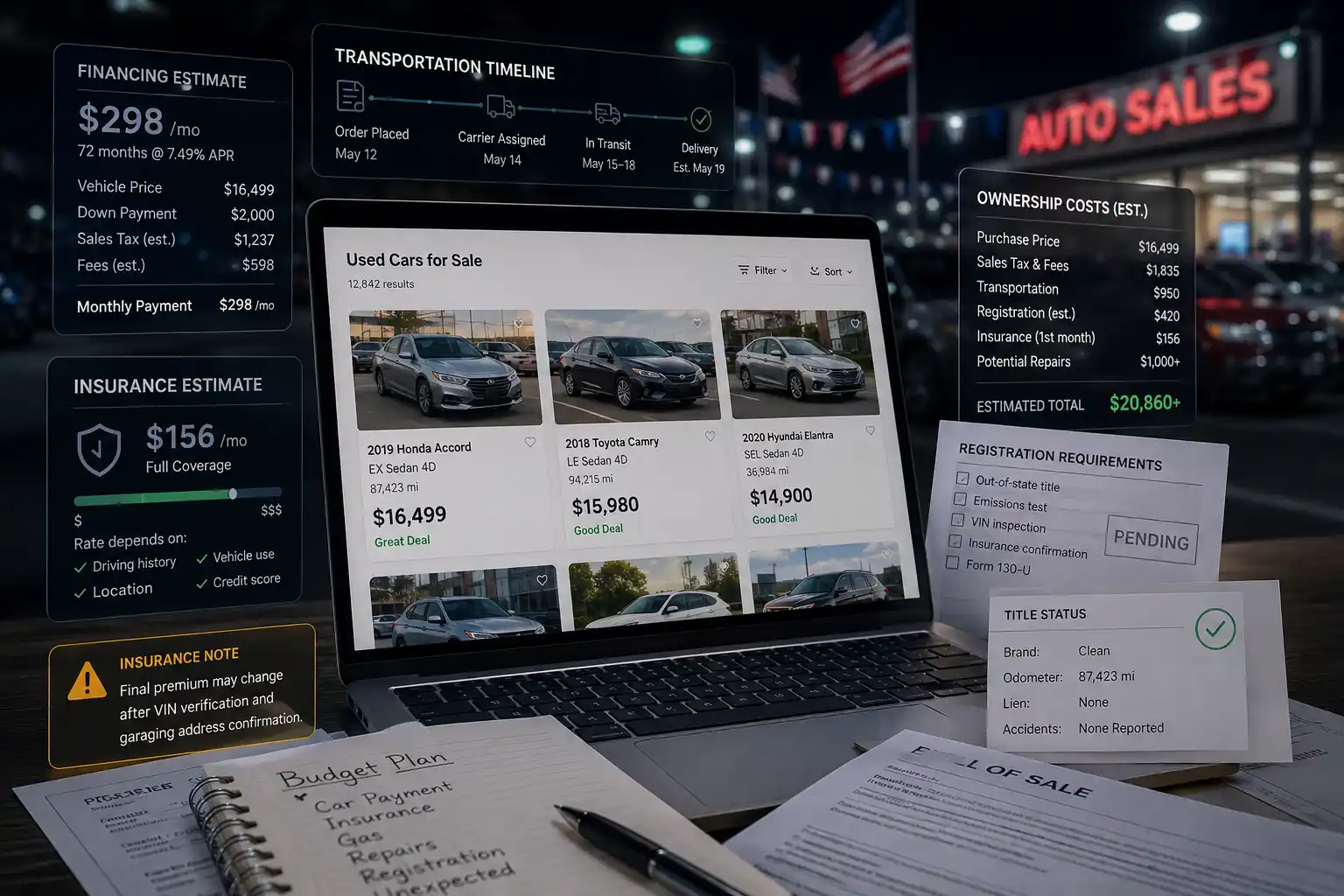
Used vehicle prices across the US may no longer look as extreme as they did a few years ago, but for many buyers, ownership still feels increasingly expensive. Higher loan rates, rising insurance premiums, and dealership pricing pressure continue pushing people toward more affordable alternatives. As a result, more buyers are comparing traditional dealership inventory with online listings and auction-connected marketplaces such as https://cars4.bid/cars-for-sale/ in search of broader inventory access and more flexible pricing opportunities.
The financial pressure often appears later and in less obvious ways. Some vehicles that initially seem financially manageable begin creating additional pressure months later through delayed repairs, transportation adjustments, insurance recalculations, or registration-related complications. Experienced market participants increasingly note that the visible purchase price often represents only a small part of the real ownership equation, especially once the vehicle enters everyday use.
The purchase price is often the most misleading part of vehicle ownership
A low purchase number tends to simplify the way buyers process risk. Once a vehicle falls below a certain pricing threshold, the decision often starts feeling financially safer than it actually is. That effect has become more visible in the current used-car market, where pricing comparisons happen quickly across dealership listings, financing platforms, and ecosystems connected to car auctions, giving buyers access to broader inventory ranges, different trim levels, and more flexible entry pricing across multiple vehicle categories.
At the entry stage, buyers usually focus on factors that are immediately measurable:
- auction bid price;
- monthly financing expectations;
- mileage and visible condition;
- trim level or model year.
The more difficult part usually starts after the vehicle actually arrives. A vehicle that initially looks inexpensive may later require ADAS recalibration, electrical diagnostics, replacement sensors, title processing, transportation rescheduling, or region-specific registration adjustments. None of those expenses feel especially urgent during the bidding or purchase stage. That is why a financially attractive listing can still evolve into a far more expensive ownership scenario several months later.
Why ownership costs often escalate only after the vehicle changes hands
The financial reality of vehicle ownership rarely reveals itself all at once. In many cases, the purchase still feels manageable during the first days after payment or delivery scheduling. The initial budget appears stable, financing expectations remain under control, and the vehicle may not show obvious operational problems. That early stage often creates a false sense that the difficult financial decisions are already finished.
The pressure usually builds later, once the vehicle moves into everyday use and administrative processing becomes more detailed. A delayed DMV appointment affects registration timing. Over time, several separate factors can begin affecting the total cost at once.
| Ownership factor | Why it becomes difficult to predict early |
| Interstate transportation | Final timing often depends on route consolidation, carrier availability, and regional demand |
| Modern repair workflows | ADAS calibration and electronics diagnostics may require multiple specialized appointments |
| Insurance processing | Final premium calculations can shift after VIN review, title status updates, or garaging location verification |
| Parts sourcing | OEM components for newer vehicles may remain backordered for weeks |
| State compliance requirements | Registration, emissions, or inspection procedures vary significantly between jurisdictions |
The problem is how long these situations can continue affecting the vehicle after purchase. The vehicle may already be in the driveway while documentation remains unfinished, repairs stay partially delayed, or insurance adjustments continue changing the original monthly budget. In that environment, the purchase price gradually stops being the number that defines ownership cost.
Modern vehicles have made repair costs far less predictable
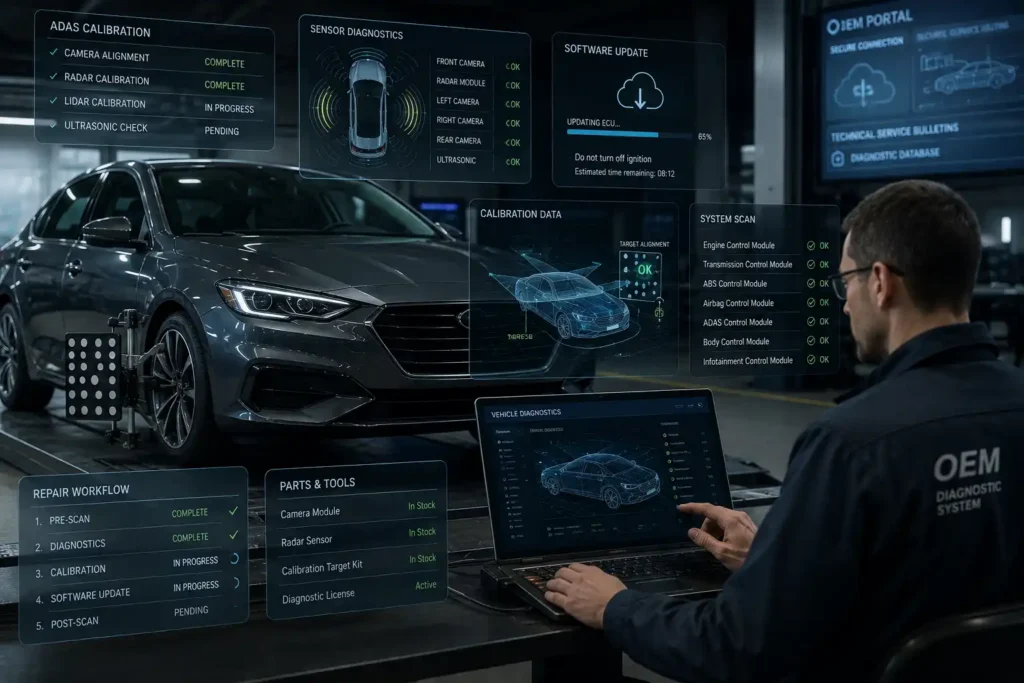
Modern vehicle ownership is increasingly tied to digital repair ecosystems that many buyers never fully consider during the purchase stage. In many newer vehicles, even relatively routine repair work may now involve:
- manufacturer-authorized software access;
- post-repair scanning procedures;
- ADAS calibration workflows;
- proprietary diagnostic ecosystems.
According to repair-industry pricing data, ADAS calibration alone now commonly ranges between $300 and $600 per procedure in the US market, while multi-system calibrations may exceed $1,000 on newer platforms. Research often cited by organizations such as Insurance Institute for Highway Safety shows how software-dependent systems are changing repair procedures across the modern vehicle market.
Physical damage is no longer the only thing shaping repair costs, but also by digital compatibility requirements, technician specialization, manufacturer-controlled software environments, and access to certified repair infrastructure. That shift has made repair economics far less predictable than many buyers expect at the purchase stage.
Why transparency has become more valuable than low entry pricing
One of the biggest changes in the modern US vehicle market is that cars are no longer evaluated only as physical assets. They now move through financing systems, insurance databases, interstate registration networks, digital VIN records, and resale platforms that continue influencing long-term market confidence after the original purchase takes place. Because of that, incomplete documentation or inconsistent title history can affect refinancing conditions, resale liquidity, trade-in positioning, and insurer treatment even when a vehicle initially appears competitively priced.
Transparency now plays a much larger role in how vehicles move through the modern market. VIN traceability, title consistency, and documented servicing history now influence how smoothly a vehicle moves through resale, refinancing, and trade-in processes. In many parts of today’s market, predictability has become more financially valuable than aggressive entry pricing alone.
Affordable vehicles are no longer judged only by how cheaply they can be purchased. Across today’s market, long-term usability, ownership continuity, and transaction confidence increasingly shape how financially sustainable a vehicle may ultimately become. The meaning of vehicle value has changed with it, especially in a market where the true cost of ownership often continues unfolding well beyond the original sale.