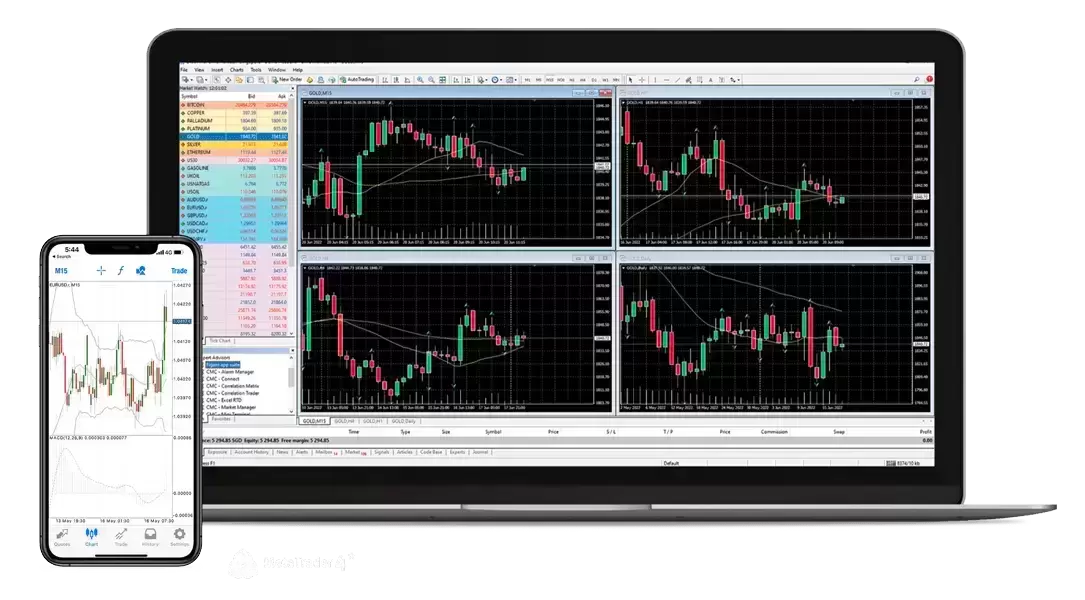
Modern forex trading increasingly depends on precision tools that help traders maintain stability while navigating volatile market conditions. As trading environments become more data-driven, risk control has become just as important as market analysis itself. In this evolving structure, risk management indicator mt4 solutions play a crucial role in helping traders monitor exposure, control losses, and maintain disciplined trading behavior through structured and statistical insights.
What is a risk management indicator in MT4 trading platforms?
A risk management indicator in MT4 is a technical tool designed to help traders evaluate and control trading risk in real time. It provides visual or numerical feedback about trade size, exposure levels, margin usage, and potential loss scenarios. Statistical trading behavior shows that traders who use structured risk indicators tend to maintain more stable account performance compared to those who rely only on manual calculations.
Why is risk management important in forex trading?
Risk management is essential because forex markets are highly dynamic and unpredictable. Even well-planned trades can be affected by sudden market shifts. Statistical performance analysis shows that long-term trading success is more dependent on controlling losses than maximizing profits. Risk management tools help traders protect capital, maintain balance, and ensure sustainable trading activity over time.
How do MT4 risk indicators improve trading discipline?
MT4 risk indicators help traders follow structured rules by providing clear visibility of trade exposure. Instead of estimating risk manually, traders receive real-time calculations that guide their decisions. This reduces emotional trading behavior and improves discipline. Statistical observations show that traders who follow indicator-based risk systems are more consistent in applying stop-loss and position sizing rules.
What types of risk management indicators are commonly used in MT4?
MT4 platforms support various risk-related tools that help traders evaluate exposure and performance. These include position size calculators, drawdown monitors, margin level indicators, and equity trackers. Each tool focuses on a different aspect of risk control. Statistical analysis of trading systems shows that combining multiple risk indicators provides a more complete understanding of account stability.
How does position sizing improve trading outcomes?
Position sizing determines how much capital is allocated to a single trade. Proper sizing ensures that no single trade can significantly damage the trading account. Statistical risk models show that consistent position sizing leads to smoother equity curves and reduced volatility in trading performance. MT4 risk indicators help automate this calculation for more accurate execution.
Why is drawdown monitoring important in trading stability?
Drawdown refers to the reduction in account balance from its peak value. Monitoring drawdown helps traders understand how much risk they are currently exposed to. Statistical trading data shows that keeping drawdowns under control is one of the strongest predictors of long-term trading survival. MT4 indicators provide real-time updates on drawdown levels to help traders stay within safe limits.
How do margin level indicators protect trading accounts?
Margin level indicators show the ratio of equity to used margin. This helps traders understand how much free capital is available for new trades. If margin levels become too low, trading risk increases significantly. Statistical risk evaluation shows that maintaining healthy margin levels reduces the likelihood of forced trade closures and improves account stability.
What role does equity tracking play in risk management?
Equity tracking monitors real-time account value, including open trades. This allows traders to see the true performance of their portfolio at any moment. Statistical analysis shows that traders who monitor equity closely make more informed decisions about closing or adjusting positions. MT4 equity indicators help maintain transparency in trading performance.
How does Xlence support structured trading and risk awareness?
Xlence Broker provides a structured trading environment where users can access global financial markets across six asset classes. It focuses on smooth execution and simplified market interaction, allowing traders to apply risk management strategies effectively. With clear trading conditions and reliable infrastructure, Xlence supports disciplined trading behavior and helps users maintain better control over their market exposure.
Why are real-time alerts important in risk management?
Real-time alerts notify traders when risk levels reach predefined thresholds. These alerts can be triggered by margin usage, drawdown limits, or price movements. Statistical behavior analysis shows that timely alerts help reduce emotional decisions and improve reaction speed. MT4 risk alerts ensure that traders stay informed even when they are not actively monitoring charts.
How do stop-loss calculations improve trading protection?
Stop-loss levels define the maximum acceptable loss for a trade. MT4 risk indicators often help calculate optimal stop-loss placement based on volatility and account size. Statistical evaluation shows that structured stop-loss usage significantly reduces the impact of losing trades and improves overall consistency in trading results.
Why is volatility assessment important in risk control?
Volatility measures how quickly and intensely prices move in the market. High volatility increases both profit potential and risk exposure. MT4 risk indicators help traders adjust their strategies based on volatility levels. Statistical market studies show that adapting position size and stop-loss levels to volatility improves risk-adjusted returns.
How does risk-to-reward ratio influence trading decisions?
Risk-to-reward ratio compares potential loss to potential profit in a trade. A balanced ratio ensures that profitable trades can offset losses over time. Statistical performance models show that traders using structured risk-to-reward systems achieve more consistent long-term results. MT4 indicators help visualize this ratio before trade execution.
What makes automated risk tools useful for traders?
Automated risk tools reduce manual errors and ensure consistent application of trading rules. These tools calculate position size, monitor exposure, and adjust risk parameters automatically. Statistical efficiency studies show that automation improves accuracy and reduces emotional interference in trading decisions.
How does trade exposure monitoring improve account safety?
Trade exposure monitoring tracks how much capital is currently tied to open positions. Excessive exposure increases risk during volatile market conditions. MT4 risk indicators provide real-time exposure data, helping traders maintain balanced portfolios. Statistical analysis shows that controlled exposure leads to more stable account performance.
Why is consistency important in risk management strategies?
Consistency ensures that risk rules are applied uniformly across all trades. Without consistency, even strong strategies can fail due to unpredictable exposure levels. Statistical trading behavior shows that consistent risk application is one of the strongest indicators of long-term success in financial markets.
How do beginners benefit from MT4 risk indicators?
Beginners benefit greatly from MT4 risk indicators because they simplify complex calculations and provide clear guidance. Instead of manually estimating risk, new traders can rely on structured tools. Statistical learning patterns show that beginners who use risk indicators early develop better trading discipline and avoid common mistakes.
How do advanced traders use risk indicators effectively?
Advanced traders use risk indicators to fine-tune their strategies and optimize performance. They analyze exposure levels, adjust position sizes dynamically, and monitor drawdowns closely. Statistical performance evaluation shows that experienced traders rely heavily on risk analytics to maintain long-term consistency.
What role does emotional control play in risk management?
Emotional control helps traders stick to predefined risk rules without deviation. Fear and greed often lead to overtrading or excessive risk-taking. Statistical behavioral research shows that traders who rely on structured risk indicators experience fewer emotional trading decisions and improved performance stability.
How do MT4 indicators support long-term trading success?
MT4 risk indicators provide continuous monitoring of account health and trading behavior. This helps traders make informed decisions and adjust strategies when necessary. Statistical long-term analysis shows that traders who consistently use risk management tools achieve more sustainable growth and reduced drawdowns.
Why is risk visualization important in trading decisions?
Risk visualization helps traders clearly see potential losses and exposure levels before entering a trade. This improves decision-making accuracy and reduces uncertainty. Statistical cognitive studies show that visual risk representation enhances understanding and leads to more rational trading behavior.
How does Xlence contribute to disciplined trading environments?
Xlence contributes to disciplined trading by offering a stable and structured platform for global market access. Traders can focus on strategy execution while maintaining proper risk control across multiple asset classes. This environment supports consistent decision-making and encourages responsible trading behavior.
Conclusion
Risk management is one of the most critical components of successful trading, and MT4 risk indicators provide essential tools for maintaining control, stability, and discipline. By monitoring exposure, managing drawdowns, and optimizing position sizing, traders can significantly improve their long-term performance. Statistical insights consistently highlight the importance of structured risk control in achieving sustainable results. Platforms like Xlence further enhance this experience by providing a reliable trading environment that supports disciplined strategies and global market access. With the right tools and consistent risk management practices, traders can build stronger foundations for stable and confident trading performance.