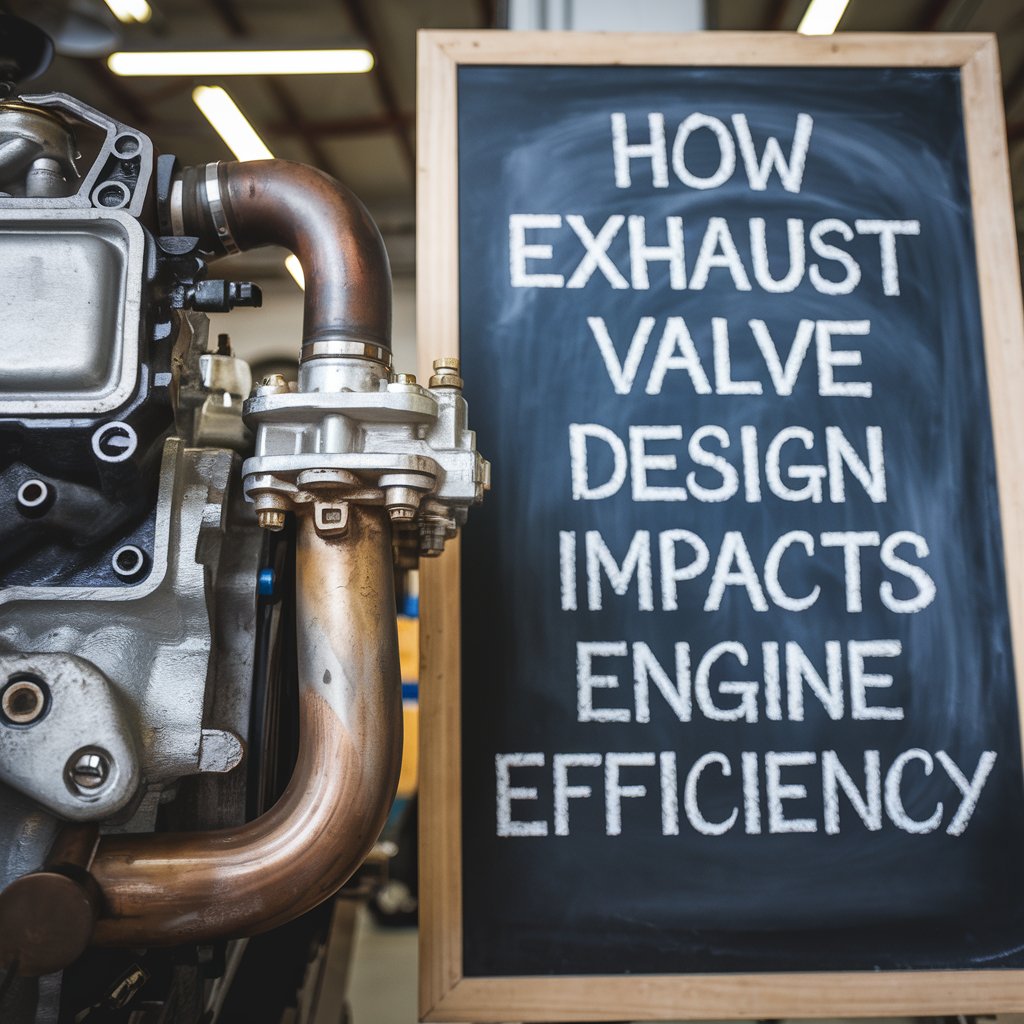
When it comes to engine performance and efficiency, many car enthusiasts focus on flashy components like turbochargers or high-flow intake systems. However, one crucial element that often gets overlooked is the humble exhaust valve.
These small but mighty components play a vital role in your engine’s performance, and their design can significantly impact overall efficiency. In this article, we’ll dive into the world of exhaust valve design and explore how it affects your engine’s performance.
The Basics of Exhaust Valves
Before we delve into the intricacies of design, let’s start with the basics. What exactly is an exhaust valve? In simple terms, it’s a mechanical device that controls the release of exhaust gases from the combustion chamber of an internal combustion engine.
Every time your engine completes a combustion cycle, the exhaust valve opens to allow the spent gases to exit, making room for a fresh air-fuel mixture.
The exhaust valve operates in an incredibly harsh environment. It’s subjected to high temperatures, corrosive gases, and constant mechanical stress. This is why the design and material of exhaust valves are so crucial to an engine’s performance and longevity.
Key Factors in Exhaust Valve Design
Several factors come into play when designing an exhaust valve:
- Material Selection
- Valve Head Design
- Stem Design
- Seat Design
- Cooling Features
Each of these elements can significantly impact the valve’s performance and, consequently, the engine’s efficiency.
Material Selection:
One of the most critical aspects of exhaust valve design is material selection. The two most common materials used for exhaust valves are stainless steel and Inconel, a nickel-chromium-based superalloy. This brings us to a common question in the automotive world: inconel exhaust valves vs stainless – which is better?
Stainless steel has been a popular choice for exhaust valves for many years due to its good heat resistance and relatively low cost. However, in high-performance applications or engines that run at very high temperatures, Inconel often becomes the material of choice.
So, why use Inconel exhaust valves? Inconel offers superior heat resistance and strength at high temperatures compared to stainless steel. It maintains its strength and resists corrosion even when subjected to extreme heat, making it ideal for high-performance engines or those that operate under severe conditions.
However, Inconel is significantly more expensive than stainless steel, which is why it’s not used in all applications. The choice between Inconel and stainless steel often comes down to a balance between performance requirements and cost considerations.
Valve Head Design: Shaping Performance
The design of the valve head plays a crucial role in exhaust flow efficiency. The most common designs are:
- Tulip (or mushroom) shape
- Semi-tulip shape
- Flat head
Each design has its pros and cons. The tulip shape, for instance, offers good flow characteristics but may be more prone to thermal stress. Flat head designs, on the other hand, are more resistant to thermal stress but may not flow as efficiently.
The choice of head design often depends on the specific engine application and the balance between flow efficiency and durability required.
Stem Design: The Unsung Hero
While the valve head gets most of the attention, the stem design is equally important. The stem connects the head to the valve train and plays a crucial role in heat dissipation. A well-designed stem can help conduct heat away from the valve head, improving durability and performance.
Some high-performance exhaust valves use hollow stems filled with sodium. As the valve moves up and down, the liquid sodium inside the stem moves, helping to transfer heat from the valve head to the cooler end of the valve stem.
Seat Design: Where the Rubber Meets the Road
The valve seat is where the exhaust valve makes contact with the cylinder head to create a seal. The design of this interface is critical for proper sealing and heat transfer. A well-designed seat will provide a good seal to prevent exhaust gas leakage while also helping to conduct heat away from the valve.
Cooling Features: Beating the Heat
Given the extreme temperatures that exhaust valves are subjected to, cooling features are often incorporated into their design. This can include:
- Sodium-filled stems, as mentioned earlier
- Coatings to reflect heat
- Specially designed seats to improve heat transfer
These features help to extend the life of the valve and maintain performance over time.
How Exhaust Valve Design Impacts Engine Efficiency
Now that we’ve covered the key elements of exhaust valve design, let’s explore how these factors impact engine efficiency.
1. Exhaust Flow Efficiency
The design of the exhaust valve directly affects how efficiently exhaust gases can exit the combustion chamber. A well-designed valve allows for smooth, unrestricted flow, reducing pumping losses and improving engine efficiency.
The shape of the valve head, the lift (how far the valve opens), and the duration (how long it stays open) all play a role in determining flow efficiency. Engineers must carefully balance these factors to optimize exhaust flow for the specific engine application.
2. Heat Management
Efficient heat management is crucial for maintaining engine performance and longevity. Exhaust valves that can effectively dissipate heat help to:
- Prevent pre-ignition and detonation
- Reduce thermal stress on engine components
- Maintain optimal combustion chamber temperatures
By managing heat effectively, well-designed exhaust valves contribute to overall engine efficiency and durability.
3. Sealing Efficiency
Proper sealing of the exhaust valve is critical for maintaining compression and preventing exhaust gas leakage. A valve that seals well helps to:
- Maintain proper compression ratios
- Prevent power loss
- Reduce emissions
Good sealing efficiency is particularly important in modern engines with high compression ratios and stringent emissions standards.
4. Weight and Inertia
The weight of the exhaust valve affects the engine’s ability to rev quickly and reach high RPMs. Lighter valves reduce the inertia of the valvetrain, allowing for higher engine speeds and potentially improving efficiency, especially in high-performance applications.
However, engineers must balance the desire for light weight with the need for durability and heat resistance. This is another area where material selection plays a crucial role.
5. Durability and Longevity
While not directly related to moment-to-moment efficiency, the durability of exhaust valves impacts long-term engine performance. Valves that can withstand the harsh conditions inside the engine for longer periods help maintain efficiency over time and reduce the need for costly repairs or replacements.
Innovations in Exhaust Valve Design
As engine technology continues to advance, so too does exhaust valve design. Some recent innovations include:
- Advanced coatings to improve heat resistance and reduce friction
- Computer-optimized valve shapes for improved flow characteristics
- Use of new, exotic materials for even better heat resistance and durability
- Integration with variable valve timing systems for improved efficiency across a wide range of engine speeds
These innovations continue to push the boundaries of what’s possible in terms of engine efficiency and performance.
Conclusion
While they may not be the most glamorous part of an engine, exhaust valves play a crucial role in determining overall efficiency and performance. From material selection to intricate design features, every aspect of an exhaust valve is carefully engineered to withstand extreme conditions while optimizing engine operation.
Whether you’re a car enthusiast looking to squeeze every ounce of performance out of your engine, or simply someone who wants to understand how your vehicle works, appreciating the complexity and importance of exhaust valve design can give you a new perspective on engine efficiency.
The next time you hear your engine purr (or roar), spare a thought for those hard-working exhaust valves. They’re doing much more than just letting out hot air – they’re a key part of the intricate dance that turns fuel into motion, and their design is a testament to the ingenuity of automotive engineering.
Technology Perspective
Technology continues to transform industries through artificial intelligence, cloud computing, automation, cybersecurity, digital platforms, and data-driven decision making. As organizations increasingly adopt digital solutions, understanding emerging technologies becomes essential for businesses, professionals, and consumers. DGM News regularly covers these developments through expert analysis, technology news, and educational resources.
Innovation Outlook
Rapid advances in artificial intelligence, automation, machine learning, cloud infrastructure, and digital transformation continue reshaping global industries. Monitoring these developments helps organizations adapt to changing technologies, improve efficiency, and prepare for future innovation.
Did you know?
Artificial Intelligence is expected to influence nearly every major industry over the coming decade, from healthcare and finance to transportation, manufacturing, education, and entertainment.
AI, Machine Learning, Deep Learning and Generative AI Explained
Google AI Updates
About DGM News
DGM News is an independent digital publication delivering the latest Technology News, AI News, and FinTech News. We provide expert insights on startups, innovation, cybersecurity, software, business, gadgets, cloud computing, artificial intelligence, and emerging technologies. Our mission is to publish informative, accurate, and regularly updated content that helps readers stay informed in today's rapidly evolving digital landscape.
Since our editorial focus includes technology, artificial intelligence, and financial technology, we continuously expand our coverage as new innovations emerge.
Editorial Standards
Every article published on DGM News undergoes editorial review before publication. We prioritize factual accuracy, clarity, transparency, and reader value while following responsible digital publishing practices.
Research Methodology
Our editorial team researches publicly available information from official announcements, technical documentation, research publications, developer resources, reputable industry reports, and trusted public sources whenever applicable. Information is reviewed to improve clarity and accuracy before publication.
Fact-Checking Policy
We make reasonable efforts to verify factual information before publishing. Articles are reviewed for accuracy, consistency, and relevance. If significant developments occur after publication, content may be revised to reflect updated information.
Update Policy
Technology evolves rapidly. Articles may be reviewed and updated periodically to reflect software releases, AI developments, security advisories, regulatory updates, product launches, and other important industry changes.
Source Verification
Whenever possible, DGM News reviews information using official company announcements, technical documentation, research publications, government resources, publicly available reports, and reputable industry references before updating articles.
Editorial Independence
DGM News maintains editorial independence in all publishing decisions. Editorial content is produced independently and is intended to provide balanced, informative, and reader-focused coverage without influence from advertisers or commercial partnerships.
AI Usage Disclosure
Artificial intelligence tools may assist with research organization, grammar improvement, formatting, or editorial workflows. Every article is reviewed by human editors before publication to help maintain quality, clarity, and factual accuracy.
Corrections Policy
Accuracy is important to us. If readers identify outdated information or factual inaccuracies, they are encouraged to contact our editorial team. Verified corrections are reviewed and incorporated whenever appropriate.
Reader Feedback
Reader feedback helps improve our journalism. We welcome suggestions, corrections, and constructive feedback through our Contact page to continuously improve the quality of our reporting.
Last Editorial Review
This article follows the DGM News editorial review process and may be updated periodically as new information becomes available.
Why Trust DGM News?
DGM News is committed to publishing technology journalism that emphasizes accuracy, transparency, editorial independence, and regularly updated information. Our editorial process is designed to provide readers with reliable coverage of technology, AI, fintech, startups, and digital innovation.
DGM News Resources
Topics We Cover
Artificial Intelligence • AI Tools • Machine Learning • FinTech • Cybersecurity • Cloud Computing • Programming • Software Development • Gadgets • Mobile Technology • Business Technology • Startups • Digital Marketing • Blockchain • Cryptocurrency • Science • Innovation • Consumer Technology • Enterprise Technology • Automation