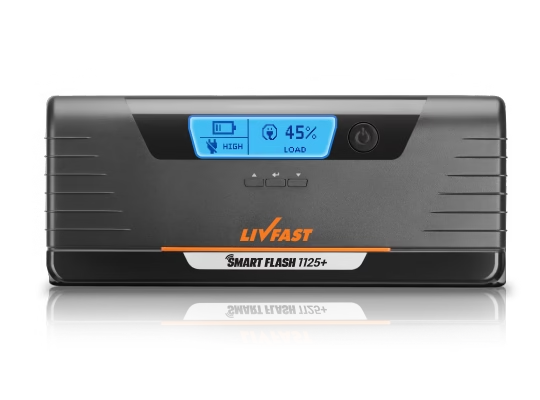
Purchasing an inverter can be a critical decision. You’re selecting a powerhouse to serve your needs during an outage. Not only that, but it is meant to sustain your power backup needs in the long term. There are installation costs and maintenance expenses to be considered, too. It doesn’t help that inverters do not feature in our conversations regularly. Naturally, when the initial plan to purchase or replace an inverter crops up, there’s an information void.
It is very useful to have a grasp of the basics when it comes to inverter price. Not only does that allow you to opt for cost-effective systems, but it also aids you in choosing the best device.
Things To Evaluate Rather Than Relying on Inverter Price Only
Multiple expenses have to be taken into account before making a purchase decision. Evaluating your power needs, installation costs, and the available models in the market can help you choose the most precise inverter. Let’s dive into some of these factors:
Power Capacity
When a power cut occurs, our instinct is to limit power consumption to necessary appliances. The first thing to consider, therefore, is the power requirements of the space you’re getting an inverter for. How many appliances will run on your inverter? Are they heavy-duty? What is the total power requirement in watts? These are a few questions to ask yourself.
The power needs of your home or office space can be determined by calculating the number of appliances you intend to use. For example, if you want to use two tubelights (60 W), two ceiling fans (140 W), and two CFL bulbs (40 W) during an outage, your total requirement stands at 240 W.
Following the same example, you can determine the voltage requirement as well. The VA rating of an inverter is determined using a simple formula.
VA is calculated by taking the total Power Requirement in Watts and then dividing it by the Power Factor.
Measuring your load requirement beforehand is essential since it helps prevent miscalculations when making a purchase. Let’s suppose your VA requirement comes at 340 VA. In this case, choosing an inverter with a VA rating slightly higher than 340 VA will ensure overloads are tackled well. The higher your power requirement, the more your inverter price will be.
Different Inverter Types
One of the primary things to be aware of when getting a new inverter is the types available in the market. Each inverter differs in terms of function and purpose. Based on the same two parameters, they differ in pricing. A pure sine wave inverter does not operate the way a bolt square wave inverter does.
Pure sine wave inverters:
● Provide a stable and consistent power supply
● Are best for modern appliances that demand modern technology
● Are cost-effective in the long run due to their efficiency and smart power consumption
Bolt square wave inverters:
● Use unfiltered signals to power traditional systems
● Are best for bulbs and old appliances that do not require smooth power output
● Are highly affordable and function efficiently when backup needs are small
While pure sine wave inverters have a smoother DC power conversion process, the power output from square wave inverters is rough. Being able to distinguish between them enables you to settle on the best fit for your backup needs.
Battery Backup Time
Depending on your location and electricity needs, the backup time required during power cuts will differ. If your area is prone to outages, you’ll need higher battery backup than if your area faces no power cuts. Higher battery backup time essentially means a larger number of batteries and vice versa.
An effective premium-quality inverter offers extended periods of battery backup. Moreover, it recharges promptly once the power has returned. Awareness of your battery backup needs equips you to choose an inverter aligned with your usage. This, in turn, prevents you from investing disproportionately.
Goodwill of Brand
The right inverter manufacturer can make all the difference. When picking an inverter brand, evaluating their goodwill is beneficial. A manufacturer that uses premium-grade electronic components and offers a long warranty period will present durable options. Positive testimonials from users are a reliable way of ascertaining customer service standards as well.
A thorough evaluation of a brand’s goodwill ensures that you bring the right inverter home. Use of cutting-edge technology and exceptional features tends to make certain brands soar higher than their competition. If they can fulfil your load requirements, promise durability, and are renowned for after-sales support, they are worth checking out.
Maintenance And Safety Features
Modern technology keeps evolving to cater to the demands of smart power backup options. New innovative features have emerged to make inverters more efficient and low-maintenance. Being aware of the overall benefits you can gain from an inverter empowers you to analyse your inverter price before signing up. A few features to look out for would be:
● Compatibility with solar panels
● Water level indicators
● Smart display for monitoring purposes
● Protection against overloads
● Minimal maintenance
● Thermal and voltage adaptability
Establishing how safe your inverter is to operate can influence the inverter price point. It is always advisable and worthwhile when the extra buck goes into ensuring your inverter is insulated against hazards.
Installation/Additional Costs
A final yet crucial factor to be evaluated is the hidden cost involved in an inverter’s purchase. Professional expertise is a must when setting up an inverter. Alterations in the electrical circuit and equipment for holding batteries are common additional costs. Pre-calculating them can prevent overspending or mistakes in determining your budget.
Conclusion
A systematic evaluation can facilitate smart purchasing decisions. You don’t want to realise that your inverter doesn’t fit your power backup needs five months into operating it. Repair and replacements are heavy on the pocket. You can make a list and check each factor off as you determine your need. This can help narrow down the options.
A trustworthy inverter brand provides reliable guidance as well as lasting products at an economical inverter price point. An optimal purchase comes with gains that serve generations.