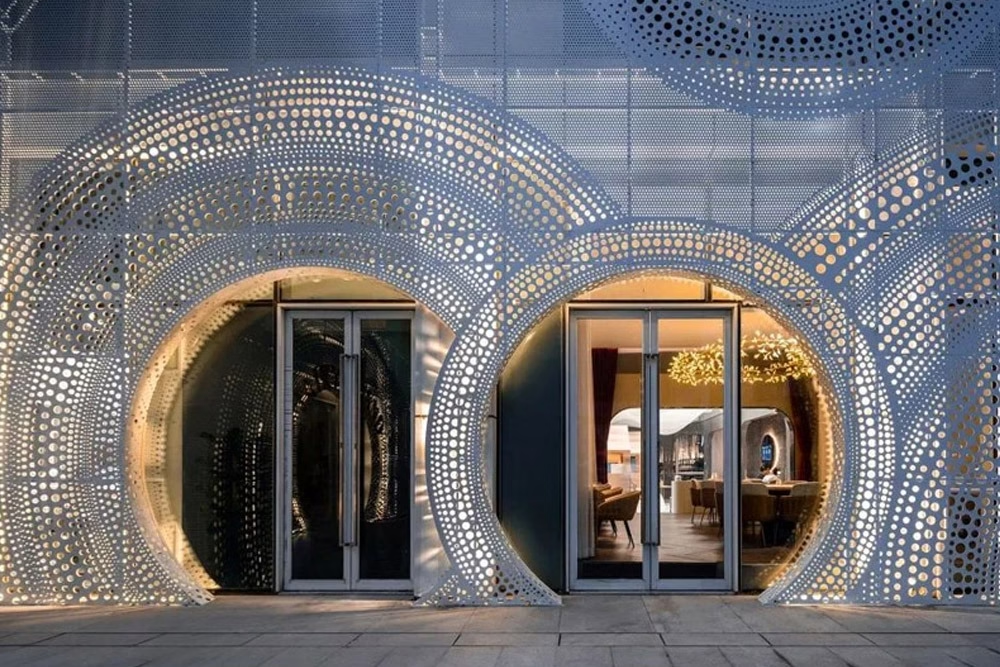
As shopping centers become more of an experience, retail architecture is focusing more on visual identity, sustainability, and performance. Perforated aluminium panels provide versatile beauty, air conditioning, and stability to modern business settings.
Designers and developers are opting for superior facade materials as a means of striking a balance between branding, comfort, and efficiency. As part of this change, light modulation, ventilation, and patterns on retail exteriors are possible with perforated aluminium panels.
Experience-Driven Design: What Makes Perforated Panels Ideal for Retail
Contemporary retail architecture is based on emotionality, flow, and emotional journeys in space, which stimulate increased stay. Perforated panels serve to make functional surfaces interesting architectural elements in the retail setting.
Enhanced Visual Identity
Custom patterns, finishes, and lighting interactions enhance the visual identity of perforated aluminium panels, strengthening the brand language, generating iconic storefronts, and attracting foot traffic within competitive shopping centre settings worldwide.
Comfort Through Performance
Performance strategic perforation provides comfort, increases air flow, spreads daylight, and removes heat build-up, which are conducive to the comfort of retail spaces and still allows full visibility and a contemporary architectural vision to shoppers and tenants.
Flexible Design Integration
Perforated with flexible design integration, the panels are easy to fit facades, ceilings, screens, and have feature walls that enable the designers to match exterior architecture and interior experiences in a variety of retail formats and brand storytelling.
Durability for High Traffic
High-traffic aluminium panels are durable, with heavy-use, exposure, and frequent cleaning, and hence, are suitable in busy shopping centers that will need long-distance performance and recurring appearance quality.
Integrating aesthetic, comfort and stability, the perforated aluminium solutions take retail experiences to a higher level than the norm, in terms of construction. They promote highly engaging brand experiences and fulfil the functional needs of contemporary shopping places.
Understanding the Key Benefits
The developers of retail want materials that provide aesthetic, performance, and efficiency at the same time. This section details how progressive facade systems respond to commercial needs with value addition to the long term across retail landscapes around the world.
Durability and Structural Performance
The strength-to-weight ratios guarantee long-term structural stability, whereas the corrosion resistance makes it possible to be used on the outside. Perforated aluminium panels assure appearance, lower maintenance needs, and work well in challenging retail climates in all parts of the world.
Environmental and Energy Efficiency
Patterns of perforation block daylight and minimize glare as well as passive cooling. The advantages improve the comfort of shoppers, reduce energy usage, and allow aesthetically changing fronts without affecting the functional performance of retail.
Design Versatility and Branding
The flexibility of design enables customization of hole sizes, fallouts, finishes, and colors. Architects employ perforated aluminium shutters to coordinate brand identity/architectural expression across the various typologies of shopping centers in the world today.
Construction Efficiency and Cost Control
Lightweight construction makes it easy to install, lowers the structural loads, and minimizes the time of project completion. To developers, this means cost-efficiency, predictability, and performance of a reliable long-term facade on commercial retail development anywhere.
All these benefits explain why current retail projects have focused on performance-based materials. Perforated aluminium panels provide quantifiable advantages, not only to the objectives of sustainability in design but also to enhancing the value and quality of architecture and commerce.
Perforated Cladding as a Brand Statement
Retail architecture is becoming more brand-expressive as building envelopes, as opposed to signage. New facade solutions enable the shopping centers and flagship stores to bring forth the identity, creativity, and quality through the use of images.
Iconic Facade Identity
Facade identity with iconic application of perforation patterns identity customizes exterior surfaces into a familiar brand form, which allows perforated cladding to become a visual signature of retail developments that can stand out in competitive urban surfaces.
Day and Night Visual Impact
Lighting that adds visual effect in the day and night enhances the perforated surface during the night to provide a dynamic appearance to the facades to attract tourists, increase the time of retail activity, and strengthen brand presence by providing memorable night architecture.
Consistency Across Retail Portfolios
Retail portfolios are standardized in design languages through the use of perforated cladding to ensure that a retailer can have visual consistency across several locations to support a brand in multiple retail locations, but customize it to suit specific markets.
Premium Perception Through Craftsmanship
Craftsmanship, quality fabrication, and finishes enhance the material qualities and imply professionalism and trust, and strengthen brand values by showing the level of architectural detailing that is seen by the customers and other stakeholders.
The retail developments obtain the long-term visual impact, making the work of functional facades into a narrative. Perforated cladding provides unique branding and offers durability, performance, as well as flexibility to changing business landscapes.
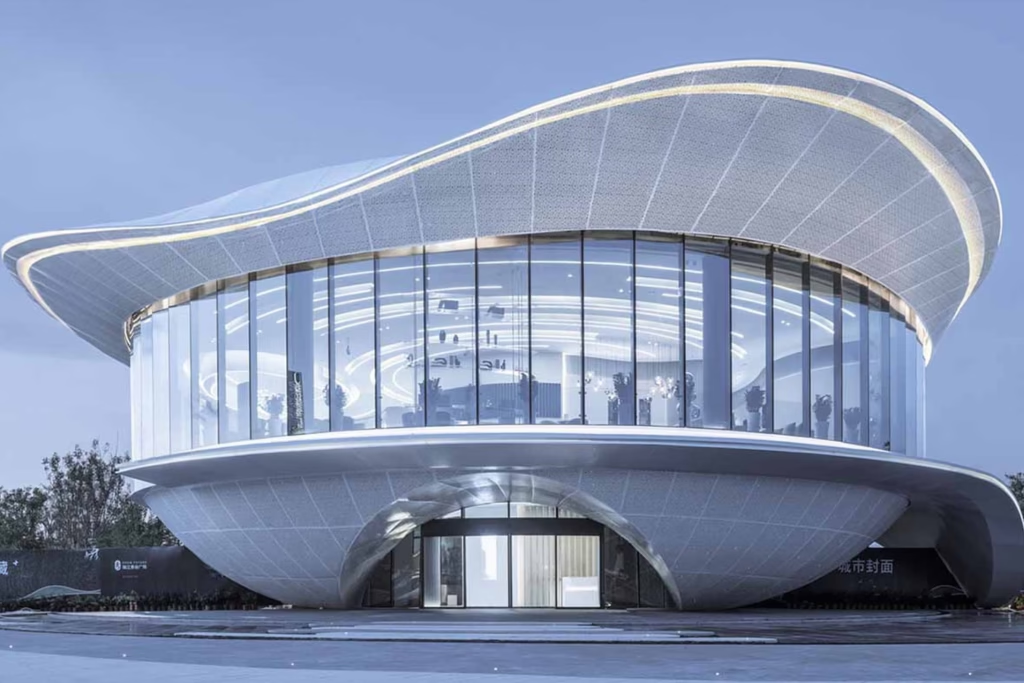
Versatility of Perforated Sheet Metal in Retail Interiors
The interior retailing areas require materials that are attractive, functional, and durable. The use of metal solutions by designers to create more flow in spaces, help make spaces more comfortable, and strengthen brand identity inside is on the rise.
Decorative Ceiling Applications
Perforated sheet metal ceilings, used decoratively, hide service points and allow air circulation and integration of lighting systems, producing clean visual planes to enhance acoustic properties and improve the overall ambience of the interior of retail space.
Partitions and Feature Screens
Lightweight metal panels are used as partitions and feature screens to identify zones without obstructing the view, and also allow perforated sheet metal to partition areas, direct movement, and keep the interior of modern shopping centers open.
Point-of-Sale Design Elements
The design of the point-of-sale, metal backdrops used to emphasize merchandise, support branding, and combine lighting, with perforated sheet metal that can be used to emphasize the customers when they check out and display areas.
Acoustic and Ventilation Benefits
Perforated patterns have acoustic and ventilation advantages, which improve sound absorption and airflow and minimise noise and increase comfort, especially in busy retail interiors where visitor numbers are high.
Metal solutions enhance interior retail experiences through flexibility and performance. Punctured sheet metal accommodates practical design without losing the integrity of appearance that is in line with modern shopping ambience.
Technical Considerations and Best Practices
Effective retail projects entail accurate technical planning to make sure that performance, safety, and durability are met. Knowledge of specifications, installation practices, and best practices of maintenance assists the designer in avoiding risk and obtaining results.
Material Selection and Thickness
Material choice and thickness selection of suitable aluminium grades, panel thicknesses, and finishes facilitate structural reliability, corrosion, and appearance uniformity between the interior and exterior retail uses in the current project environments across the globe.
Perforation Pattern Engineering
The pattern of engineering holes should be linked to airflow, lighting, acoustic, and load-bearing needs; thus, ensuring that the objectives of performance, safety, and aesthetics are continuously met in different project novelties.
Installation and Integration Methods
Properly fixed systems, tolerances, and subframe design to meet thermal movement, easy installation, and long-run stability are accomplished by installation and integration techniques when integrating panels with glazing, concrete, or steel frames.
Maintenance and Lifecycle Planning
Installation and integration techniques are used in combining panels with a glazing, concrete, or steel frame by properly fixing systems, tolerances, and subframe design to support thermal movement, easy installation, and long-term stability.
The employment of stringent technical criteria secures the design purpose and value of the investment in the long run. Best practices are applied to make sure that panels work as planned, enhance safety, longevity, and architectural quality during retail operations.
Case Studies: Retail & Shopping Centers You Should Know
Practical examples can be used to bring to focus how retail spaces are transformed by innovative solutions with respect to the facade and interior. These case studies present the aesthetic, functional, and branding advantages of perforated applications in aluminium and metal applications.
Flagship Store Transformation
Transformation of flagship stores: an international fashion brand incorporated perforated aluminium panels that helped to enliven its walls to form a visual impact as well as increase the ventilation, daylighting, and customer interaction in the busy areas of the city.
Shopping Center Façade Upgrade
Facade upgrade perforated cladding modeled a preexisting shopping mixture with elements of power economizing, strength, and layout adaptability, which improved the image of the center and drew more pedestrians to the area.
Interior Feature Walls
Walls on interior features, one of the biggest electronics retailers used perforated sheet metal panels as decorative partitions, acoustic solutions, and branded display backs, improving interior beauty and developing immersive customer experiences.
Mixed-Use Retail Integration
Facade continuity between retail, dining, and entertainment areas was facilitated by means of perforated aluminium, which desired balance between aesthetics, ventilation, and solar control, as well as aiding in the same brand message being conveyed through the complex.
These case studies show how perforated solutions incorporate form, functionality, and brand narrative. They demonstrate practical outcomes that support the reasons why the contemporary retail trends are moving towards using perforated aluminium and metal systems more.
How to Choose the Right Perforated Aluminium Supplier
A good choice of a supplier will be quality, reliable, and designable in terms of retail projects. Perforated aluminium panels have high aesthetic, functional, and long-term performance, which is ensured through careful consideration.
Material Quality and Certification
The quality of materials and certification confirm the grade of aluminium, corrosion resistance, and production requirements. A reliable supplier supplies panels with international certification that would be of uniform quality and longevity in high-traffic retail and shopping centers.
Customization Capabilities
Customization features analyze the capability of the supplier to develop custom patterns, finishes, and sizes. Perforated aluminium panels can suit branding, architectural vision, and functional needs exactly, with flexible design options.
Delivery and Project Support
There are reliable logistics in delivery and project support, timely delivery, and project management to minimize construction delays. The appropriate supplier assists in installation, integration and coordination of other building systems effectively.
After-Sales Service and Maintenance
The pinnacle of performance and appearance is ensured through after-sales service and maintenance after installation, maintenance advice, and warranty cover so that panels maintain sustained performance, and a long-lasting retail environment is made possible.
Working with a well-established supplier simplifies the design, manufacture, and installation. TBK Metal is a reliable supplier of perforated aluminium in its perforated projects because of its skills, level of fabrication, and customer orientation.
FAQs About Perforated Aluminium Panels
- What are perforated aluminium panels?
Perforated aluminium sheets are thin and durable aluminium sheets with personalized patterns of perforations, applied in facades, interiors, ventilation, and decorative purposes of retail and business spaces. - What are the main benefits of using perforated aluminium panels?
Aesthetics, durability, ventilation, daylight control, acoustic performance, and branding opportunities are some of the opportunities they offer, hence making them the perfect fit in the modern-day retail and shopping center projects. - Can perforated aluminium panels be customized?
Yes. The size of a hole can be designed to suit design intent, branding, or functional need. The pattern can also be customized, the panel size can also be customized, the finish can also be customized, and the color can also be customized. - How durable are perforated aluminium panels?
Aluminium is lightweight, corrosion-resistant and strong, which guarantees long-time work of exterior and interior applications, even in high-traffic retail environments. - Are perforated aluminium panels suitable for indoor use?
Absolutely. They are mostly utilized in ceilings, feature walls, partitions, and point-of-sale points, giving them a visual aspect, airflow, and acoustic advantages indoors. - How are perforated aluminium panels installed?
It mounts panels on subframes, brackets, or anchors that fit the structure of the building. As a professional installation is carried out, it will be stable, correctly aligned, and have a long life. - Do perforated aluminium panels require maintenance?
There is minimal maintenance. Cleaning and inspection are done regularly to maintain appearance, performance, and avoid possible damage to the surfaces. Certain finishes can require certain care suggestions. - Can perforated aluminium panels improve energy efficiency?
Yes. They are made to give the effect of natural shading, light diffusion, and ventilation, which decreases the HVAC loads and enhances thermal comfort in retail areas. - Are perforated aluminium panels environmentally friendly?
Aluminium is 100% recyclable. Perforated aluminium panels have been shown to be beneficial in encouraging sustainable building, reducing energy use, and providing green building certifications. - Why choose TBK Metal for perforated aluminium panels?
TBK Metal provides experience in design and custom construction, quality control, and assistance in the installation. Their solutions satisfy aesthetic, functional, and brand specifications in retail and commercial projects.
Conclusion: Future of Retail Design with Perforated Aluminium
The redefinable retail architecture is perforated aluminium panels that are a combination of aesthetics, functionality, and brand storytelling. This versatility enables the designers to design great visual, sustainable, and interesting shopping environments for the current consumers.
With the development of shopping centers, the perforated aluminium panels will be of high quality and durable, energy-efficient, and memorable customer experience. Collaborating with such specialists as TBK Metal provides custom-made solutions that further enhance the effects of any retail venture.