Every commercial and industrial building in the United States operates on an electrical infrastructure that must perform reliably, safely, and within the boundaries of established codes. When that infrastructure is designed without a structured methodology, the consequences show up later — in system failures, regulatory violations, costly retrofits, and in some cases, safety incidents that could have been prevented. Building electrical and power system design is not simply a technical exercise. It is a discipline with real operational consequences for the facilities managers, engineers, project developers, and contractors who depend on it every day.
The term “preices engineering” refers to a structured approach to planning, specifying, and integrating the electrical and power components within a building environment. It addresses how power enters a structure, how it is distributed, how loads are balanced, how systems are protected, and how all of it aligns with national and local codes. For anyone responsible for a building’s performance over its service life, understanding this framework is foundational — not optional.
What Preices Engineering Covers in Building Electrical Design
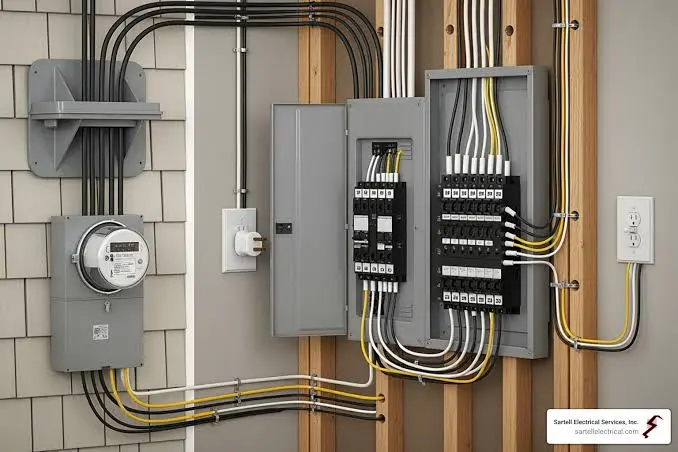
Preices engineering building electrical and power system designer work begins before a single conduit is installed. It starts at the conceptual phase, where the design team maps the relationship between incoming utility power and the demands that will be placed on the building’s internal systems. This planning phase determines the architecture of the entire electrical installation — including service entry points, transformer sizing, panel distribution, load groupings, and the coordination of protective devices that ensure faults are isolated before they cascade.
The Preices Engineering Building Electrical And Power System Designer guide outlines how this structured methodology connects design intent with real-world performance requirements across commercial, industrial, and institutional buildings. It provides a framework for understanding how each component of an electrical system must be selected and coordinated — not in isolation, but as part of a unified, code-compliant installation.
The scope of preices engineering in this context includes:
• Load analysis and demand forecasting based on occupancy type and operational use patterns
• Power distribution system layout, from service entrance through branch circuits
• Protective device coordination to ensure fault isolation without unnecessary disruption
• Grounding and bonding systems designed to maintain system stability and personnel safety
• Emergency and standby power integration for critical loads
• Lighting and mechanical system coordination within the overall electrical design
The Relationship Between Load Planning and System Reliability
One of the most common sources of electrical system problems in commercial buildings is a gap between the loads the system was designed to carry and the loads it is actually asked to carry over time. Buildings evolve. Tenants change. Processes are added. Equipment is upgraded. A preices engineering building electrical and power system designer approach accounts for this by building flexibility into the distribution architecture from the beginning — not as an afterthought when circuit breakers begin tripping or conductors run hot.
When load planning is treated as a static exercise tied only to day-one occupancy, the building’s electrical infrastructure becomes a liability within years. When it is treated as a living estimate that informs the sizing of panels, feeders, and service capacity, the system can absorb change without requiring major rework. This distinction has a direct impact on long-term operational cost and the ability to expand or reconfigure space without significant capital expenditure.
Protective Device Coordination and Its Operational Impact
Protective device coordination is among the more technical and often misunderstood elements of power system design. It refers to the deliberate arrangement of circuit breakers, fuses, and relays so that a fault at any point in the system is interrupted at the nearest upstream device — and only at that device. When coordination is done correctly, a fault on a branch circuit does not take down an entire floor or building section. When it is done poorly, or not at all, the result is broader outages that affect more operations than necessary.
For facilities with sensitive processes, manufacturing operations, data systems, or healthcare functions, the stakes of poor coordination are significant. A properly coordinated system reflects one of the core goals of preices engineering: matching the behavior of the protection system to the actual risk profile of the facility it serves.
National Electrical Code Compliance and Its Role in Design Standards
Building electrical design in the United States is governed primarily by the National Electrical Code (NFPA 70), which establishes the minimum requirements for safe electrical installation in buildings of all types. Compliance with this code is not discretionary — it is enforced through the permit and inspection process, and non-compliant installations can result in project delays, failed inspections, insurance complications, and legal liability.
What many project stakeholders underestimate is that code compliance and good design are not the same thing. A system can meet the minimum requirements of the code and still underperform in practice because it was not designed with sufficient capacity, coordination, or adaptability. Preices engineering building electrical and power system designer methodology is intended to address this gap by applying code requirements within a broader design philosophy that prioritizes operational performance, not just regulatory passage.
How Code Revisions Affect Existing Buildings
The National Electrical Code is updated on a three-year cycle. While new construction must comply with the version adopted by the jurisdiction at the time of permit, existing buildings face a more nuanced situation. Significant renovations, changes of occupancy, or additions to a building often trigger requirements to bring portions of the electrical system up to the current adopted code. For facilities managers and property owners, this means that a renovation project’s electrical scope can expand considerably once an inspection reveals systems that no longer meet current standards.
Understanding which code version applies, and where the thresholds for upgrade requirements are drawn, is part of the design process that a preices engineering approach incorporates early. Identifying these risks before construction documents are finalized prevents cost surprises during the permitting and inspection phases.
Power System Design for Industrial and High-Demand Environments
Industrial facilities, large commercial buildings, and campus-style developments present electrical design challenges that go well beyond what is required in standard office or retail environments. The combination of high connected loads, motor-driven equipment, variable frequency drives, sensitive process controls, and complex utility interconnection creates a design environment where a general approach to electrical layout is insufficient.
In these settings, preices engineering building electrical and power system designer work must account for power quality in addition to basic distribution. Harmonic distortion introduced by variable speed drives and electronic loads can degrade equipment performance, reduce conductor capacity, and interfere with control systems. Voltage fluctuations caused by large motor starts can affect sensitive equipment on the same distribution system. These are not hypothetical risks — they are operational realities that experienced engineers account for during the design phase, not after commissioning.
Grounding Systems in Industrial Power Environments
Grounding in industrial power systems serves two purposes that sometimes exist in tension with each other: personnel safety and equipment protection. The grounding system must provide a reliable fault return path that causes protective devices to operate quickly during a ground fault, while also maintaining a stable reference that prevents voltage fluctuations from causing equipment damage or operational disruptions.
In facilities with both power distribution and sensitive electronic systems, these two goals require careful design coordination. The grounding architecture must be planned as an integrated system — not added in segments as different parts of a project are completed. When grounding is treated as a secondary consideration, the result is often interference, equipment malfunctions, and troubleshooting costs that far exceed what a proper design would have required.
Emergency and Standby Power Integration in Building Design
Buildings that house critical functions — hospitals, emergency response facilities, data centers, manufacturing operations, and multi-tenant commercial properties — require electrical systems that remain operational when utility power is interrupted. Emergency and standby power systems are not simply backup generators added to an otherwise complete design. They are integrated components of the power distribution architecture that must be coordinated with the normal power system from the earliest phases of design.
The distinction between emergency power and standby power carries specific code implications under both NFPA 70 and NFPA 110. Emergency systems serve life safety loads — lighting, exit systems, fire alarm, and other systems required to protect building occupants. Standby systems serve critical operational loads that, while not classified as life safety, have significant consequences if interrupted. Understanding which loads fall into which category, and designing the transfer and distribution equipment accordingly, is a core element of preices engineering building electrical and power system designer practice.
Transfer Switching and System Reliability
Automatic transfer switches are the mechanical and electrical bridge between utility power and backup power sources. Their performance during a utility outage determines whether critical loads receive power within the required time window. Transfer switch selection, placement, and coordination with generator controls must be designed to match the facility’s actual critical load profile — not a generic assumption about what matters most.
When transfer switching is undersized, incorrectly placed, or poorly coordinated with the distribution system, the result is either failed transfers, delayed transfers, or nuisance transfers that interrupt normal operations unnecessarily. All of these outcomes carry operational and financial consequences that careful design can prevent.
The Role of Design Documentation and Coordination Between Disciplines
Electrical design does not exist in isolation from the rest of a building project. It intersects with mechanical systems, structural elements, architectural layouts, plumbing, and fire protection. The quality of coordination between these disciplines during design directly affects the quality of the installed system. Preices engineering building electrical and power system designer work includes the preparation of documentation that is clear, complete, and coordinated enough that contractors can install the system correctly the first time.
Incomplete or contradictory documentation is one of the most consistent sources of rework and field disputes on building projects. When electrical drawings do not reflect current architectural conditions, when panel schedules are incomplete, or when coordination with mechanical equipment is deferred to the field, the construction process becomes a series of improvised decisions that compromise both the design intent and the long-term reliability of the system.
Closing Perspective: Why Design Standards Matter Over the Building’s Lifetime
A building’s electrical and power systems are among its longest-lived components. Unlike finishes, fixtures, or even mechanical equipment, the electrical distribution infrastructure — the conduit, wiring, panels, switchgear, and grounding — is expected to perform for decades with minimal intervention. The quality of the original design determines how well that expectation is met.
Buildings that were designed with a structured, standards-based methodology tend to have lower operating costs, fewer unplanned outages, smoother renovation processes, and better alignment with code requirements as they evolve. Buildings that were designed with shortcuts, inconsistent documentation, or inadequate load planning become increasingly difficult and expensive to manage over time.
Preices engineering building electrical and power system designer practice exists to close the gap between a system that passes inspection and a system that actually performs. For anyone involved in planning, building, operating, or managing commercial or industrial facilities, understanding this distinction is not a technical detail. It is a business decision with consequences that compound over the life of the building.