For mid-size distributors operating across Pennsylvania, pallet procurement is rarely treated as a strategic function until something goes wrong. A delayed shipment, a pallet that fails under load during transport, or a supplier who can no longer meet volume requirements — these are the moments when procurement decisions made months earlier come back into focus. The reality is that pallet sourcing affects more than logistics. It shapes warehouse throughput, product safety, carrier compliance, and ultimately, the reliability of your distribution operation as a whole.
Pennsylvania sits in a dense corridor of manufacturing, food distribution, pharmaceutical supply chains, and retail fulfillment. Distributors in this environment are often managing tight margins, high SKU variability, and customers who expect consistent delivery performance. In that context, the pallets moving product through your operation are not a commodity decision. They are a structural input, and treating them as one unlocks a level of operational control that many mid-size distributors overlook entirely.
This guide walks through the sourcing process in practical terms — from understanding what custom wood pallets actually involve, to evaluating suppliers, managing specifications, and building a procurement process that holds up under real operational pressure.
What Custom Wood Pallet Procurement Actually Involves
Custom wood pallet procurement means ordering pallets built to your specific dimensional, load-bearing, and handling requirements rather than purchasing off-the-shelf standard sizes. For distributors, this distinction matters because standard pallets are designed around broad averages, not around the specific weight profiles, racking systems, or transport configurations your operation uses daily. When there is a mismatch between pallet design and operational need, the consequences range from minor inefficiency to product damage or warehouse injury.
If you are beginning to evaluate suppliers or formalize your sourcing process, consulting a detailed New Custom Wood Pallets In Pa guide can help clarify the specification and supplier engagement process before you commit to volume orders.
Custom wood pallets ordered locally in Pennsylvania offer an additional operational advantage beyond fit: lead time. Regional suppliers operating in-state are positioned to respond to volume adjustments, emergency orders, and specification changes faster than national distributors managing orders from central facilities. For mid-size operations that lack the purchasing scale to lock in long-term national contracts, local sourcing often provides a more workable balance between cost, responsiveness, and quality consistency.
The Difference Between Standard and Custom Configurations
Standard pallets are manufactured to predetermined dimensions and are widely available through pallet exchanges, brokers, and national distributors. They are cost-effective for general-purpose use, but they assume a level of uniformity that most specialized distribution environments do not actually have. A food manufacturer shipping refrigerated goods on narrow racking systems has different needs than an industrial parts distributor loading flatbed trailers. Neither operation is well-served by a one-size approach.
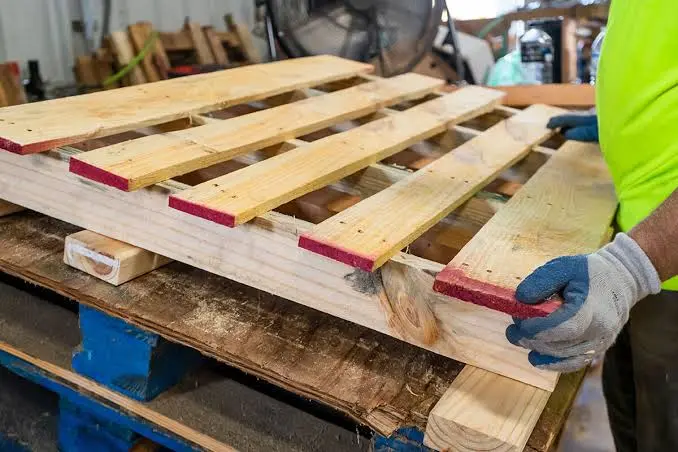
Custom configurations account for variables like deck board spacing, block versus stringer construction, notch placement for forklift access, and surface treatment requirements. Each of these decisions affects how the pallet performs under the specific conditions of your warehouse and transport environment. Getting these details right at the procurement stage reduces downstream losses — fewer damaged goods, fewer pallet failures, and less time spent dealing with product returns or carrier complaints.
Wood Species and Grade Considerations for Pennsylvania Distributors
Pennsylvania has substantial access to hardwood timber, and many regional pallet manufacturers source locally, which gives buyers in the state access to consistent material quality without the variability that can come from long supply chains. Hardwood pallets, particularly those built from oak and mixed hardwood species, offer a density and durability profile well-suited for heavy industrial and food-grade applications.
Wood grade affects both load performance and surface integrity. For operations where pallets come into direct contact with food packaging or pharmaceutical goods, surface quality and moisture content become compliance considerations, not just performance ones. Understanding the grade of lumber going into your pallets — and confirming that your supplier maintains consistent sourcing — is part of responsible procurement, not an optional detail.
How to Evaluate Pallet Suppliers in Pennsylvania
Supplier evaluation for pallet procurement is often approached too narrowly, with price being the dominant filter. Cost matters, but price without context is an unreliable guide. A supplier offering the lowest unit cost while managing inconsistent lumber quality, unreliable delivery windows, or limited capacity for custom work will generate costs elsewhere in your operation that more than offset the initial savings.
Evaluating suppliers effectively means examining their production process, not just their price sheet. A capable pallet manufacturer operating in Pennsylvania should be able to speak directly to their lumber sourcing, their build tolerances, their quality inspection process, and their capacity to scale with your volume requirements. If a supplier cannot answer these questions with specificity, that is relevant information about how they will perform as a long-term partner.
Capacity and Lead Time Reliability
For mid-size distributors, lead time reliability is often more operationally significant than raw lead time. A supplier that consistently delivers in a predictable window allows you to plan inventory and warehouse staffing with confidence. A supplier with a shorter average lead time but frequent delays creates planning problems that are difficult to absorb without buffer stock or emergency sourcing — both of which carry their own costs.
When evaluating a supplier’s lead time reliability, ask specifically about how they handle peak demand periods and volume increases. If a supplier is managing several large accounts alongside yours, understanding their production scheduling priorities gives you a clearer picture of where your orders fall during high-demand periods. This is particularly relevant in Pennsylvania’s industrial corridors, where multiple large manufacturers and distributors are often drawing from the same regional supplier base.
Compliance and Documentation Capability
Certain distribution channels require pallets that meet specific treatment and documentation standards. Operations involved in export shipping, for example, are subject to international phytosanitary regulations — specifically ISPM 15, the international standard for wood packaging material used in global trade — which requires that wood pallets be heat-treated or fumigated and marked accordingly. Distributors operating in cross-border supply chains who source pallets without verifying compliance status risk delays, fines, or rejected shipments at port.
Even for domestic distribution, food-grade and pharmaceutical-adjacent operations often require documentation confirming that pallets meet internal or customer-mandated material standards. Suppliers who can provide batch-level documentation, treatment certification, and material traceability are better positioned to support distributors operating in regulated or compliance-sensitive industries.
Building a Procurement Process That Holds Up Operationally
Many mid-size distributors manage pallet procurement reactively — ordering when stock runs low, using multiple suppliers without a clear primary relationship, and accepting whatever is available when lead times tighten. This approach works until it does not. A more structured procurement process does not require significant administrative overhead. It requires a few deliberate decisions made in advance and a supplier relationship built with enough transparency to support real communication.
The foundation of a functional procurement process is a clear specification document. This should capture your standard pallet dimensions, weight requirements, construction type, any treatment or certification requirements, and your preferred delivery format. Having this document in place makes supplier conversations faster, reduces the risk of incorrect orders, and gives you a reference point when evaluating alternative suppliers or managing quality disputes.
Establishing Volume Agreements Without Overcommitting
For mid-size distributors, volume commitments can be a productive tool for securing pricing and production priority, but they carry risk if your order volumes fluctuate seasonally or in response to customer demand changes. A well-structured volume agreement should include clearly defined minimum order quantities, flexible delivery scheduling, and a defined process for adjusting volume within a specified notice period.
Some Pennsylvania-based pallet suppliers are willing to work with mid-size buyers on rolling forecast arrangements, where you provide a demand projection over a defined horizon without locking in exact order quantities. This approach gives the supplier enough visibility to plan production while preserving your operational flexibility. It also builds the kind of working relationship where the supplier is more likely to prioritize your orders during capacity-constrained periods.
Managing Quality Consistency Over Time
Pallet quality can drift over time even with a supplier you have worked with reliably. Changes in lumber sourcing, production staffing, or equipment maintenance can affect the consistency of finished pallets without those changes being communicated proactively. Building a lightweight incoming inspection process — whether managed internally or through a receiving checklist your warehouse team follows — gives you early visibility into quality shifts before they affect product safety or warehouse efficiency.
When quality issues do arise, having a documented specification and an established supplier relationship makes resolution faster. Disputes over whether a delivered product meets agreed-upon standards are much easier to resolve when both parties are working from the same reference document rather than reconstructing a verbal agreement after the fact.
Regional Sourcing Advantages Specific to Pennsylvania
Pennsylvania’s geographic position and industrial history have created a regional supplier base that is well-suited for mid-size distribution operations. The state’s access to hardwood forests, combined with a long manufacturing tradition, means there are established pallet producers operating at various scales across the region. This gives buyers options that range from smaller specialty producers capable of high-customization, low-volume work to mid-scale manufacturers who can handle consistent volume with good lead time reliability.
Sourcing new custom wood pallets in PA also carries a supply chain resilience argument. Distributors who rely heavily on national suppliers or distant manufacturing sources are exposed to disruptions — fuel price volatility, carrier constraints, national demand spikes — that regional sourcing partially insulates against. This does not eliminate supply risk, but it does reduce the distance and complexity through which that risk travels before it reaches your operation.
Additionally, working with regional suppliers often enables site visits, which remain one of the most effective ways to evaluate production quality and supplier capability. The ability to walk a production floor, review material storage practices, and speak directly with production management is a due diligence step that is difficult to replicate through documentation alone.
Closing Thoughts on Custom Pallet Sourcing for PA Distributors
Pallet procurement occupies a quiet but consequential role in distribution operations. It does not generate revenue, and it rarely receives attention until something fails. But the decisions made during sourcing — about specification, supplier selection, volume structure, and compliance — directly affect the reliability and cost efficiency of the operation those pallets support.
For mid-size distributors in Pennsylvania, the combination of regional supplier access, material quality, and geographic proximity creates a sourcing environment that rewards structured engagement. The distributors who get the most from that environment are the ones who approach procurement as a process rather than a transaction — building supplier relationships, maintaining clear specifications, and managing quality actively rather than reactively.
Investing that level of attention into a procurement category that often goes unmanaged is not complicated. It is deliberate. And for operations where consistency and reliability are competitive requirements, that deliberateness tends to compound positively over time.