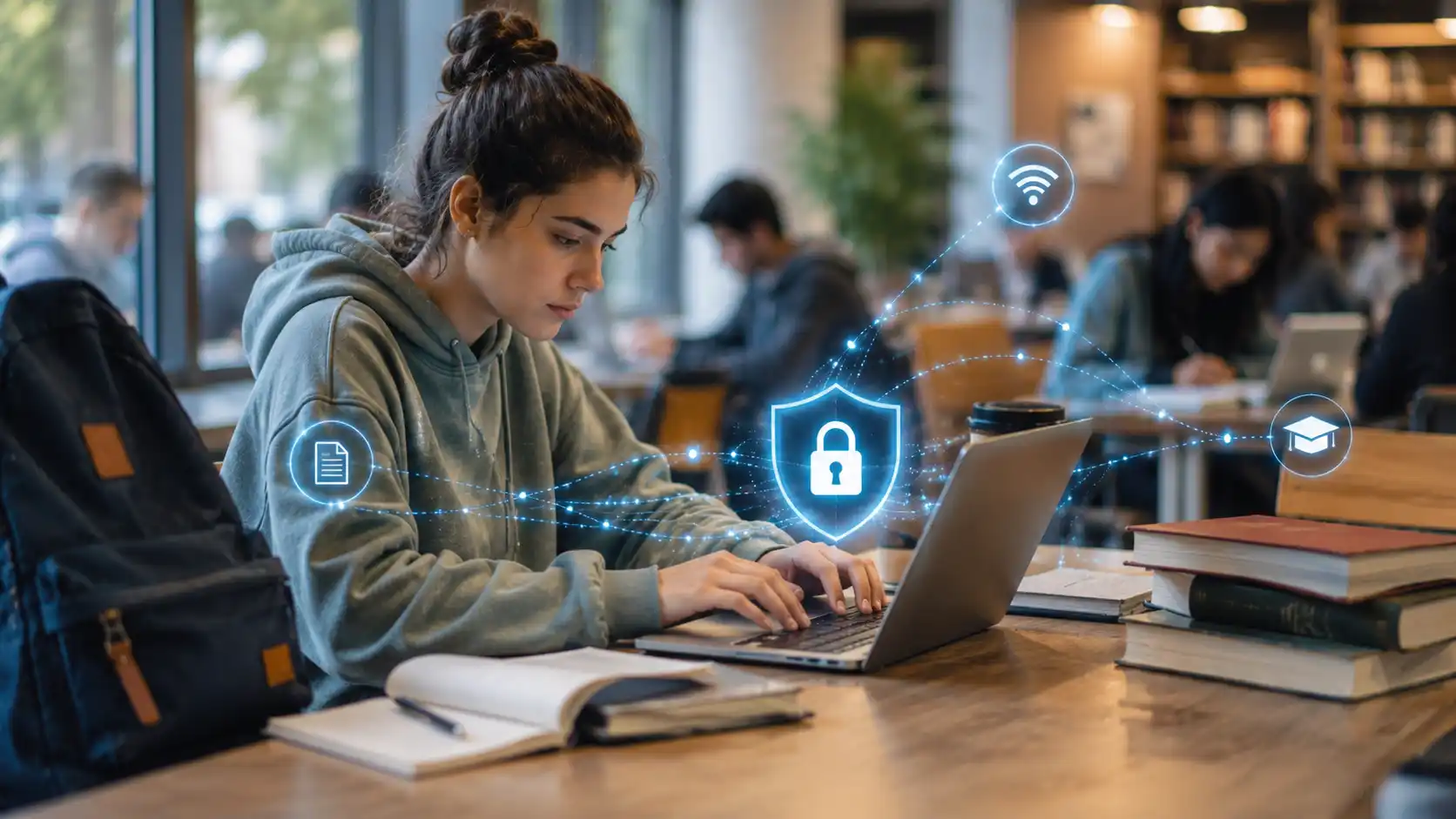
A typical week at university now runs almost entirely through a screen. Lecture notes, reading lists, library databases, group projects, submission portals, and the endless logins that tie them together. Add the cafés, halls of residence, and library Wi-Fi networks students hop between every day, and you have a person who spends enormous amounts of time online — usually without much thought about how exposed that makes them.
That combination of heavy online activity and light security habits is precisely what attackers look for, and the education sector has become one of their favourite hunting grounds.
Universities Are Under Sustained Attack
This is not alarmism. The UK government’s Cyber Security Breaches Survey 2025 found that further and higher education institutions reported the highest rates of incidents of any sector, with around 97 percent reporting phishing attacks and the overwhelming majority of universities experiencing a breach or attack within the previous twelve months. Ransomware against colleges and universities climbed sharply through 2025, with average ransom demands running into the hundreds of thousands of dollars.
Students are not bystanders in this. Many of these intrusions begin with a single phishing email impersonating a campus service — a fake “your library account is expiring” or “re-enrol now” message — designed to harvest the login credentials that open the door to far more. In a community of thousands of users, attackers only need one person to click.
Where Students Get Caught Out
A few exposure points come up again and again, and none of them require bad luck — just routine behaviour.
The first is the credential itself. A university login often unlocks email, cloud storage, personal records, and academic systems all at once, which makes it unusually valuable. Reusing that password elsewhere, or handing it to a convincing fake page, has outsized consequences.
The second is the network. Doing research on open café or shared accommodation Wi-Fi means your traffic crosses a connection you do not control. The standard advice from university IT teams is blunt: avoid unsecured Wi-Fi when logging into institutional systems, or protect the connection if you must.
A Realistic Security Setup for Student Life
The good news is that the fixes fit a student budget and schedule.
Turn on multi-factor authentication for your university account first — it is usually the single most valuable thing you can do, because it stops a stolen password from being enough on its own. Learn what a campus phishing email actually looks like, and treat any message creating urgency about your account with suspicion. Keep your devices updated.
For the laptop that does most of the heavy lifting, connection-level protection matters on networks you cannot vouch for. Most students work on Windows machines, and installing X-VPN for Windows from the Microsoft Store is one way to encrypt traffic before logging into library systems or submitting work from a shared network — so that even on dodgy café Wi-Fi, your session is wrapped in encryption rather than sitting in the open.
Studying Abroad and Accessing What You’re Entitled To
Student life increasingly crosses borders — exchange terms, placements, research trips, or simply heading home for the holidays. Suddenly the services and content you rely on may behave differently because they read your new location from your IP address. Connecting through a server back in your usual region can let you access content through a VPN server the same way you would at your desk on campus, whether that is a regional academic resource or a service you already pay for.
One sensible caveat: this is about reaching what you are genuinely entitled to use, not circumventing rules. University networks and many platforms have acceptable-use policies, and breaching those can carry consequences even when the underlying action is legal. Stay on the right side of them.
Security Is Part of Being a Student Now
Nobody chooses university for the cybersecurity training, and most students will never think about any of this until something goes wrong. But the habits are small, and they map neatly onto a life that is already lived online: protect the login that unlocks everything, be wary of messages that rush you, and encrypt the connection when the network is not yours. Get those three right, and you have removed most of the realistic risk — leaving you free to worry about deadlines instead.