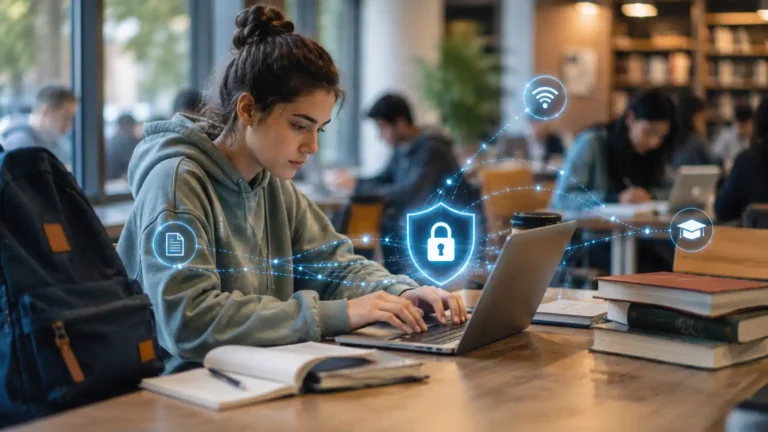
Education has evolved from the structured, traditional classroom model of twenty years ago. With the rise of learning in diverse environments like living rooms and coffee shops, students are developing greater self-management skills. Without constant teacher oversight, they learn to stay on task, find answers independently, and work through challenging material on their own.
The Rise of Virtual Learning: More Than Just a Trend
A few years ago, plenty of people assumed online education was a temporary fix. A stopgap. Something we’d abandon the moment things returned to “normal.” That prediction aged poorly.
Families kept choosing virtual options even after traditional doors reopened. Why? Flexibility, for one. A student who learns best at 9 p.m. shouldn’t be forced to absorb algebra at 7:30 a.m. Athletes, performers, and students with health needs found that remote learning bent around their lives instead of the other way around.
But the real surprise was what happened to the students themselves. Without a teacher hovering over every assignment, many of them grew up a little faster—in the best possible way.
Cultivating Self-Discipline and Time Management
Here’s the hard truth about learning from home: nobody is going to chase you down. There’s no hall monitor, no buzzer, no neighbor’s eyes on your half-finished worksheet. The responsibility lands squarely on the student.
Students who learn remotely quickly discover that their day is theirs to shape. They start mapping out when to tackle the hard subjects and when to take a breather. Some block out their mornings for math because that’s when their brain is sharpest. Others save creative writing for the afternoon. Over time, these small decisions add up to a real skill: knowing how you work best.
A few habits tend to separate the thriving students from the struggling ones:
- Setting a daily schedule and actually sticking to it
- Breaking big projects into smaller, less terrifying chunks
- Using a planner or app to track deadlines instead of relying on memory
- Building in real breaks to avoid burnout
None of these come naturally at first. But once they click, they don’t just help with schoolwork. They show up later in college, in jobs, and in life.
Navigating Resources: Becoming a Self-Sufficient Learner
In a traditional classroom, the answer is usually four feet away. Confused? Raise your hand. The teacher fills the gap almost instantly.
Remote learning changes that rhythm. When a student hits a wall, the first move is often to dig for the answer themselves. They reread the lesson. They search for a video that explains it differently. They check the study resources provided in their course before pinging an instructor.
This isn’t about leaving kids stranded. Good programs make sure help is always within reach. But the small habit of trying first—of treating a problem as something you can solve rather than something you wait to be solved for you—builds genuine confidence. Students stop seeing themselves as passengers. They become drivers.
Fostering Critical Thinking and Problem-Solving Skills
When you have to teach yourself something, you can’t just memorize and move on. You have to actually understand it.
That’s the quiet magic of independent study. A student working through a science unit alone has to ask: Does this make sense? How does it connect to what I learned last week? What happens if I apply this idea somewhere else? Those questions are the building blocks of critical thinking.
Virtual learning also tends to throw students into projects that don’t have a single tidy answer. Research assignments, open-ended discussions, and real-world case studies push them to weigh evidence and form their own opinions. They learn to defend a position, spot weak arguments, and change their minds when the facts demand it. These are not small things. They’re the difference between a student who repeats information and one who actually thinks.
The Role of Technology in Empowering Independent Study
Technology is the engine behind all of this. And not in a flashy, gimmicky way—in a genuinely useful one.
Learning platforms let students revisit a recorded lecture as many times as they need. Interactive quizzes give instant feedback, so a student knows right away whether they’ve got it. Discussion boards connect classmates who might live three counties apart. A student exploring an online high school in Utah, for instance, can collaborate with peers, message a teacher, and submit a finished essay without ever leaving the kitchen table.
What makes this powerful is control. Students decide when to pause, rewind, or speed ahead. A kid who grasps fractions quickly doesn’t have to wait for the rest of the class. A kid who needs three passes through a chemistry lesson can take them—no embarrassment, no pressure. Technology hands the pace back to the learner, and that ownership fuels independence.
Overcoming Challenges: Strategies for Success in Virtual Environments
Let’s be honest, though. Learning from home isn’t all smooth sailing. Distractions are everywhere. The fridge is twelve steps away. Loneliness can creep in. And without a bell to mark the day, motivation sometimes sputters.
- Carve out a dedicated workspace. A consistent spot signals to your brain that it’s time to focus. The couch rarely cuts it.
- Stay connected. Join virtual study groups, attend live sessions, and lean on teacher support when you need it. Isolation fades fast when you build relationships.
- Set small, clear goals. Finishing one chapter feels far more achievable than “doing all my homework.”
- Move your body. A short walk between subjects resets your focus better than another hour of grinding.
The students who succeed aren’t the ones who never struggle. They’re the ones who notice when something isn’t working and adjust.
Preparing Students for a Future of Lifelong Learning
The job market our kids will enter rewards people who can teach themselves new things. Careers shift. Tools change. The person who can pick up a fresh skill without hand-holding will always have an edge.
That’s the deeper payoff here. Beyond the algebra and the essays, students learning remotely are practicing how to learn—how to manage their time, find their own answers, and think for themselves. Those muscles don’t fade after graduation. They carry students into college, into the workforce, and into whatever comes next.
If you’re a parent weighing your options, look past the convenience for a moment. Ask yourself what kind of learner you want your child to become. The independence built today might be the thing that serves them most a decade from now.
Conclusion
Now that you have a better understanding of the benefits of remote learning, it’s important to recognize that this approach is not without its challenges. Just like with any form of learning, there will be obstacles and difficulties along the way. However, by embracing remote learning and all that it has to offer, students can gain valuable skills and experiences that will benefit them throughout their education and beyond.