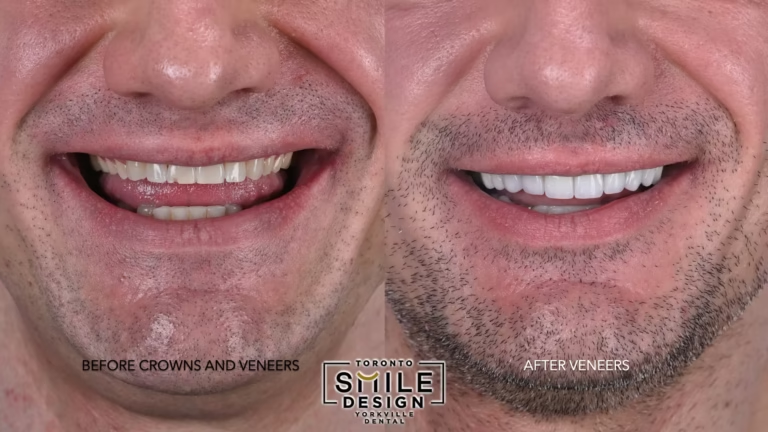
You might be feeling caught in the middle right now. Maybe a tooth has cracked, an old filling has darkened, or you have a few new cavities and you are worried that every solution from a dentist in Hoffman Estates, IL will either look obvious or cost more than you can manage. You want to fix the problem so you can chew comfortably and protect your health, yet you also want to feel confident when you smile or speak. It can feel like you are being forced to choose between strength and beauty.end
That tension is very real. Modern general dentistry exists right in that space, where teeth must work properly every day and still look natural and calm in your mouth. The short version is this. A good general dentist is always balancing three things at once. How well your teeth function. How long the treatment will last. How natural and attractive the result will look, based on your goals and your budget. You are not supposed to know all the material options or clinical details. You just need someone who can translate them into clear choices that fit your life.
Why does fixing a tooth feel like such a hard decision?
It often starts with something small. A bit of sensitivity when you drink cold water. A dark line around an old filling. A chip on a front tooth that nobody else notices, but you see it every time you look in the mirror. Because of this, you might find yourself asking a simple question. Can this be repaired in a way that both works and looks like a normal tooth, or will it always be obvious that I had dental work done?
The stress builds because you are juggling several worries at once. If you choose the strongest material, will it look gray or too opaque. If you choose the most natural looking option, will it chip or stain. If you try to save money now, will you pay more later to redo the work. It is not only about teeth. It is about your appearance at work, your comfort when you eat, and your sense of control over your health.
Modern general dental care for function and aesthetics is designed around these exact questions. For example, a back molar with a cavity might be restored with a tooth colored resin, a traditional metal filling, or a porcelain onlay. Each option has its own balance of strength, appearance, and cost. A front tooth chip could be repaired with bonding in one visit or with a custom veneer that takes more time and money but may offer a more stable color match. None of these choices are “right” in isolation. They only make sense in the context of your mouth, your habits, and your priorities.
So what exactly is your dentist balancing?
Think of your general dentist as constantly working with three dials. Function, aesthetics, and longevity. Those dials move depending on your needs. Here is how that plays out in real life.
On the functional side, the goal is that you can chew comfortably, speak clearly, and avoid new problems. A filling that looks beautiful but cracks under normal chewing is not a success. On the other hand, a crown that is extremely strong but feels bulky or changes your bite can create jaw pain or headaches. Function always has to be respected.
On the aesthetic side, modern materials give many more choices than in the past. Tooth colored composites and ceramics can be carefully matched to your natural shade and translucency. The American Dental Association describes different materials for direct restorations, such as composite resins and glass ionomers, and how they are used in everyday dentistry. You can read more about these options in the ADA’s overview of materials for tooth colored fillings and restorations.
Then there is longevity and maintenance. The Food and Drug Administration notes that there are several treatment options for cavities, from silver colored amalgam to resins and ceramics, each with its own expected service life and care needs. If you are curious about how these choices compare from a safety and durability perspective, you can review the FDA’s explanation of treatment options for dental caries.
So where does that leave you. It leaves you needing a clear, simple way to compare what you gain and what you trade off with each choice, instead of feeling pushed toward whatever is most expensive or most familiar.
How do different options compare for strength and appearance?
To make this more concrete, imagine you need a filling on a back tooth. Here is how some common choices often compare. This is a general guide, not a personal recommendation, yet it can help you frame your questions.
| Option | Function (Chewing Strength) | Aesthetic Outcome | Typical Use |
| Tooth colored composite filling | Good for small to medium cavities. Bonds to tooth. | Blends with natural tooth color. Can stain over time. | Front and back teeth where appearance matters. |
| Silver colored amalgam filling | Very strong for heavy chewing areas. | Visible metallic color. Does not match tooth. | Back molars where strength is the top priority. |
| Ceramic or porcelain onlay / inlay | Strong and wear resistant when bonded properly. | Excellent match to natural teeth. Resists staining. | Larger restorations where both strength and looks matter. |
| Full coverage crown | High strength. Protects tooth structure. | Metal, porcelain fused to metal, or all ceramic. Aesthetics vary by type. | Badly broken or root canal treated teeth. |
Seeing the options side by side can ease some of the anxiety. You can start to say, “For this tooth, function is my top concern” or “For this front tooth, appearance really matters to me” and let your dentist adjust the plan. That is how cosmetic focused general dentistry quietly happens in everyday care, without turning every visit into a makeover project.
What can you do right now to protect both function and appearance?
There are a few practical moves you can make right away that support both the health and the look of your teeth, without needing to know every clinical detail.
1. Be clear about what matters most to you at the appointment
Before your visit, take a moment to list your concerns. For example, “I want to avoid future pain,” “I am worried about how this will look when I smile,” or “I need to watch my budget this year.” Share these openly with your dentist at the start of the visit. When your priorities are on the table, it becomes much easier for the dentist to explain which treatments best balance function and aesthetics for your situation.
2. Ask for at least two treatment paths with pros and cons
If you feel stuck between choices, ask your dentist to outline a primary plan and a backup plan. For each option, ask three questions. How long is this expected to last with normal care. How natural will it look in my mouth. What kind of maintenance or replacement might I need in the future. You are not being difficult. You are simply making sure that your general dentistry treatment supports both your daily comfort and your confidence.
3. Protect your dental work with simple daily habits
The best materials in the world will not stand a chance if they are exposed to constant grinding, sugar, or neglect. Small habits protect both function and appearance. Use a soft toothbrush and fluoride toothpaste twice a day. Floss gently to keep the edges of fillings and crowns clean. If you clench or grind, talk with your dentist about a night guard. Avoid constantly chewing ice or hard candies. These simple steps can add years to the life of your restorations and keep them looking more natural.
Moving forward with more confidence and less fear
Needing dental work is rarely something anyone looks forward to. It can stir up old fears, financial worries, and self consciousness about your smile. You are not alone in that. Many people sit in the chair thinking they have to choose between a strong solution that looks obvious or a pretty solution that feels fragile.
The truth is that modern general dentist care is built around avoiding that forced choice whenever possible. By being honest about what matters most to you, asking clear questions, and taking simple steps at home, you give your dentist the information they need to design treatment that respects both how your teeth work and how your smile looks.
You deserve to chew without worry and smile without second guessing. The next step is simply a conversation with a dentist you trust, where your comfort, your appearance, and your budget are all part of the same thoughtful plan.