You might be staring at your teeth in the mirror, noticing little things that never used to bother you. A dark edge on one front tooth. A chip from years ago that now feels bigger. Gaps that make you hide your smile in photos. A dentist in Lodi, CA can help you address these concerns. You may not want a full mouth makeover, but you do want to feel at ease when you smile, talk, or laugh.
Because of this tension, you might wonder if veneers are the quiet, subtle answer you have been looking for, or if they are too aggressive, too expensive, or too “fake looking.” You might have heard success stories, but also horror stories about teeth being shaved down or veneers popping off at the worst possible time.
Here is the simple truth. Veneers are a tool in cosmetic smile design. Used thoughtfully, they can transform how your smile looks and how you feel about it, without changing who you are. Used carelessly, they can cause stress, extra cost, and regret. This guide walks you through what veneers can do, where they fit among other options, and how to decide whether they belong in your own Family And Cosmetic And Implant Dentistry plan.
What exactly are veneers and how do they change a smile?
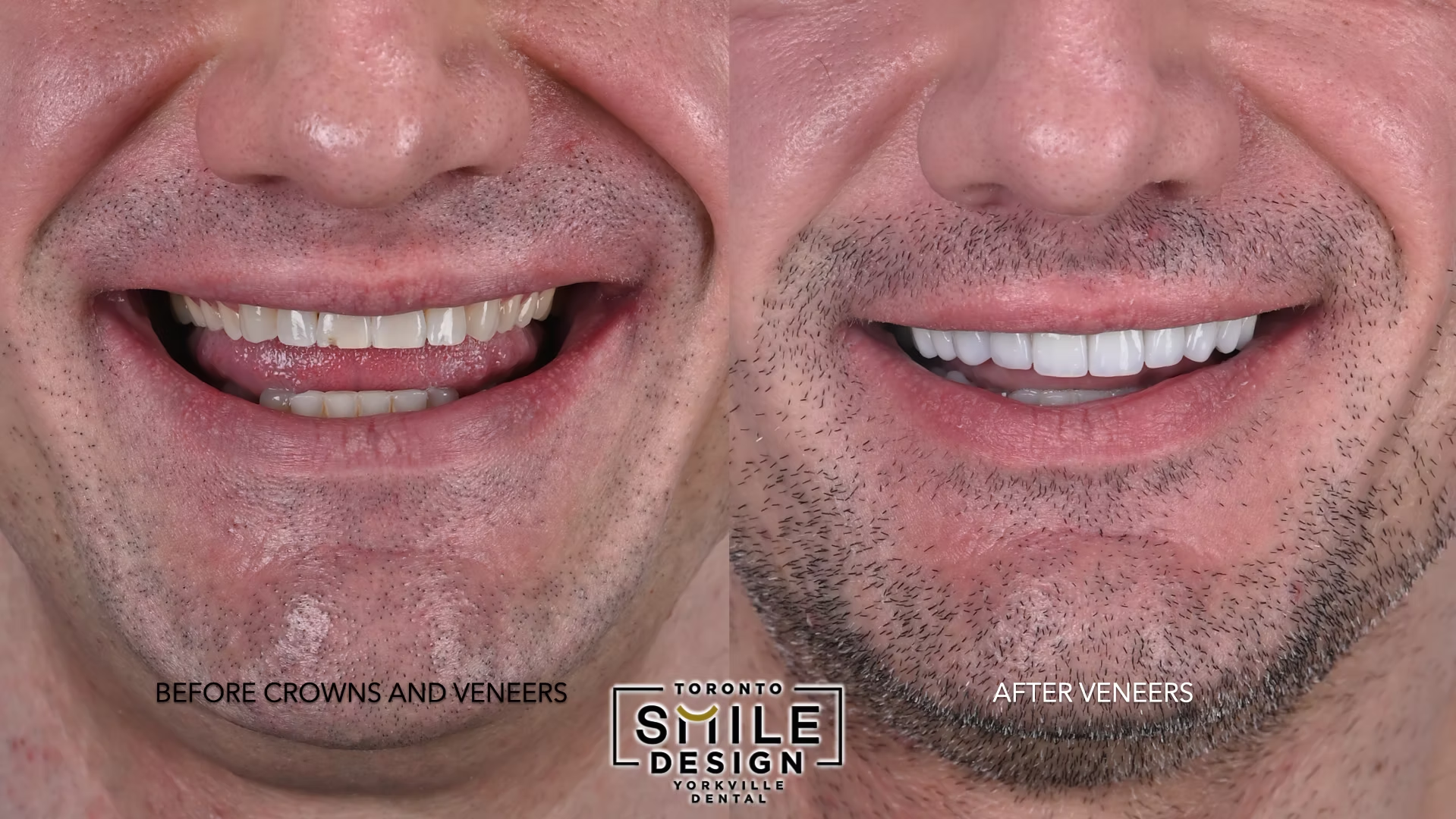
To feel calm about a decision, you first need to understand what you are saying yes to. Veneers are thin shells of porcelain or composite that your dentist bonds to the front surface of your teeth. Think of them as a new “face” for the tooth that can change color, shape, size, and even the way light reflects from your smile.
According to the American Dental Association’s patient resource, veneers are typically used to improve teeth that are discolored, worn down, chipped, or misaligned. They are not a cure-all. They are one option among whitening, bonding, orthodontics, crowns, and sometimes no treatment at all.
So where does that leave you? It helps to picture real situations. For example, someone with minor crowding and deep staining might choose porcelain veneers on the front six teeth. Another person with one dark tooth from an old injury might do a single veneer to match the rest of the smile. A third person who grinds their teeth at night may be steered away from veneers entirely, or asked to wear a night guard to protect them.
Why does the decision feel so emotional and stressful?
Cosmetic dentistry is never just about teeth. It is about self image, confidence, and sometimes old stories you carry from childhood. Maybe someone once teased you about your teeth, and you have been “half smiling” ever since. So when you hear the phrase cosmetic smile makeover, it can stir up excitement and fear at the same time.
There is also the financial side. Veneers are usually a significant investment and often not fully covered by insurance because they are considered cosmetic. You might worry about spending money and still not liking the result, or needing to replace them sooner than you expected. That is a reasonable concern. Veneers are long lasting, but they are not permanent. They often need replacement after 10 to 15 years, sometimes sooner if they are not cared for or if your bite changes.
On top of that, you may have heard that teeth must be shaved down. The truth is nuanced. Some cases need very little enamel removal. Others require more, especially if the tooth is crowded, rotated, or sticks out. Once enamel is removed, you will always need some type of restoration on that tooth. That is why veneers should never feel like a quick, casual choice.
Because of all this, you might feel stuck between “I really want to love my smile” and “I am afraid of making a mistake.” That is exactly where a thoughtful cosmetic dentist’s role begins, not with a hard sell, but with careful planning and realistic options.
How do veneers compare to other cosmetic options?
To make a clear decision, it helps to see veneers next to other common choices. Each tool in cosmetic smile design has its own strengths and limits. No single option is right for everyone.
| Treatment | What it helps with | Tooth removal needed | Longevity (typical) | Cost level | Best suited for |
| Whitening | Surface and some deep stains | None | Months to a few years with touch ups | $ | Healthy, well shaped teeth that are just discolored |
| Composite bonding | Small chips, minor gaps, slight shape changes | Usually none or very minimal | 3 to 7 years | $$ | Localized issues on otherwise good teeth |
| Porcelain veneers | Color, shape, moderate alignment, worn edges | Small amount of enamel in most cases | 10 to 15 years, sometimes longer | $$$ | Multiple front teeth with cosmetic concerns |
| Orthodontics (braces or aligners) | Crowding, spacing, bite problems | None | Long term with retainers | $$$ | Teeth that are healthy but misaligned |
| Full crowns | Badly broken, heavily filled, or root canal treated teeth | More tooth reduction than veneers | 10 to 15 years, sometimes longer | $$$ | Teeth that need strength as well as cosmetic change |
Looking at this, you can see that veneers sit between simple cosmetic touch ups and full coverage restorations. They shine when you want a visible change in color and shape on several front teeth, and when those teeth are strong enough to support them.
Research also continues to show that oral health strongly affects overall health, including heart and brain health. The University of Rochester, for example, discusses how oral bacteria are linked with systemic problems such as heart disease and even dementia in this overview of mouth body connections. While veneers themselves are cosmetic, the planning around them must respect your gum health, bite, and long term function.
What should you think about before saying yes to veneers?
Before you commit, slow the process down in your mind. Ask yourself and your dentist some grounding questions.
What is my real goal? Is it to have whiter teeth in general, or to change the shape and alignment I have never liked? Am I trying to fix a single tooth or redesign my entire smile line?
How healthy are my gums and supporting bone? If there is active gum disease, that has to be treated first. Otherwise, the edge of the veneer can end up in an unhealthy environment, which shortens its lifespan and can lead to sensitivity or bleeding gums.
What is my bite like? People who clench or grind, or who have a deep overbite, need more protection and planning. Veneers in a stressed bite may chip or debond. Often, a night guard becomes part of the long term plan.
How will this choice feel in 10 years? Veneers are a commitment. Once placed, they will eventually need to be replaced. Thinking in that time frame can help you decide whether they fit your priorities and budget as part of your overall family and cosmetic care.
Three practical steps you can take right now
1. Get a thorough smile and health evaluation, not just a quick “cosmetic quote.”
Ask for a complete exam that looks at your teeth, gums, bite, and jaw joints. High quality photos and, when appropriate, digital scans help you and your dentist see the same “before” picture. Share what you like about your smile as well as what you do not. A good treatment plan for cosmetic dentistry starts with protecting your health first, then layering in cosmetic options that fit that foundation.
2. Ask to preview your new smile before anything permanent.
Many dentists can offer a mock up. This might be digital imaging, temporary material placed on your teeth, or a trial set of provisional veneers. The goal is not perfection, but a realistic preview of shape, length, and general look. This step reduces anxiety because you are not walking in blind. It also gives you space to say, “That tooth looks a little long” or “I want a more natural shade.”
3. Clarify maintenance, costs, and “what if” scenarios up front.
Ask clear questions. How long do your veneers typically last for patients like me. What habits could shorten that time. What happens if one veneer chips. What is covered by any warranty and what is not. How will whitening work for my other teeth in the future so my smile stays blended. Honest answers to these questions help you decide whether veneers fit your long term plan for Family And Cosmetic And Implant Dentistry, rather than feeling like a one time cosmetic splurge.
Where do you go from here with your smile?
If you feel both hopeful and cautious, that is a healthy place to be. Veneers can be a powerful part of cosmetic smile design, especially when they are planned around your bite, your gum health, and your personality, not just a shade tab.
You do not need to decide everything today. Your next step is simply to have an open, detailed conversation with a dentist you trust. Bring your questions. Bring your worries. A thoughtful plan will always move at the pace of your comfort and your health.
Your smile does not have to be perfect to be worth showing. It just has to feel like you. Veneers are one possible path to that feeling, and you deserve clear, calm guidance as you decide whether that path is right for you.