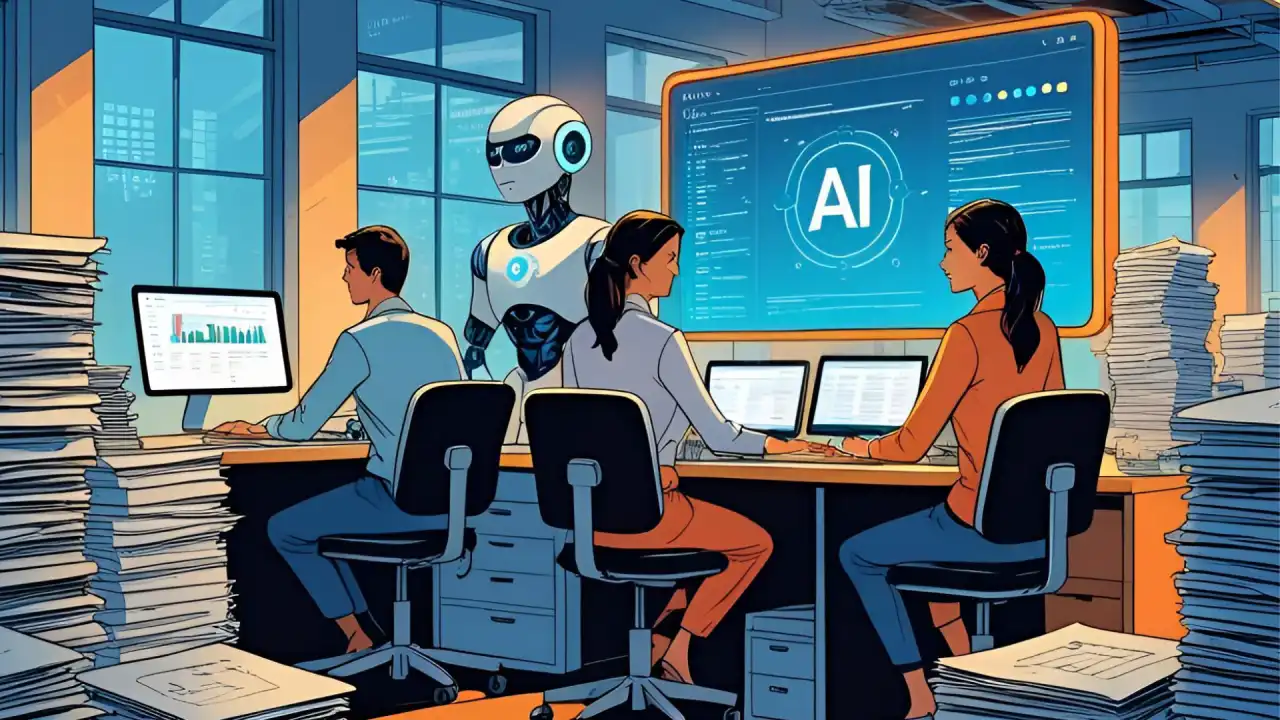
You might be feeling a quiet pressure building around you. Clients expect faster answers, regulators expect flawless compliance, and everywhere you turn someone is talking about artificial intelligence or automation. You may be wondering what this means for you as a Certified Public Accountant at Westwood CPA, and whether the profession you know is shifting under your feet.
That unease is understandable. The work has already changed. Cloud platforms, data feeds, and electronic records are now the norm, and the pace of change feels relentless. At the same time, you probably sense that technology could remove some of the grind and free you to focus on judgment, strategy, and relationships. The tension between fear and opportunity is very real.
So where does that leave you. In simple terms, the future of technology in certified public accounting is not about replacing you. It is about reshaping what your time is worth. Routine tasks are being automated. Risk and advisory work are gaining importance. Strong CPAs will not be those who fight the tools, but those who learn to guide them and use them to serve clients better, with more insight and less burnout.
Is technology really changing what it means to be a CPA?
The short answer is yes, and you can already see it. Traditional compliance work is being transformed by automation. Bank feeds import transactions directly. Optical character recognition reads invoices. Workflow tools assign and track tasks. What once took hours can now be done in minutes, which sounds like a blessing until you start wondering what happens to the billable hours that used to live there.
This is where the discomfort grows. If software can sort transactions or prepare a basic return, where do you fit. You might worry that fees will be squeezed, that clients will assume software is “good enough,” or that younger staff will not learn the fundamentals because the system does so much for them. Those are not imaginary risks. They are already affecting pricing models and staffing plans in many firms.
At the same time, clients are facing their own wave of complexity. Cybersecurity threats, remote work, new reporting standards, and fast changing tax rules are all colliding. Boards and owners are asking harder questions about controls, data integrity, and long term planning. A recent discussion of IT governance trends for CPAs highlights how frequently financial reporting now overlaps with technology risk and data oversight. That is territory where software cannot stand in for human judgment.
Because of this tension, the role of the CPA is drifting away from “producer of reports” and toward “trusted interpreter of information.” In this sense, the future of CPA technology is less about tools and more about the new questions clients will bring to you. Can they rely on the numbers. Are the controls sound. What does the data say about where the business is heading. Technology creates more information, but it also creates a stronger need for someone who can test it, explain it, and connect it to real decisions.
What are the biggest technology challenges for CPAs right now?
To move from worry to action, it helps to name the specific challenges you are facing. They tend to fall into a few common themes.
First, there is the emotional strain of constant change. New software, new standards, new security protocols. It can feel like every system update steals time from client service and staff development. You may feel behind before you even start busy season.
Second, there is financial uncertainty. Investing in practice management tools, audit data analytics, or AI based systems is expensive. You may not be sure which platforms will last, what training will cost, or how quickly you will see a return. A recent AI in accounting report points out that many firms underestimate the time needed to redesign processes around new tools. It is not just software spend. It is the hidden cost of change.
Third, there is real professional risk. Poor data security, weak IT governance, or an overreliance on automated outputs can expose you to reputational damage or even liability. If a client’s system is compromised or an algorithm misclassifies a key transaction, you may be the one they call first. This is why technology skills are no longer “extra.” They are part of protecting your license and your clients’ trust.
So how do you move forward without feeling overwhelmed. One way is to look at technology not as an all or nothing decision, but as a series of choices about where you want to create value as a CPA, and what you are willing to let machines do for you.
How does tech-driven accounting compare to traditional practice?
The comparison below can help you see the tradeoffs more clearly and decide where you want your practice or career to sit along this spectrum of technology in public accounting.
| Area | Traditional CPA Practice | Tech-Forward CPA Practice |
| Core Work | Manual data entry, periodic reporting, reactive compliance | Automated data capture, continuous reporting, proactive analysis |
| Client Expectations | Annual or quarterly touchpoints, static reports | Frequent check ins, dashboards, scenario planning |
| Staff Development | Learning by doing manual work, gradual exposure to analysis | Learning systems and controls early, quicker move into advisory |
| Risk Profile | Lower tech risk, higher risk of human error and delay | Higher tech and cybersecurity risk, lower risk of basic errors |
| Profit Model | Billable hours tied to manual tasks | Value based fees tied to insight, automation handling routine work |
| Client Relationship | Viewed as compliance provider | Viewed as strategic advisor and guide |
You do not need to be at the far right side of this table tomorrow. What matters is that you move deliberately, rather than being pulled along by whatever tool a client or vendor hands you.
What practical steps can you take right now?
Change feels more manageable when you know exactly what to do next. Here are three concrete moves you can start with, whether you are in a firm or in corporate accounting considering how to work with outside CPAs.
1. Map your work into “human judgment” and “automation ready” buckets
Take a typical engagement or month end process and list the steps. Mark which require judgment, context, or conversation with the client. Mark which are rules based, repetitive, and data heavy. This simple exercise shows you where technology can safely take over and where your expertise must remain at the center.
For example, importing transactions, reconciling bank statements, and sending standard reminders are often automation ready. Assessing going concern, interpreting unusual variances, or advising on entity structure clearly sit in the human judgment bucket. Aim to gradually shift time away from the second list and invest it in the first.
2. Build a small, focused tech learning habit
You do not need to become a programmer. You do need enough fluency to ask good questions about how systems work, what data they use, and where they can go wrong. Choose one area that aligns with your work. It might be data analytics in audit, workflow tools in tax, or security basics for client accounting services.
Commit to a modest but consistent habit. For instance, spend thirty minutes each week exploring features in a tool you already own or reviewing a short training. The goal is not to master every platform. It is to become confident enough that technology feels like a set of options, not a threat.
3. Reposition yourself with clients as a guide, not a technician
As routine accounting work becomes more automated, clients will look to you less for raw output and more for interpretation. You can start reinforcing that today, even with the tools you already use. When you send a report, add a short explanation of what the numbers mean and what you recommend. When a client asks about a new app, talk first about controls, data quality, and process, not just features.
Use language that highlights your role as a thinking partner. For example, “Here is what this trend could mean for your cash flow over the next six months” or “If we adopt this system, here are the controls we need so you can rely on the numbers.” This shifts the focus from the software itself to the value of your judgment as a Certified Public Accountant.
Where does this leave you as a CPA?
The profession is changing, and it is normal to feel both curiosity and concern. You do not need to predict every technological advance. You do need to stay grounded in what has always made CPAs essential. Integrity. Independence. Clear thinking. The tools will evolve around you, but those core qualities are what clients and employers are really buying.
If you focus on learning just enough technology to protect data, question outputs, and harness automation, you can spend more of your energy on work that truly needs a human mind. That is where the strongest careers and the most resilient firms are heading. The future of technology in certified public accounting is not about making you less important. It is about giving you the chance to practice at a higher level, with more clarity and more impact.