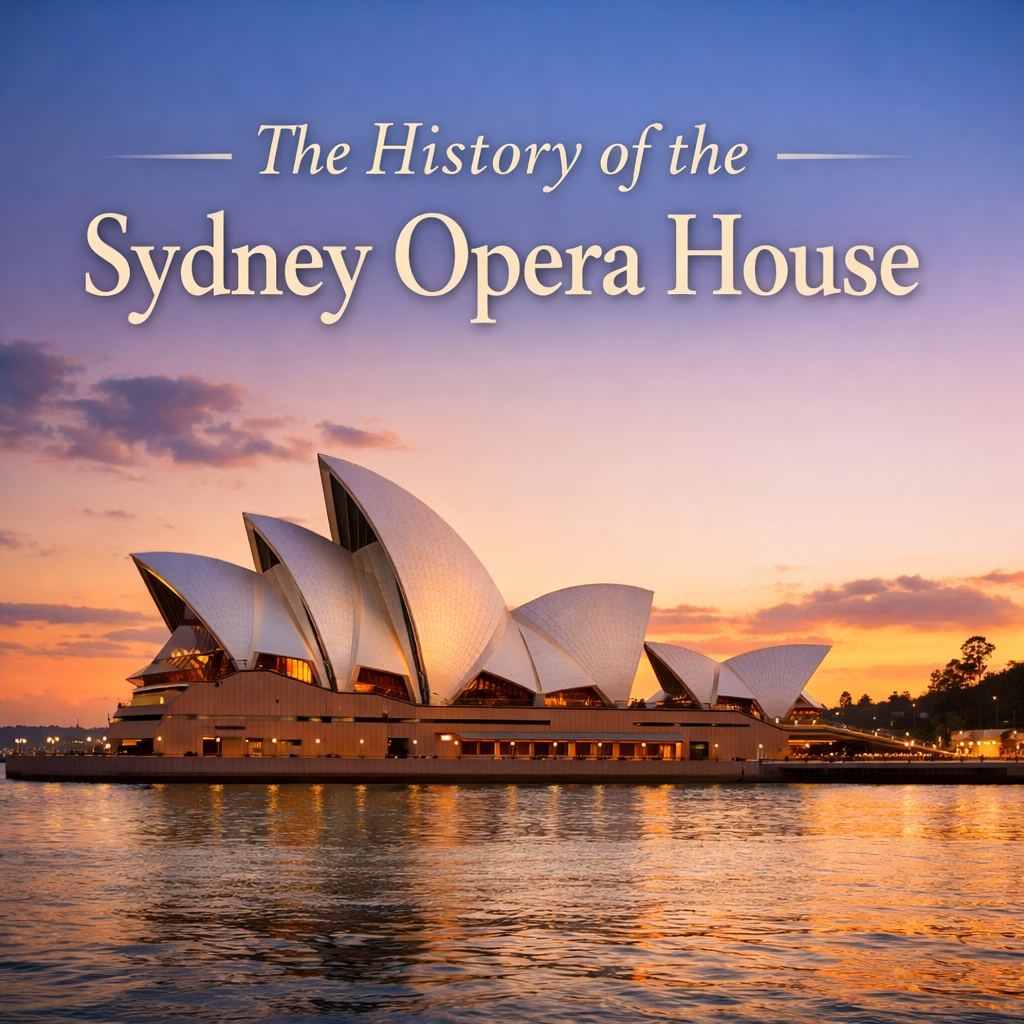
The Sydney Opera House stands as one of the most recognisable landmarks in the world, admired for its striking white sail-shaped roofs and its place as a centre for music, theatre, and performance. Its history is a story of ambition, creativity, and engineering ingenuity. While the idea for building a performing venue on Bennelong Point had been discussed for decades, it wasn’t until the 1950s that the planning had actually begun. So with that being said, BoyleSports, the home of 49’s, will be taking a look at one of the most iconic buildings on the planet and understanding how the Sydney Opera House became what it is today.
Lottery Funding Built the Dream
In the 1950s, the progress to the Sydney Opera House was supported by a mix of public funds and government planning, including the New South Wales lottery, which helped to contribute during its early stages. The fund provided helped to move the bold ideas that were discussed into action, especially when it came to the actual planning stages and promotion. While the lottery was never the main source of finance, it reflected public involvement in the project and helped maintain momentum at a time when the building was still only a proposal.
Global Design Competition
Choosing to launch an international design competition proved to be an important moment in the project’s development. Architects from around the world began to respond, showcasing already what would be a massive interest in the new building. Jørn Utzon’s design is regarded as the submission that was selected, prioritising the environment, something that would’ve been way ahead of its time. Although the design was initially considered ambitious and uncertain, architectural studies later highlighted the competition as evidence that welcoming new ideas can result in enduring cultural landmarks.
Construction Begins
Construction began in 1959 on Bennelong Point, a site that required significant preparation before building could properly start. Engineers had to stabilise the ground and design foundations capable of supporting the unusual roof forms. Progress was slow and often complex, but the project encouraged collaboration between architects, engineers, and builders. Studies of major construction projects frequently refer to this phase as an example of learning through experimentation rather than following established methods.
Innovative Engineering
The roof shells came to define the appearance of the Opera House, although they also proved to be the most challenging part of the construction. After several years of testing and refinement, Utzon developed a method based on repeating sections from a single sphere, which allowed the complex curves to be formed accurately. This solution made it possible to complete the structure while preserving the strength and visual character of the original design. Engineering case studies continue to reference this solution as a breakthrough in combining creative design with practical building techniques.
Funding Challenges
As the building work moved forward, costs rose far above what had first been expected, prompting concern from both government figures and the wider public. The original budget was no longer sufficient given the complexity of the design and the technical difficulties encountered during construction. Funding arrangements were reviewed a number of times, with continued government support remaining essential to keeping the project on track. Public infrastructure studies often refer to this period to show why large projects need adaptable planning and open communication over time.
Completion and Official Opening
The Opera House was officially opened in October 1973 by Queen Elizabeth II, marking the end of a long and often difficult journey. By that point, the building had already become widely known, even before hosting its full programme of performances. Its opening symbolised not only the completion of a major construction project but also Australia’s growing confidence in presenting itself on the world cultural stage, a point often noted in urban development case studies.
Cultural Transformation of Sydney
Following its opening, the Opera House quickly became central to Sydney’s cultural life. It provided a permanent home for major performing arts organisations and attracted international artists and audiences. The surrounding area also benefited, with increased tourism and public use of the harbour foreshore. Cultural research has shown how the building helped shift perceptions of Sydney from a regional city to a global cultural destination.
Restoration and Modern Upgrades
As time passed, it became increasingly more evident that the Opera House was in desperate need of some upgrades and support to modernise. The renovations focused on enhancing the accessibility as well as backstage spaces without compromising any of the original design themes. These works were initially supported by public funding and cultural programmes, highlighting the building’s national importance. Studies in heritage conservation frequently refer to the Opera House to show how sensitive improvements can help historic buildings remain functional and relevant.
World Heritage Recognition
In 2007, the Sydney Opera House was added to UNESCO’s World Heritage List in recognition of its architectural importance and cultural significance. Since then, it has maintained a reputation for being one of the most widely recognised buildings in the world, and is a symbol of Australian culture. The design and development are still ones that are assessed by architects who use it as an example of what ambition and public support can create, despite the lengthy time it took to build. For the present and the future, this building will remain iconic and one of the most fascinating structures in the world.
Technology Perspective
Technology continues to transform industries through artificial intelligence, cloud computing, automation, cybersecurity, digital platforms, and data-driven decision making. As organizations increasingly adopt digital solutions, understanding emerging technologies becomes essential for businesses, professionals, and consumers. DGM News regularly covers these developments through expert analysis, technology news, and educational resources.
Innovation Outlook
Rapid advances in artificial intelligence, automation, machine learning, cloud infrastructure, and digital transformation continue reshaping global industries. Monitoring these developments helps organizations adapt to changing technologies, improve efficiency, and prepare for future innovation.
Did you know?
Artificial Intelligence is expected to influence nearly every major industry over the coming decade, from healthcare and finance to transportation, manufacturing, education, and entertainment.
AI, Machine Learning, Deep Learning and Generative AI Explained
Google AI Updates
About DGM News
DGM News is an independent digital publication delivering the latest Technology News, AI News, and FinTech News. We provide expert insights on startups, innovation, cybersecurity, software, business, gadgets, cloud computing, artificial intelligence, and emerging technologies. Our mission is to publish informative, accurate, and regularly updated content that helps readers stay informed in today's rapidly evolving digital landscape.
Since our editorial focus includes technology, artificial intelligence, and financial technology, we continuously expand our coverage as new innovations emerge.
Editorial Standards
Every article published on DGM News undergoes editorial review before publication. We prioritize factual accuracy, clarity, transparency, and reader value while following responsible digital publishing practices.
Research Methodology
Our editorial team researches publicly available information from official announcements, technical documentation, research publications, developer resources, reputable industry reports, and trusted public sources whenever applicable. Information is reviewed to improve clarity and accuracy before publication.
Fact-Checking Policy
We make reasonable efforts to verify factual information before publishing. Articles are reviewed for accuracy, consistency, and relevance. If significant developments occur after publication, content may be revised to reflect updated information.
Update Policy
Technology evolves rapidly. Articles may be reviewed and updated periodically to reflect software releases, AI developments, security advisories, regulatory updates, product launches, and other important industry changes.
Source Verification
Whenever possible, DGM News reviews information using official company announcements, technical documentation, research publications, government resources, publicly available reports, and reputable industry references before updating articles.
Editorial Independence
DGM News maintains editorial independence in all publishing decisions. Editorial content is produced independently and is intended to provide balanced, informative, and reader-focused coverage without influence from advertisers or commercial partnerships.
AI Usage Disclosure
Artificial intelligence tools may assist with research organization, grammar improvement, formatting, or editorial workflows. Every article is reviewed by human editors before publication to help maintain quality, clarity, and factual accuracy.
Corrections Policy
Accuracy is important to us. If readers identify outdated information or factual inaccuracies, they are encouraged to contact our editorial team. Verified corrections are reviewed and incorporated whenever appropriate.
Reader Feedback
Reader feedback helps improve our journalism. We welcome suggestions, corrections, and constructive feedback through our Contact page to continuously improve the quality of our reporting.
Last Editorial Review
This article follows the DGM News editorial review process and may be updated periodically as new information becomes available.
Why Trust DGM News?
DGM News is committed to publishing technology journalism that emphasizes accuracy, transparency, editorial independence, and regularly updated information. Our editorial process is designed to provide readers with reliable coverage of technology, AI, fintech, startups, and digital innovation.
DGM News Resources
Topics We Cover
Artificial Intelligence • AI Tools • Machine Learning • FinTech • Cybersecurity • Cloud Computing • Programming • Software Development • Gadgets • Mobile Technology • Business Technology • Startups • Digital Marketing • Blockchain • Cryptocurrency • Science • Innovation • Consumer Technology • Enterprise Technology • Automation