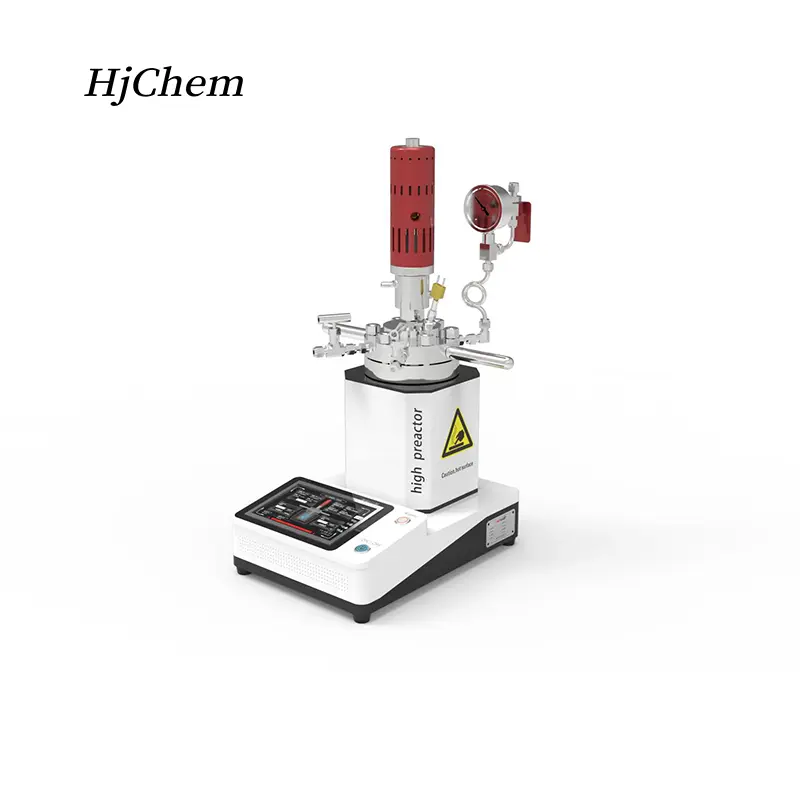
Buying a high pressure reactor sounds straightforward at first. Check the volume, check the pressure rating, compare prices, and move on.
In reality, that is where many buyers go wrong.
A reactor may look fine on a quotation sheet but still be a poor fit for the actual process. The result is usually not one big failure. It is a series of smaller problems: slow heating, awkward sampling, poor mixing, seal trouble, hard cleaning, or data that is difficult to trust when the project moves forward.
Here are some of the most common mistakes buyers make when choosing a high pressure reactor.
Buying based on maximum pressure alone
This is probably the most common one.
A higher pressure rating does not automatically mean a better reactor. What matters is whether the unit matches your real operating conditions, including normal working pressure, temperature, gas charging, and how the process behaves during the full reaction cycle.
Some buyers ask for the highest pressure they can get, even when the process does not need it. That usually adds cost, and sometimes complexity too, without adding much practical value.
Not looking closely enough at temperature
Pressure gets most of the attention, but temperature often causes just as many problems.
A reactor body may handle the target temperature, but that does not mean every part of the system does. Seals, valves, fittings, sensors, and port arrangements all need to work under the same conditions. A setup that looks acceptable on paper can become much less comfortable once the process runs hot for long periods or goes through repeated heating and cooling cycles.
That is why it is worth asking not only “What temperature can it reach?” but also “How stable is it during real operation?”
Choosing material by habit
A lot of buyers default to stainless steel and stop there.
Sometimes that is fine. Sometimes it is not.
The right material depends on the chemistry, not on what is most common. Solvents, acids, chlorides, alkalis, hydrogen service, intermediates, and even cleaning chemicals can all change what makes sense. A reactor that works well in one application may be the wrong choice for another that looks similar at first glance.
The real mistake is usually incomplete process information. If the supplier only gets half the chemistry story, the recommendation can only be half right.
Treating mixing as a secondary issue
Mixing is often treated like a small detail compared with pressure and temperature. In practice, it can have a huge effect on how the reactor performs.
Agitation affects heat transfer, solids suspension, gas-liquid contact, and overall reaction consistency. That matters even more when the process becomes thicker, involves solids, or moves from lab work into pilot trials.
A reactor can be strong and well made, but still frustrating to use if the mixing setup does not suit the process.
Overlooking small design details
This is where many “good enough” purchases become annoying very quickly.
Things like sampling ports, feed inlets, discharge layout, sealing arrangement, pressure measurement, and safety fittings do not always get enough attention during the buying stage. Then the unit arrives, and the user finds it is harder than expected to charge, sample, vent, or clean.
Those details may not look exciting on a drawing, but they have a big impact on day-to-day usability.
Assuming pilot scale is just a bigger lab reactor
It usually is not.
Once volume increases, other things change too: mixing behavior, heat-up time, operator access, cleaning effort, sampling frequency, control expectations, and overall workflow. A reactor selected only by scaling up vessel size may not work as smoothly as expected in pilot use.
That is one reason many teams spend extra time comparing different high pressure reactors before locking in a final specification. Looking at the broader configuration options early often helps avoid costly adjustments later.
Buying too fast on price
Everyone has a budget. That is normal.
But a lower purchase price does not always mean lower real cost. If the reactor later needs modification, slows down development, or creates repeatability problems, the “cheaper” option can easily become more expensive.
In process development work, lost time is often more costly than the initial price difference.
Final thought
The best reactor is usually not the one with the highest numbers on the brochure. It is the one that fits the real process.
Before buying, it helps to be clear about a few basics: actual operating pressure, target temperature, chemistry, corrosion risk, mixing needs, sampling expectations, and whether the unit is for screening, pilot work, or scale-up data.
That extra thinking up front usually saves a lot of trouble later.
Technology Perspective
Technology continues to transform industries through artificial intelligence, cloud computing, automation, cybersecurity, digital platforms, and data-driven decision making. As organizations increasingly adopt digital solutions, understanding emerging technologies becomes essential for businesses, professionals, and consumers. DGM News regularly covers these developments through expert analysis, technology news, and educational resources.
Innovation Outlook
Rapid advances in artificial intelligence, automation, machine learning, cloud infrastructure, and digital transformation continue reshaping global industries. Monitoring these developments helps organizations adapt to changing technologies, improve efficiency, and prepare for future innovation.
Did you know?
Artificial Intelligence is expected to influence nearly every major industry over the coming decade, from healthcare and finance to transportation, manufacturing, education, and entertainment.
AI, Machine Learning, Deep Learning and Generative AI Explained
Google AI Updates
About DGM News
DGM News is an independent digital publication delivering the latest Technology News, AI News, and FinTech News. We provide expert insights on startups, innovation, cybersecurity, software, business, gadgets, cloud computing, artificial intelligence, and emerging technologies. Our mission is to publish informative, accurate, and regularly updated content that helps readers stay informed in today's rapidly evolving digital landscape.
Since our editorial focus includes technology, artificial intelligence, and financial technology, we continuously expand our coverage as new innovations emerge.
Editorial Standards
Every article published on DGM News undergoes editorial review before publication. We prioritize factual accuracy, clarity, transparency, and reader value while following responsible digital publishing practices.
Research Methodology
Our editorial team researches publicly available information from official announcements, technical documentation, research publications, developer resources, reputable industry reports, and trusted public sources whenever applicable. Information is reviewed to improve clarity and accuracy before publication.
Fact-Checking Policy
We make reasonable efforts to verify factual information before publishing. Articles are reviewed for accuracy, consistency, and relevance. If significant developments occur after publication, content may be revised to reflect updated information.
Update Policy
Technology evolves rapidly. Articles may be reviewed and updated periodically to reflect software releases, AI developments, security advisories, regulatory updates, product launches, and other important industry changes.
Source Verification
Whenever possible, DGM News reviews information using official company announcements, technical documentation, research publications, government resources, publicly available reports, and reputable industry references before updating articles.
Editorial Independence
DGM News maintains editorial independence in all publishing decisions. Editorial content is produced independently and is intended to provide balanced, informative, and reader-focused coverage without influence from advertisers or commercial partnerships.
AI Usage Disclosure
Artificial intelligence tools may assist with research organization, grammar improvement, formatting, or editorial workflows. Every article is reviewed by human editors before publication to help maintain quality, clarity, and factual accuracy.
Corrections Policy
Accuracy is important to us. If readers identify outdated information or factual inaccuracies, they are encouraged to contact our editorial team. Verified corrections are reviewed and incorporated whenever appropriate.
Reader Feedback
Reader feedback helps improve our journalism. We welcome suggestions, corrections, and constructive feedback through our Contact page to continuously improve the quality of our reporting.
Last Editorial Review
This article follows the DGM News editorial review process and may be updated periodically as new information becomes available.
Why Trust DGM News?
DGM News is committed to publishing technology journalism that emphasizes accuracy, transparency, editorial independence, and regularly updated information. Our editorial process is designed to provide readers with reliable coverage of technology, AI, fintech, startups, and digital innovation.
DGM News Resources
Topics We Cover
Artificial Intelligence • AI Tools • Machine Learning • FinTech • Cybersecurity • Cloud Computing • Programming • Software Development • Gadgets • Mobile Technology • Business Technology • Startups • Digital Marketing • Blockchain • Cryptocurrency • Science • Innovation • Consumer Technology • Enterprise Technology • Automation