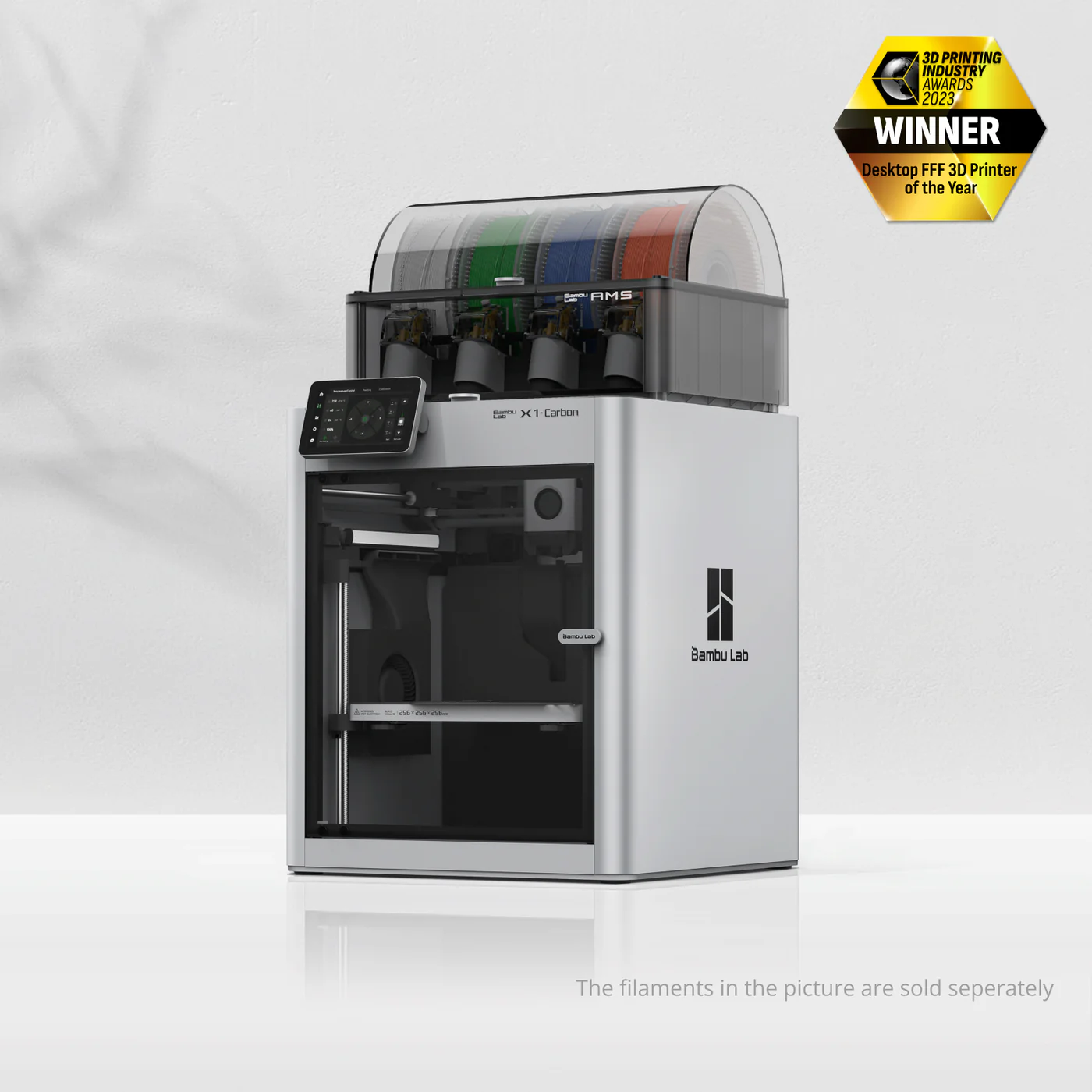
Diving into the world of 3D printing is like opening the door to endless creativity and innovation. Given the many options available, choosing the right 3D printer can feel overwhelming for a maker. Whether you’re a seasoned creator or just starting out, finding a printer that matches your needs and budget is key to transforming your ideas into tangible reality.
What is 3D Printing Technology
3D printing lets you create three-dimensional objects from digital files. It layers material, often plastic or resin, to form detailed structures. This revolutionary tech offers endless possibilities for those eager to bring their ideas to life.
Importance of Selecting the Right 3D Printer for Makers
Choosing the right 3D printer matters for makers aiming to turn concepts into physical objects. With so many options, finding the best 3D printer that matches your projects and budget improves creativity and satisfaction. I remember picking my first printer and being overwhelmed with choices changed everything. Balancing features and costs helped me embrace my creative side without being very costly.
Why Choose a 3D Printer from Bambu Lab?
Bambu Lab offers top-notch 3D printers, making creation straightforward. Once I used their model, I immediately noticed its precision and speed. These printers integrate advanced features like high-resolution printing and user-friendly interfaces, catering to novices and experts. No more tinkering endlessly to get the perfect print; Bambu Lab designs with makers in mind. Plus, they stand out as one of the best 3D printer brands, constantly pushing the boundaries.
Types of 3D Printers
Choosing the best 3D printer involves understanding the different types available. Each type has its quirks and benefits, making it suitable for diverse projects.
| 3D Printing Technology | Description | Advantages | Disadvantages |
| FDM (Fused Deposition Modeling) | Melts and extrudes plastic filament through a heated nozzle, layer by layer, to form the object. | Cost-effective and widely available materials | Lower resolution compared to other technologies |
| Easy to operate and maintain | Limited in producing intricate details | ||
| Versatile with numerous material options | |||
| SLA (Stereolithography) | It uses a laser to cure liquid resin into solid layers, ideal for high-resolution and detailed work. | – High precision and fine details | Requires post-processing of parts |
| – Smooth surface finish | Resin can be expensive and messy | ||
| – Ideal for intricate designs | |||
| DLP (Digital Light Processing) | It is similar to SLA but uses a digital projector screen to flash each layer onto the resin tank, allowing for fast curing. | – Very fast curing and production | Resins are pricey and often toxic |
| – Excellent detail and resolution | Limited build volume compared to FDM | ||
| – Good for batch printing |
Once, I experimented with an FDM printer for a personal project, seeking an affordable option to prototype my design. Its versatility and ease of use made it a breeze to iteratively refine the model, even if the details needed to be more razor-sharp. Such practical experiences help decide which type best suits your needs.
Key Features to Consider
Choosing the best 3D printer means understanding critical features. Consider these aspects to make a well-informed choice.
Build Volume
Build volume affects the size of objects you can print. Choose a printer with a volume matching your intended projects. A larger build volume, like 300x300x400 mm, is ideal for large prototypes. In contrast, smaller volumes, around 150x150x150 mm, suit compact designs and aid in saving space and materials. I once needed to print a scale model of a car and found my 200x200x200 mm printer just right for the job.
Print Quality
Print quality refers to details and smoothness. Printers vary based on layers’ thickness; thinner layers produce finer details. For high precision, consider SLA or DLP printers that offer resolutions of 25 microns or less. FDM printers, sometimes the best 3D printer choice for budget-conscious users, usually provide resolutions of around 100 microns, which is acceptable for most hobbyists.
Speed and Reliability
Speed varies with technology and settings. Like some FDM models, Faster printers complete prints in a few hours, but slower speeds often enhance detail. Assess reliability by checking for features like heated beds and quality feeder systems that minimize errors. I opted for an FDM printer known for its consistency, which significantly reduced my failed prints.
Material Compatibility
Material compatibility influences project outcomes. Ensure your printer supports the materials you plan to use, like PLA, ABS, or resin. FDM printers often handle various filaments, with ABS requiring higher temperatures. In contrast, resin printers focus on specific resins. This flexibility is crucial when experimenting across projects, providing distinct textures and strengths.
Conclusion
In the exciting world of 3D printing, choosing the right printer is like finding the perfect tool to unleash your creativity and turn your ideas into reality. With many types and features to consider, from FDM’s accessibility to SLA’s precision, there’s truly a fit for every maker. Whether you’re a beginner or a seasoned pro, matching your projects with the ideal printer—like the dependable, high-quality options from Bambu Lab—can make all the difference. So dive in, explore the endless possibilities, and let the right 3D printer empower you to bring your unique creations to life! Happy printing!
Technology Perspective
Technology continues to transform industries through artificial intelligence, cloud computing, automation, cybersecurity, digital platforms, and data-driven decision making. As organizations increasingly adopt digital solutions, understanding emerging technologies becomes essential for businesses, professionals, and consumers. DGM News regularly covers these developments through expert analysis, technology news, and educational resources.
Innovation Outlook
Rapid advances in artificial intelligence, automation, machine learning, cloud infrastructure, and digital transformation continue reshaping global industries. Monitoring these developments helps organizations adapt to changing technologies, improve efficiency, and prepare for future innovation.
Did you know?
Artificial Intelligence is expected to influence nearly every major industry over the coming decade, from healthcare and finance to transportation, manufacturing, education, and entertainment.
AI, Machine Learning, Deep Learning and Generative AI Explained
Google AI Updates
About DGM News
DGM News is an independent digital publication delivering the latest Technology News, AI News, and FinTech News. We provide expert insights on startups, innovation, cybersecurity, software, business, gadgets, cloud computing, artificial intelligence, and emerging technologies. Our mission is to publish informative, accurate, and regularly updated content that helps readers stay informed in today's rapidly evolving digital landscape.
Since our editorial focus includes technology, artificial intelligence, and financial technology, we continuously expand our coverage as new innovations emerge.
Editorial Standards
Every article published on DGM News undergoes editorial review before publication. We prioritize factual accuracy, clarity, transparency, and reader value while following responsible digital publishing practices.
Research Methodology
Our editorial team researches publicly available information from official announcements, technical documentation, research publications, developer resources, reputable industry reports, and trusted public sources whenever applicable. Information is reviewed to improve clarity and accuracy before publication.
Fact-Checking Policy
We make reasonable efforts to verify factual information before publishing. Articles are reviewed for accuracy, consistency, and relevance. If significant developments occur after publication, content may be revised to reflect updated information.
Update Policy
Technology evolves rapidly. Articles may be reviewed and updated periodically to reflect software releases, AI developments, security advisories, regulatory updates, product launches, and other important industry changes.
Source Verification
Whenever possible, DGM News reviews information using official company announcements, technical documentation, research publications, government resources, publicly available reports, and reputable industry references before updating articles.
Editorial Independence
DGM News maintains editorial independence in all publishing decisions. Editorial content is produced independently and is intended to provide balanced, informative, and reader-focused coverage without influence from advertisers or commercial partnerships.
AI Usage Disclosure
Artificial intelligence tools may assist with research organization, grammar improvement, formatting, or editorial workflows. Every article is reviewed by human editors before publication to help maintain quality, clarity, and factual accuracy.
Corrections Policy
Accuracy is important to us. If readers identify outdated information or factual inaccuracies, they are encouraged to contact our editorial team. Verified corrections are reviewed and incorporated whenever appropriate.
Reader Feedback
Reader feedback helps improve our journalism. We welcome suggestions, corrections, and constructive feedback through our Contact page to continuously improve the quality of our reporting.
Last Editorial Review
This article follows the DGM News editorial review process and may be updated periodically as new information becomes available.
Why Trust DGM News?
DGM News is committed to publishing technology journalism that emphasizes accuracy, transparency, editorial independence, and regularly updated information. Our editorial process is designed to provide readers with reliable coverage of technology, AI, fintech, startups, and digital innovation.
DGM News Resources
Topics We Cover
Artificial Intelligence • AI Tools • Machine Learning • FinTech • Cybersecurity • Cloud Computing • Programming • Software Development • Gadgets • Mobile Technology • Business Technology • Startups • Digital Marketing • Blockchain • Cryptocurrency • Science • Innovation • Consumer Technology • Enterprise Technology • Automation