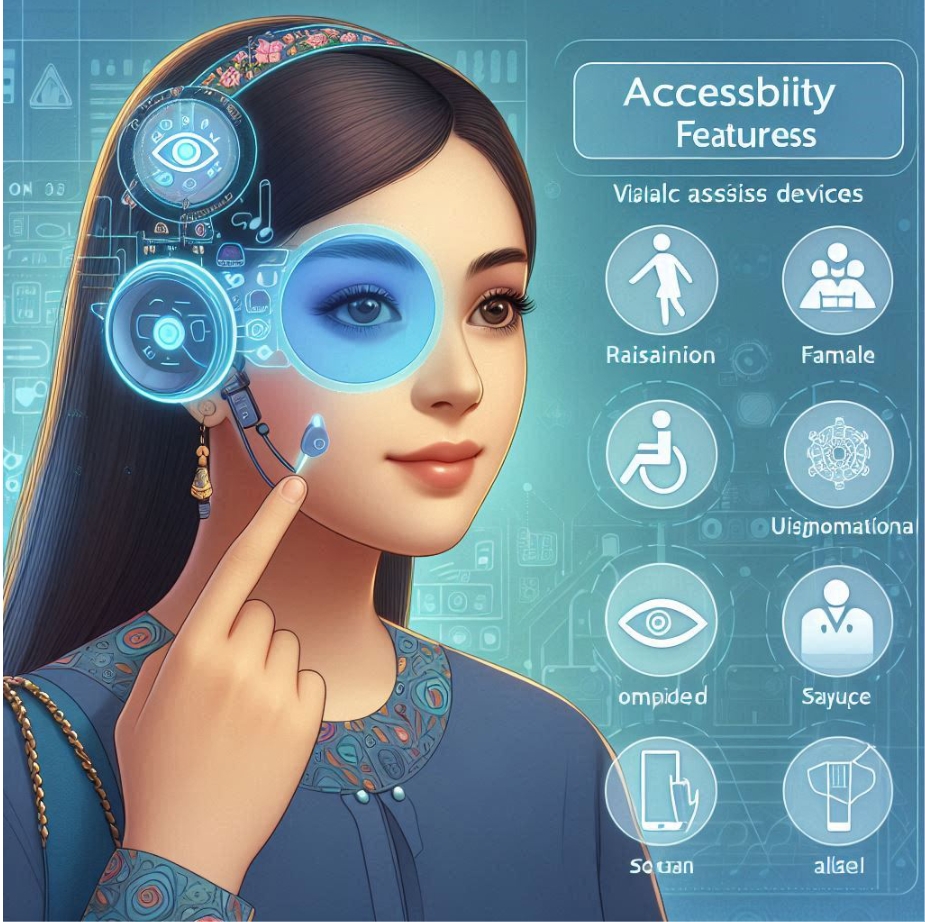
The world of technology has rapidly evolved, and with it, a growing commitment to inclusivity. For individuals with visual impairments, assistive devices have become indispensable tools, transforming their daily lives. These devices, equipped with a range of accessibility features, empower users to navigate their surroundings, access information, and engage in activities independently. This article delves into the intricacies of these devices, exploring the essential features that make them invaluable companions.
Key Highlights
- Assistive devices transform the lives of visually impaired individuals by providing essential tools for independence.
- A wide range of features, from screen readers to AI-powered assistance, empower users to navigate the world with confidence.
- Inclusive design is crucial for creating assistive devices that seamlessly integrate into daily life.
Image Credit Goes to Florida Vision Technology

Understanding the Needs of the Visually Impaired
Before diving into the specifics of assistive devices, it’s crucial to comprehend the challenges faced by individuals with visual impairments. Vision loss can vary significantly, from partial sight to complete blindness, influencing the types of assistive technology required. These individuals often encounter obstacles in tasks as fundamental as reading, mobility, and communication.
The Role of Assistive Devices
Assistive devices for the visually impaired serve as essential bridges, connecting individuals to the world around them. These innovative tools act as sensory extensions, offering alternative ways to perceive and interact with the environment. By leveraging cutting-edge technology, assistive devices for the visually impaired provide a range of features designed to enhance independence, safety, and overall quality of life.
Core Accessibility Features
- Screen Readers: These software applications convert on-screen text into audible speech or Braille output. They are indispensable for accessing computers, smartphones, and other electronic devices. Features like speech customization, navigation commands, and integration with other assistive technologies are vital.
- Magnifiers: Whether handheld or electronic, magnifiers enlarge text and images, enabling individuals with low vision to read and see details. Advanced features include contrast enhancement, color inversion, and adjustable magnification levels.
- Optical Character Recognition (OCR): This technology transforms printed text into digital format, which can then be read by screen readers or converted into Braille. OCR is invaluable for accessing books, documents, and other printed materials.
- Braille Displays: These devices provide tactile feedback, allowing users to read digital text in Braille. Features like refreshable displays, cursor control, and integration with screen readers are essential.
- Speech Recognition: This technology enables users to control devices and dictate text using voice commands. Accurate speech recognition, customization options, and integration with other assistive features are key.
- GPS and Navigation: Assistive devices with GPS capabilities can provide turn-by-turn directions, locate points of interest, and assist with indoor navigation. Features like audio guidance, obstacle detection, and point-of-interest information are crucial.
- Object Recognition: Some devices utilize image recognition technology to identify objects in the environment, providing audio descriptions or tactile feedback. This feature can be helpful for tasks like product identification and navigation.
Advanced Accessibility Features
Beyond the core features, assistive devices often incorporate advanced functionalities to enhance user experience:
- Artificial Intelligence (AI): AI-powered features can provide intelligent assistance, such as scene understanding, object recognition, and real-time translation.
- Gesture Control: Devices that respond to gestures offer hands-free operation, allowing users to interact with technology more intuitively.
- Augmented Reality (AR): AR can overlay digital information onto the real world, providing guidance and context for users.
- Biometric Authentication: Fingerprint or facial recognition can secure devices and provide personalized experiences.
Choosing the Right Assistive Device
Selecting the appropriate visual assistive device depends on various factors, including the individual’s specific needs, vision impairment level, budget, and personal preferences. It’s essential to consider the following:
- Functionality: Identify the primary tasks the device will assist with, such as reading, mobility, or communication.
- Ease of Use: The device should be intuitive and user-friendly, minimizing learning curves.
- Portability: Consider the need for a device that can be easily carried and used on the go.
- Compatibility: Ensure compatibility with other assistive technologies and devices.
- Cost: Evaluate the device’s price and available funding options.
- Trial Period: If possible, try out the device before purchasing to assess its suitability.
The Importance of Accessibility in Design
To create truly inclusive products, designers and developers must prioritize accessibility from the outset. Incorporating accessibility features into the design process ensures that assistive devices seamlessly integrate with everyday technology. By following accessibility guidelines and conducting user testing with individuals with visual impairments, companies can create products that empower and enrich lives.
Conclusion
Assistive devices have revolutionized the lives of individuals with visual impairments, providing them with tools to overcome challenges and achieve independence. With continuous advancements in technology, the future holds even greater possibilities for enhancing accessibility. By understanding the core features, advanced functionalities, and the importance of inclusive design, we can contribute to a world where everyone has equal opportunities to participate and thrive.
Technology Perspective
Technology continues to transform industries through artificial intelligence, cloud computing, automation, cybersecurity, digital platforms, and data-driven decision making. As organizations increasingly adopt digital solutions, understanding emerging technologies becomes essential for businesses, professionals, and consumers. DGM News regularly covers these developments through expert analysis, technology news, and educational resources.
Innovation Outlook
Rapid advances in artificial intelligence, automation, machine learning, cloud infrastructure, and digital transformation continue reshaping global industries. Monitoring these developments helps organizations adapt to changing technologies, improve efficiency, and prepare for future innovation.
Did you know?
Artificial Intelligence is expected to influence nearly every major industry over the coming decade, from healthcare and finance to transportation, manufacturing, education, and entertainment.
AI, Machine Learning, Deep Learning and Generative AI Explained
Google AI Updates
About DGM News
DGM News is an independent digital publication delivering the latest Technology News, AI News, and FinTech News. We provide expert insights on startups, innovation, cybersecurity, software, business, gadgets, cloud computing, artificial intelligence, and emerging technologies. Our mission is to publish informative, accurate, and regularly updated content that helps readers stay informed in today's rapidly evolving digital landscape.
Since our editorial focus includes technology, artificial intelligence, and financial technology, we continuously expand our coverage as new innovations emerge.
Editorial Standards
Every article published on DGM News undergoes editorial review before publication. We prioritize factual accuracy, clarity, transparency, and reader value while following responsible digital publishing practices.
Research Methodology
Our editorial team researches publicly available information from official announcements, technical documentation, research publications, developer resources, reputable industry reports, and trusted public sources whenever applicable. Information is reviewed to improve clarity and accuracy before publication.
Fact-Checking Policy
We make reasonable efforts to verify factual information before publishing. Articles are reviewed for accuracy, consistency, and relevance. If significant developments occur after publication, content may be revised to reflect updated information.
Update Policy
Technology evolves rapidly. Articles may be reviewed and updated periodically to reflect software releases, AI developments, security advisories, regulatory updates, product launches, and other important industry changes.
Source Verification
Whenever possible, DGM News reviews information using official company announcements, technical documentation, research publications, government resources, publicly available reports, and reputable industry references before updating articles.
Editorial Independence
DGM News maintains editorial independence in all publishing decisions. Editorial content is produced independently and is intended to provide balanced, informative, and reader-focused coverage without influence from advertisers or commercial partnerships.
AI Usage Disclosure
Artificial intelligence tools may assist with research organization, grammar improvement, formatting, or editorial workflows. Every article is reviewed by human editors before publication to help maintain quality, clarity, and factual accuracy.
Corrections Policy
Accuracy is important to us. If readers identify outdated information or factual inaccuracies, they are encouraged to contact our editorial team. Verified corrections are reviewed and incorporated whenever appropriate.
Reader Feedback
Reader feedback helps improve our journalism. We welcome suggestions, corrections, and constructive feedback through our Contact page to continuously improve the quality of our reporting.
Last Editorial Review
This article follows the DGM News editorial review process and may be updated periodically as new information becomes available.
Why Trust DGM News?
DGM News is committed to publishing technology journalism that emphasizes accuracy, transparency, editorial independence, and regularly updated information. Our editorial process is designed to provide readers with reliable coverage of technology, AI, fintech, startups, and digital innovation.
DGM News Resources
Topics We Cover
Artificial Intelligence • AI Tools • Machine Learning • FinTech • Cybersecurity • Cloud Computing • Programming • Software Development • Gadgets • Mobile Technology • Business Technology • Startups • Digital Marketing • Blockchain • Cryptocurrency • Science • Innovation • Consumer Technology • Enterprise Technology • Automation