Football has changed quite drastically in the last decade. Apart from the change in style of play on the pitch, the way fans experience the game has also changed. Nowadays, watching a game on television is no longer enough. Supporters seek direct access to stats, tactical insights, live scores, player data, and real-time updates across multiple competitions at once.
This shift became especially noticeable with the growth of mobile streaming, faster internet connections, as well as data-driven football analysis. Fans do not stick to one game for 90 minutes anymore. They track entire matchdays in parallel, jumping from one league to another, checking out the tournament live stats, etc.
Exactly that is the reason why platforms like jogos de hoje are becoming more and more popular. Users can easily monitor ongoing matches, schedules, and live updates from multiple leagues in one place. Instead of searching for separate scoreboards, fixtures, and statistics pages.
Football Viewing Habits Have Completely Changed
A typical football fan today rarely focuses on a single screen.
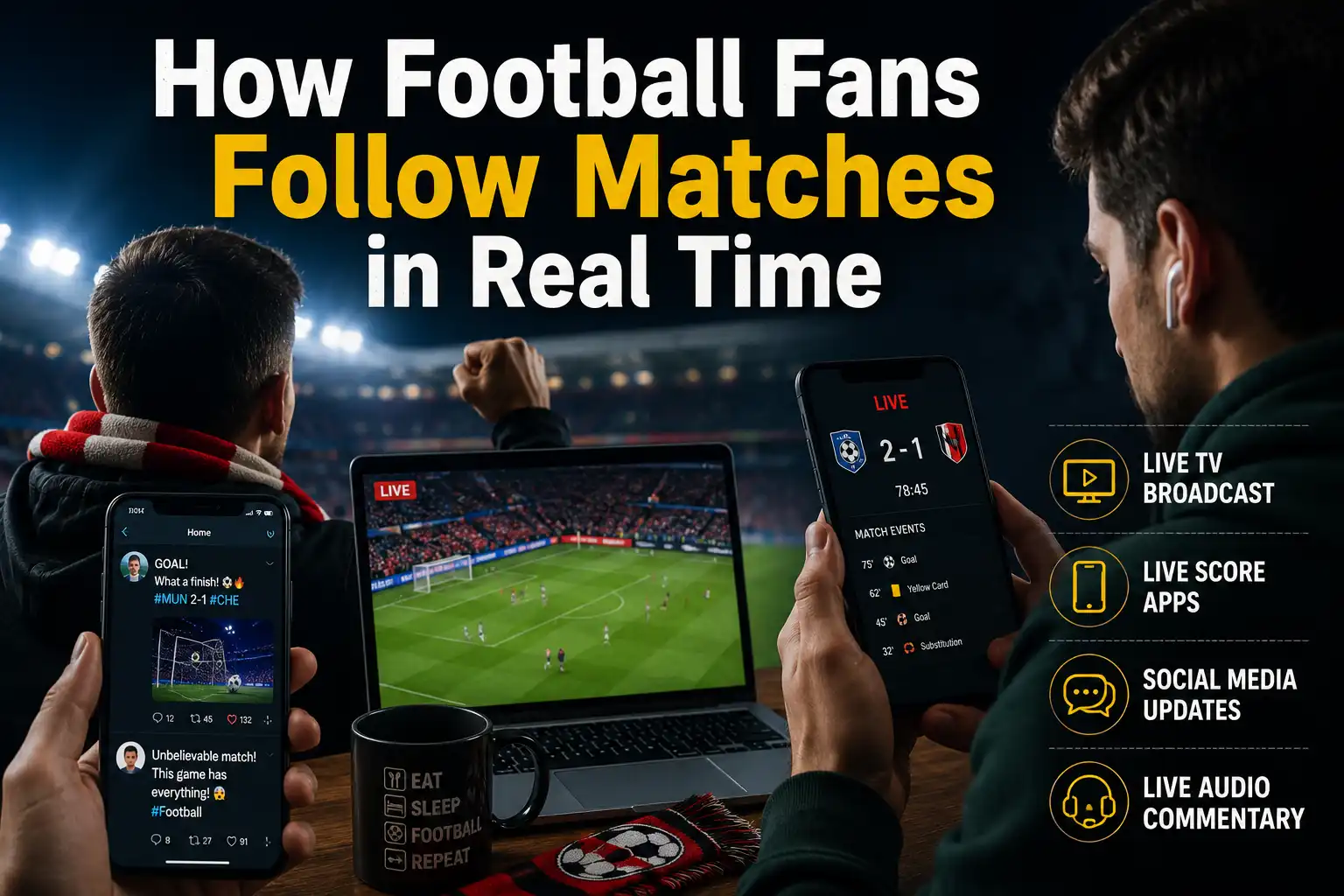
During a Champions League night, for example, supporters often:
- stream one match on TV;
- follow live scores from other games on their phones;
- monitor league standings in real time;
- receive push notifications about goals and VAR decisions;
- check possession stats, xG, and substitutions while watching.
This behavior is just a small part of a much bigger change in sports media consumption. Based on the latest data from Statista, mobile devices now generate the bulk of digital sports traffic all over the world. No matter where football fans are, they want quick access to information, e.g., while going to work, staying in the office, or on the move.
Thus, football nowadays is less of a TV program that you watch at a set time but more of a steady, real-time experience.
Speed Matters More Than Ever
Traditional TV broadcasts often run with delays ranging from 20 to 60 seconds, especially on streaming platforms. Meanwhile, live-score systems update goals, cards, and substitutions almost instantly.
This speed is important for matches of big-name clubs like Manchester City, Arsenal, Real Madrid, Bayern Munich, and Inter Milan, where momentum can happen in a matter of seconds.
Fans expect to get instant updates on:
- goals and assists;
- VAR reviews;
- yellow and red cards;
- substitutions;
- injury updates;
- live expected goals (xG);
- shot maps and possession data.
For many fans, these details are no longer optional extras. They are part of the core viewing experience.
Football Statistics Became Mainstream
Just several years back, advanced football analytics were mostly discussed by coaches, analysts, and television pundits. Today, ordinary fans use the same data while following live matches.
Expected goals, pressing intensity, progressive passes, and passing accuracy are some of the regular components of football discussions now.
Imagine that the match ends 0-0, and it looks like a reasonable outcome. Even so, one team has a 2. 7 xG, the other only 0.5, so stats immediately tell us who was controlling the game and made more quality chances.
This analytical approach has changed how supporters understand football itself.
They don’t just talk about the final score anymore, but rather:
- tactical structure;
- pressing systems;
- defensive line positioning;
- transitions between phases;
- midfield control;
- chance creation efficiency.
In many ways, football audiences have become more educated and tactically aware than ever before.
Mobile Platforms Became the Second Screen
During major tournaments such as the UEFA Champions League, the European Championship, or the FIFA World Cup, smartphones effectively function as a second screen.
TV broadcasts still give the feeling, narration, and heart-stirring moments. But football platforms on mobile devices deliver context and the up-to-the-minute information that traditional broadcasts can’t provide.
Fans regularly use live football services to check updated standings, match timelines, squad lineups, player ratings, live statistics, fixture schedules, parallel match results, and so on. This becomes especially useful on busy evenings when several important matches are taking place at once. Fans can watch one game while keeping track of others, including high-profile fixtures such as PSG x Arsenal, without constantly switching between different websites.
Fans Now Follow Multiple Leagues Simultaneously
Decades ago, most fans supported only clubs in their domestic league. Now you can watch matches from several countries during the same week. Modern football audience often follows the Premier League, La Liga, Serie A, the Bundesliga, the UEFA Champions League, as well as international tournaments.
Global football stars have given a big boost to this trend. Players like Erling Haaland, Jude Bellingham, and Kylian Mbappé attract viewers regardless of league or country.
As a result, football platforms now cover hundreds of matches daily. The challenge is not just in giving out information on time but rather in doing so in a highly organized manner. Users expect clean interfaces, fast navigation, and instant access to the matches that matter most to them.
Push Notifications Changed Match Consumption
Push alerts truly revolutionized the way people keep track of football. A great number of fans don’t watch the entire games anymore. They connect only at key moments like kickoff, goals, VAR incidents, red cards, penalty shootouts, final minutes.
Such a shift is especially prevalent among younger audiences, already familiar with short cycles of digital content. Sports media companies have responded to this. Live timelines, instant updates, and short match coverage increasingly dominate football platforms as the audience craves continuous live interaction.
Real-Time Data Is Shaping the Future of Football Coverage
The next phase of football media is already underway at a fast rate.
Artificial intelligence, automated tracking systems, and predictive analytics are becoming central parts of modern football coverage. During elite matches, systems process thousands of live data points every minute.
These technologies already support:
- live player tracking;
- sprint and workload analysis;
- probability-based match predictions;
- tactical pattern recognition;
- automated statistical updates.
Football audiences are becoming more data-oriented every season, and media platforms are evolving to meet those needs.
One thing is already clear. Modern fans no longer want to wait until full-time to understand what happened in a match. They like to track teams’ strategies, the shifts in the game, and all sorts of figures live, as the action unfolds.