You might be feeling a knot in your stomach just thinking about the dentist. Maybe it started with one bad experience as a child. The sound of the drill, the bright light, the feeling that you had no control. Or maybe you have always avoided appointments with a dentist in Tawas City MI, telling yourself you will go “when things calm down,” yet the thought still makes your chest tighten.end
If that sounds familiar, you are far from alone. Many people live in this quiet tug of war. You know regular dental visits are important, but anxiety keeps winning. The good news is that general dentistry, when it is consistent and familiar, can actually reduce that fear over time instead of feeding it. With steady care, a dentist who knows you, and a plan that respects your limits, the chair can slowly shift from a place of panic to a place of routine.
So what is the heart of it all. Regular general dental care builds trust, keeps problems small, gives you more control, and uses proven methods to reduce anxiety. You are not “too nervous” or “too late.” You simply need care that fits you, not the other way around.
Why does the dentist trigger so much anxiety in the first place?
Dental fear is rarely random. It often comes from a mix of past experiences, stories you have heard, and the feeling that you are trapped in a chair with things happening to you rather than with you. For some, it is the fear of pain. For others, it is the sounds, the smells, or the embarrassment of someone seeing the state of their teeth.
There is also a deeper layer. Dental problems sit right at the intersection of health, appearance, and money. You might worry that the dentist will judge you, that the treatment will hurt, and that the bill will be more than you can handle. All of that pressure lands on one appointment, so of course your body reacts.
Because of this tension, you might delay visits. Yet when you wait, small issues become bigger ones. A tiny cavity turns into a root canal. Mild sensitivity becomes a throbbing toothache. Then the treatment you need is more complex, which reinforces the idea that the dentist is a place of pain and crisis. It becomes a loop that feels impossible to break.
So where does general dentistry come in. A trusted general dentist is not just there for emergencies. They are the steady anchor that keeps problems from turning into crises. They see you regularly, learn your triggers, and adjust how they care for you. Over time, that familiarity can quiet the fear that everything will spiral out of control.
How does familiar general dental care ease that fear over time?
Think about any situation that once scared you but now feels ordinary. Driving a car. Speaking to a group. The first few times were probably stressful. What changed was not the activity itself, but your sense of control and familiarity. The same can happen with anxiety friendly general dental care.
Here are some of the ways routine care with the same general dentist can soften anxiety.
1. Familiar faces and predictable routines
Seeing the same dentist and team each time matters. You learn their names. They remember your story. They know you hate the sound of the suction or that you prefer to sit up slowly. That kind of familiarity turns the visit from a threatening unknown into something you can picture and prepare for.
Predictable routines also help. When you know what happens first, second, and third, your body does not brace for surprise. You can agree on signals to pause, and you know those signals will be respected.
2. Smaller problems, gentler treatment
Regular checkups and cleanings mean most issues are caught early. That means shorter appointments, fewer injections, and less invasive work. When you experience “easy” visits more often than hard ones, your brain slowly rewrites the story about what the dentist is like.
National guidance on dental anxiety management also shows that early and preventive care plays a key role in keeping treatment simple and less stressful.
3. Clear communication and shared control
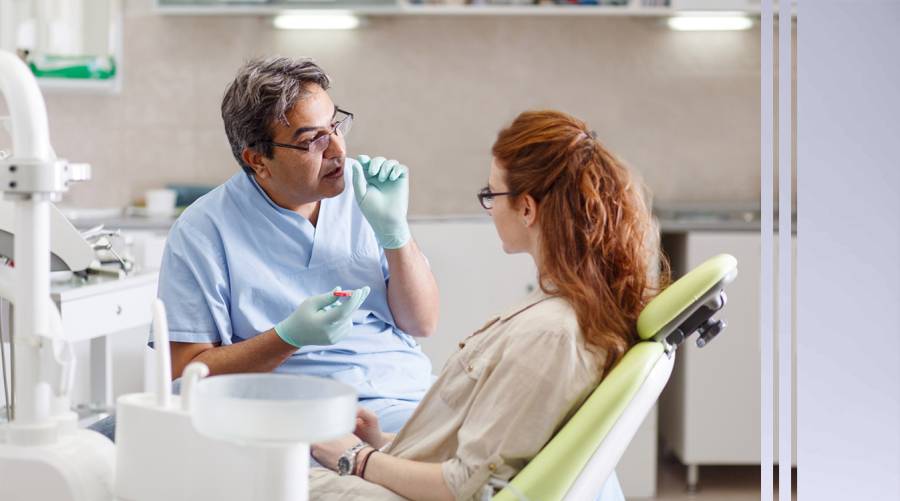
A good general dentist will not rush you through explanations. You deserve to know what is happening, why it is needed, and what your options are. When you can ask questions and say “I am nervous about that part,” you shift from feeling like a passive patient to an active partner.
Over time, this shared control is what reduces fear the most. You start to trust that nothing will be done without your consent. You feel heard, not handled.
4. Evidence based tools to calm your body and mind
Modern general dentistry has many ways to support anxious patients. These can include numbing gels before injections, distraction methods, scheduled breaks, and sometimes medication to help you relax when needed. Guidance for families on reducing fear of dental visits shows how small steps, like gradual exposure and positive reinforcement, can change how both children and adults experience care.
So, if anxiety has shaped your past experiences, does that mean you are stuck with it forever. Not at all. The key is to use general dentistry as a steady, familiar resource, not as a last resort when things are already urgent.
What are the real trade offs of avoiding vs embracing general dental care?
When you are anxious, it can feel easier to cancel, postpone, or avoid. Yet that choice has its own costs. Seeing these side by side can help you decide what is truly kinder to your future self.
| Approach | Short term impact | Long term impact on anxiety | Typical dental outcome |
|---|---|---|---|
| Avoiding routine general dentistry | Temporary relief from having to go | Anxiety grows before each eventual visit. Visits are often emergencies. | Larger problems. More complex and costly treatment. Higher risk of pain. |
| Occasional “only when it hurts” visits | Some care when problems flare up | Anxiety stays high because visits are linked to pain or crisis. | Mixed. Some issues fixed, others missed until late. |
| Regular care with a familiar general dentist | Initial discomfort facing fear, but with planned support | Anxiety usually decreases as trust and routine build. | Fewer major issues. Gentler, shorter treatments. Better long term health. |
You do not have to move from “I avoid everything” to “I am totally comfortable” overnight. Even choosing a checkup every six months with a dentist who understands dental anxiety can change the direction of your story.
What can you do right now to make your next visit feel safer?
You might be wondering what an actual next step looks like. It helps to keep things small and specific rather than trying to “fix” your fear all at once.
1. Choose a general dentist who openly welcomes anxious patients
When you look for a gentle general dentist, pay close attention to how they talk about nervous patients. Do they mention anxiety on their website. Do reviews mention feeling understood. When you call, say clearly, “I have strong dental anxiety and I need a dentist who can go slowly with me.” The response you get to that sentence tells you a lot.
Ask about options like longer appointment times, breaks during treatment, or quiet rooms. You are not asking for special favors. You are asking for care that respects your nervous system.
2. Plan the visit together before anyone touches your teeth
At your first appointment, you can set a boundary. You might say, “Today I only want an exam and to talk about a plan. No treatment unless we both agree.” This keeps you from feeling ambushed.
Work with the dentist to map out a simple, step by step plan. Start with the least stressful procedures and build up. When each visit goes as planned, your mind collects real proof that the chair is not a trap.
3. Use simple coping tools that you control
You do not need complex techniques to make a difference. Small tools can help, especially when you control them.
- Bring headphones and a playlist or podcast that calms you.
- Agree on a hand signal to pause at any time.
- Practice slow breathing before and during the appointment. For example, breathe in for a count of four, out for a count of six.
- Schedule appointments at times of day when you feel more stable, not rushed or exhausted.
The goal is not to feel zero anxiety. The goal is to feel enough safety and control to get through the visit, then slowly build on that success.
Moving forward with more confidence and less fear
Dental anxiety can make you feel stuck, ashamed, and alone. Yet your fear is not a personal failure. It is a very human response to experiences that felt out of your control. With steady, familiar care from a general dentist who understands anxiety, you can rewrite that story.
You deserve a mouth that feels healthy and a dental experience that does not leave you shaken. Your next small step, whether it is making a phone call, sending an email, or booking a gentle first visit, is enough to start changing your relationship with care. You are not starting from scratch. You are simply choosing a kinder path for the person you are now.