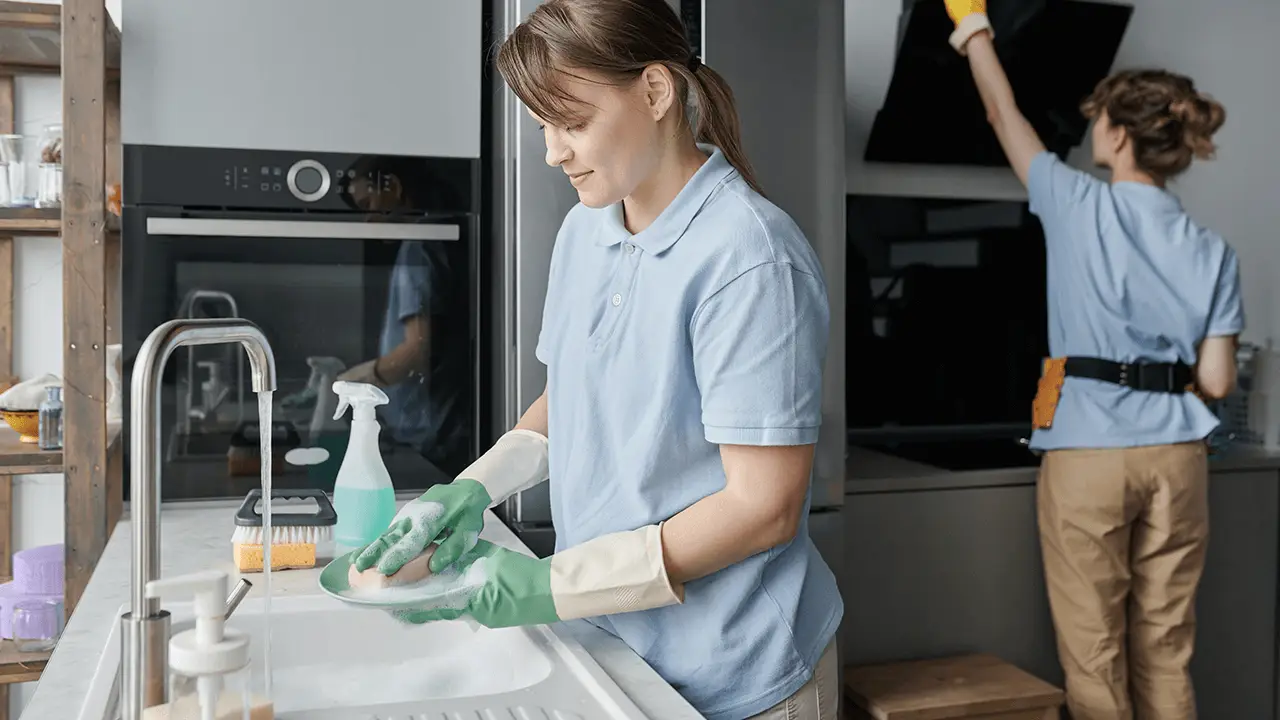
Household chores are frequently seen as routine tasks for completion. When families perform these tasks together, the activities are opportunities for cooperation. Shared dishwashing duties are a simple example of how daily responsibilities support family teamwork.
Cleaning after meals is a process that requires coordination and communication. Each person is helpful when they perform a specific role, like rinsing, loading the dishwasher or drying items – these collaborative actions are able to strengthen family relationships and create a sense of shared responsibility.
Building Cooperation
Family members are learners of cooperation when they share dishwashing duties. Everyone is a contributor to a common goal instead of one person performing the entire task – this method is useful for reducing resentment and ensuring that each person feels their effort is significant.
Cooperation is important when schedules are full – Families are often less stressed when they divide household tasks fairly. The cleanup process is a practical exercise in teamwork instead of a task for one individual.
Encouraging Communication
Shared chores are a natural source of communication – Family members are required to discuss the organization and timing of the work – these conversations are helpful for building habits of problem solving.
Working at the sink is also a time for informal talk about school, work or plans – these interactions are a way for family members to stay connected. Relationships are often stronger because of these moments.
Teaching Responsibility
Participating in dishwashing is a way to show that everyone is responsible for maintaining the home. Children are able to learn that household tasks are shared rather than belonging to one person – this understanding is a way to foster accountability.
Responsibility is also the act of completing tasks properly. Family members are students of practical skills, like handling fragile items with care. Teamwork is effective when each person is reliable in their role.
Creating Fairness
Shared dishwashing is a supporter of teamwork because it is fair. The workload is balanced when responsibilities are distributed – this balance is a way to lower frustration and increase the willingness to help with other tasks.
Fairness is not always an equal amount of work for everyone. Contributions are based on the age and ability of each person. A younger child is able to clear the table while an adult handles delicate items. It is important that everyone is a participant.
Building Life Skills
Dishwashing is an opportunity to learn skills for independent living. Understanding how to clean and organize the kitchen is useful for the future – these tasks are a way to prepare family members for life outside the home.
Modern tools like dishwasher pods or dishwasher tablets are common but the items still require knowledge. Family members are responsible for using equipment correctly and following instructions – these tasks are a combination of practical competence and cooperation.
Strengthening Family Culture
Families are often creators of traditions through shared chores. Some households are daily participants in cleanup, while others use a rotation – these routines are predictable opportunities for family members to be helpful.
Shared dishwashing can become a part of a family culture that values mutual support. Children in this environment are often more likely to be contributors in school and work settings. Teamwork is a skill that grows over time.
Conclusion
Shared dishwashing duties are a small part of daily life but they are impactful for teamwork – this task is a way for family members to practice cooperation, communication and fairness. The kitchen is a place where relationship skills are used every day.
Benefits are present beyond a clean kitchen when everyone is a contributor. Families are often less stressed and have stronger connections. Working side by side is a way to build habits that are beneficial for many years.