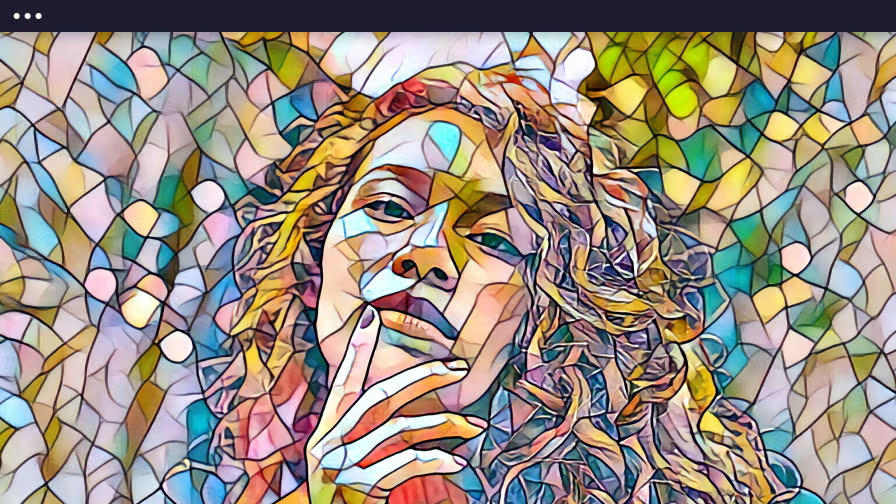
There is a certain magic to converting a fleeting moment captured in a photograph into a permanent masterpiece, where pixels give way to strokes of oil on canvas. In this article, we explore the art of creating oil paintings from photographs, discussing the process, its history, and what makes it such a timeless way to preserve memories https://www.miicreative.com/products/paint-your-photo
Unveiling the Process
The Digital Bridge to the Analog World
The transformation of photographs into oil paintings might seem like alchemy, but it’s a process rooted in both technology and tradition. Artists today have the luxury of digital tools that enable them to start with a high-resolution image, adjusting details and colors before the painting even begins. This step is crucial, as it helps mimic the visual richness of an oil painting that a printed photo simply cannot convey.
The Artist’s Touch: From Pixels to Strokes
The digital image guides the artist’s hand, dictating the composition and nuances of the final piece. Yet, it is the artist’s interpretation and technique that breathe life into the canvas. The process involves layering colors, using different brushes and textures to recreate the depth and complexity found in the world around us. Each brushstroke is a decision, a step towards turning a mere image into a visual chronicle.
A Brush with History
The Birth of Commissioned Portraiture
The practice of commissioning oil paintings from photographs harks back to the Renaissance era, a time when portraiture gained popularity among the affluent. Artists like Jan van Eyck and Hans Holbein the Younger were among the first to elevate portraits to an art form, capturing not just likenesses but the essence of their subjects.
The Victorian Era’s Obsession with Memory
In the 19th century, with the invention of photography, painting took on a new role. The Victorian upper class, with an intense preoccupation with death and remembrance, sought to immortalize their loved ones through painted portraits using photographs as references.
Preserving Moments in Time
The Art of Personal Narrative
An oil painting isn’t just an accurate reflection of the past; it’s a storytelling device. When a photograph is transformed into a painting, it takes on a narrative quality that a photo alone can’t. The soft blending of colors, the intentional illumination, and the selective detail all serve to draw the eye to the story the artist seeks to tell.
Bridging Generations with Art
In a world where family heirlooms are becoming relics of the past, an oil painting offers a tangible link to our lineage. It’s a way to pass on our shared history to future generations, a touchpoint connecting the old with the new. When you hang a painting of a loved one on the wall, you’re not just presenting a likeness — you’re offering a conversation starter and a lesson in genealogy.
The Emotional Depth of Oil
Emotional Resonance Through Texture
The tactile nature of an oil painting is as emotionally resonant as it is aesthetically pleasing. The textured surface invites touch, and its variations in sheen and color create a rich visual experience that stirs the soul. While a photograph represents the visual, an oil painting appeals to our senses in a more profound way.
Timeless Quality of Oil
Oil paintings are renowned for their durability and timeless quality. The richness of oil as a medium means that it can maintain its original appearance for centuries, provided it is cared for properly. When you commission an oil painting, you’re not just creating an heirloom; you’re investing in a piece of art that may well outlive you.
Turning Photography into Art
The Role of the Artist in Interpretation
What an artist sees in a photograph isn’t always what is there; it’s what the artist sees. In the process of turning a photo into an oil painting, the artist is free to interpret and embellish. This interpretation can elevate the ordinary snapshot into an extraordinary representation of the original moment.
Exploring Personal Vision
When you commission an oil painting, you’re commissioning a piece of someone else’s vision. The result is a collaboration – you provide the starting point, the artist provides the artistry. The outcome is often a painting that is both a reflection of the original photograph and an expression of the artist’s unique style and perspective.
The Technical Side of Artistic Alchemy
Tools and Techniques
From the type of canvas used to the brushes and palettes employed, the materials an artist selects influence the final product. Different oils, such as linseed or walnut, can alter drying times and the sheen of the finished painting. The type of brush, whether synthetic or natural, can affect the texture and transparency of the paint.
Layering and Glazing
The process of creating an oil painting from a photograph is often an exercise in layering. Building up from the darkest shadows to the brightest highlights, artists use a technique called ‘glazing,’ which involves applying many thin layers of transparent paint to add depth and complexity.
In Summary: A Time-Honored Legacy
Keeping the Flame of Artistic Traditions Alive
The tradition of transforming photographs into oil paintings is a precious link to the art of the past. By continuing this practice, we keep alive the techniques and philosophies of past masters. This connection to our artistic heritage enriches both the artistic community and those who commission these works.
The Value of the Personal in a Digital World
In an age where the digital seems to diminish physical artifacts, an oil painting is a defiant statement. It’s a declaration that some moments are worth preserving in a way that is tangible, enduring, and uniquely your own.
Conclusion
An oil painting is more than just a picture; it’s an investment in preserving a piece of history, a testament to the enduring power of an age-old medium. The process of transforming a photograph into an oil painting is an art form in itself, bridging the gap between the modern and the traditional. In this vein, artists and their patrons continue to create and curate memories that transcend time. Whether a cherished family portrait or a favorite snapshot, the photographic image has the potential to become a masterpiece, a keepsake that will last lifetimes and beyond.
Technology Perspective
Technology continues to transform industries through artificial intelligence, cloud computing, automation, cybersecurity, digital platforms, and data-driven decision making. As organizations increasingly adopt digital solutions, understanding emerging technologies becomes essential for businesses, professionals, and consumers. DGM News regularly covers these developments through expert analysis, technology news, and educational resources.
Innovation Outlook
Rapid advances in artificial intelligence, automation, machine learning, cloud infrastructure, and digital transformation continue reshaping global industries. Monitoring these developments helps organizations adapt to changing technologies, improve efficiency, and prepare for future innovation.
Did you know?
Artificial Intelligence is expected to influence nearly every major industry over the coming decade, from healthcare and finance to transportation, manufacturing, education, and entertainment.
AI, Machine Learning, Deep Learning and Generative AI Explained
Google AI Updates
About DGM News
DGM News is an independent digital publication delivering the latest Technology News, AI News, and FinTech News. We provide expert insights on startups, innovation, cybersecurity, software, business, gadgets, cloud computing, artificial intelligence, and emerging technologies. Our mission is to publish informative, accurate, and regularly updated content that helps readers stay informed in today's rapidly evolving digital landscape.
Since our editorial focus includes technology, artificial intelligence, and financial technology, we continuously expand our coverage as new innovations emerge.
Editorial Standards
Every article published on DGM News undergoes editorial review before publication. We prioritize factual accuracy, clarity, transparency, and reader value while following responsible digital publishing practices.
Research Methodology
Our editorial team researches publicly available information from official announcements, technical documentation, research publications, developer resources, reputable industry reports, and trusted public sources whenever applicable. Information is reviewed to improve clarity and accuracy before publication.
Fact-Checking Policy
We make reasonable efforts to verify factual information before publishing. Articles are reviewed for accuracy, consistency, and relevance. If significant developments occur after publication, content may be revised to reflect updated information.
Update Policy
Technology evolves rapidly. Articles may be reviewed and updated periodically to reflect software releases, AI developments, security advisories, regulatory updates, product launches, and other important industry changes.
Source Verification
Whenever possible, DGM News reviews information using official company announcements, technical documentation, research publications, government resources, publicly available reports, and reputable industry references before updating articles.
Editorial Independence
DGM News maintains editorial independence in all publishing decisions. Editorial content is produced independently and is intended to provide balanced, informative, and reader-focused coverage without influence from advertisers or commercial partnerships.
AI Usage Disclosure
Artificial intelligence tools may assist with research organization, grammar improvement, formatting, or editorial workflows. Every article is reviewed by human editors before publication to help maintain quality, clarity, and factual accuracy.
Corrections Policy
Accuracy is important to us. If readers identify outdated information or factual inaccuracies, they are encouraged to contact our editorial team. Verified corrections are reviewed and incorporated whenever appropriate.
Reader Feedback
Reader feedback helps improve our journalism. We welcome suggestions, corrections, and constructive feedback through our Contact page to continuously improve the quality of our reporting.
Last Editorial Review
This article follows the DGM News editorial review process and may be updated periodically as new information becomes available.
Why Trust DGM News?
DGM News is committed to publishing technology journalism that emphasizes accuracy, transparency, editorial independence, and regularly updated information. Our editorial process is designed to provide readers with reliable coverage of technology, AI, fintech, startups, and digital innovation.
DGM News Resources
Topics We Cover
Artificial Intelligence • AI Tools • Machine Learning • FinTech • Cybersecurity • Cloud Computing • Programming • Software Development • Gadgets • Mobile Technology • Business Technology • Startups • Digital Marketing • Blockchain • Cryptocurrency • Science • Innovation • Consumer Technology • Enterprise Technology • Automation