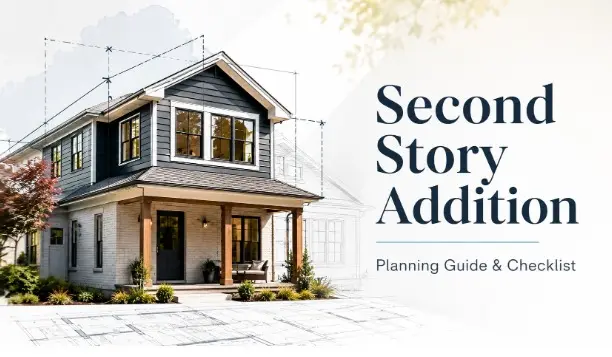
A second story addition can be one of the smartest ways to add space without giving up your yard. For many homeowners, moving is not always the best option. You may like your neighbourhood, your lot, your school catchment, or the general layout of your home, but the house itself may no longer have enough room.
That is where building upward starts to make sense.
A second story addition can give you more bedrooms, a larger primary suite, a home office, a playroom, or extra living space. It can also help your home work better for a growing family. But this type of renovation is not simple. It affects the structure, roof, stairs, layout, permits, budget, and how the whole home feels once the work is finished.
Before starting, it helps to understand what is involved and what should be checked early. A clear second story addition can help you avoid rushing into design decisions before the bigger questions are answered.
What Is a Second Story Addition?
A second story addition means adding a new upper level to an existing home. In some cases, this may involve building a full second floor. In other cases, it may mean adding a partial second level above one part of the house, such as over a garage, rear section, or existing main floor area.
The goal is usually to create more living space without expanding the home’s footprint too much. This can be useful on smaller city lots where backyard space is limited or where zoning rules make a large rear addition harder.
A second story addition can include:
- New bedrooms
- A primary suite
- Extra bathrooms
- A home office
- A family room
- Laundry space
- Storage areas
- A better roofline
- Improved views and natural light
It is a major project, but when planned well, it can change how the whole home functions.
Why Homeowners Choose to Build Up
Many homeowners consider a second story addition when the home no longer fits their life, but they do not want to move.
Maybe the family has grown. Maybe one parent works from home. Maybe the kids need separate bedrooms. Maybe the main floor feels too crowded. Or maybe the house sits on a valuable lot in a neighbourhood where buying a larger home would cost much more than renovating.
Building up can help you stay in the area you already like.
It can also protect outdoor space. A rear addition may reduce the backyard. A second story addition can add square footage while keeping more of the yard open for kids, pets, gardening, or entertaining.
For homes in Vancouver and nearby areas, this is often a big reason homeowners explore the option. Lots can be limited, and staying in the same neighbourhood can be worth the planning work.
Start With the Structure
The first question is not about finishes or room layouts. It is about whether the existing home can support the new level.
A second story addition adds weight. The foundation, framing, walls, beams, and footings may need to be reviewed by a professional before plans move forward. Some homes can support an addition with the right upgrades. Others may need major structural work before a second level is possible.
This is one of the most important parts of the checklist.
Your early planning should include:
- Foundation review
- Existing wall and framing review
- Roof removal planning
- Load path assessment
- Beam and support requirements
- Engineering input
- Soil or site concerns if needed
Skipping this step can lead to serious problems later. A nice floor plan will not matter if the house is not ready to carry the extra load.
Think About the Stairs Early
Stairs are one of the biggest layout decisions in a second story addition.
Many homeowners focus on the rooms upstairs, but the staircase affects both floors. It takes up space on the main level and shapes how the upper level connects to the rest of the home.
A poorly placed staircase can make the main floor feel awkward. A well-placed staircase can make the addition feel natural, like it was always part of the home.
When planning stairs, think about:
- Where the stairs can fit without hurting the main floor layout
- How the stairs connect to the new upper level
- Whether natural light can be added near the stairwell
- How the stair placement affects furniture and traffic flow
- Whether the stairs meet code requirements
This is one of those details that can make or break the final design.
Match the New Level With the Existing Home
A second story addition should not look like a random box placed on top of the house. The new level needs to fit the style, scale, and proportions of the existing home.
This matters both inside and outside.
From the exterior, the roofline, windows, siding, trim, and overall shape should feel balanced. The addition can look updated and modern, but it should still connect with the original structure.
Inside the home, the transition should also feel natural. The main floor and upper floor should feel like parts of the same house, not two separate projects.
This is where working with the right design and construction team matters. A local contractor like TQ Construction can help homeowners think through the practical side of the build while keeping the final result clean, useful, and consistent with the home’s character.
Plan the Rooms Around Daily Life
The best second story addition is not always the biggest one. It is the one that solves the right problems.
Before deciding how many rooms to add, think about how your family actually lives. Do you need more bedrooms, or do you need a larger primary suite? Do you need a work-from-home space? Do you need another bathroom more than another bedroom? Would upstairs laundry make daily life easier?
The layout should match real needs, not just add square footage.
For example, a young family may need three bedrooms and a shared bathroom upstairs. A couple may want a private primary suite, walk-in closet, and quiet office. A multi-generational home may need flexible rooms that can change use over time.
Good planning starts with lifestyle first, then layout.
Second Story Addition Checklist for Homeowners
A simple home renovation checklist can help you stay focused before the project gets too far.
Here are the main items to review:
- Confirm why you need the extra space
- Review the current home layout
- Check if building up makes more sense than building out
- Speak with a contractor early
- Review the foundation and structure
- Bring in engineering support if needed
- Check zoning and permit requirements
- Plan where the staircase will go
- Decide which rooms are most important
- Review roofline and exterior design
- Set a realistic budget
- Add a contingency for hidden issues
- Plan where you will live during construction
- Choose materials that suit the home
- Prepare for noise, dust, and disruption
- Build a clear timeline before work begins
This checklist does not replace professional advice, but it gives homeowners a better starting point.
Budget for More Than the New Rooms
A second story addition is more than building new rooms upstairs. The work often affects the entire house.
The roof may need to be removed. The main floor may need structural changes. Electrical, plumbing, and HVAC systems may need upgrades. The exterior may need new siding, windows, or trim so the addition looks complete.
You may also need to repair or update parts of the home that are affected during construction.
Common budget items include:
- Design and planning
- Engineering
- Permits
- Demolition
- Framing
- Roofing
- Insulation
- Windows
- Electrical work
- Plumbing
- Heating and ventilation
- Drywall and finishing
- Flooring
- Exterior siding and trim
- Painting
- Cleanup and disposal
A second story addition can also reveal hidden problems in the existing home. Older framing, wiring, moisture issues, or previous renovation work may need attention once construction begins.
This is why a contingency is important. It gives you room to make the right decision if something unexpected appears.
Understand the Disruption
A second story addition is a major renovation. In many cases, the home may not be comfortable or safe to live in during key parts of the work.
There may be roof removal, structural changes, open walls, temporary weather protection, dust, noise, and trade activity throughout the house. Some families choose to move out during construction. Others stay elsewhere during the most disruptive stages.
Before starting, ask your contractor what to expect.
You should understand:
- Whether you can live in the home during the project
- How long the most disruptive phase may last
- How weather protection will be handled
- How the site will be secured
- What areas of the home will be affected
- How often you will get updates
Knowing this ahead of time helps reduce stress once work begins.
Do Not Rush the Permit Stage
Permits are a key part of a second story addition. Since the work affects structure, height, floor area, setbacks, safety, and sometimes neighbourhood character, approvals may take time.
The permit process can feel slow, but it is important. It helps confirm that the project is being reviewed properly and that the work meets required standards.
A contractor and design team can help prepare the right documents and coordinate the process. This may include drawings, engineering details, site plans, and other required information.
It is better to plan for this early than to assume construction can start right away.
Choose a Contractor With Addition Experience
A second story addition is not the same as a cosmetic renovation. It requires careful planning, strong site management, and clear coordination between designers, engineers, trades, and inspectors.
The contractor needs to understand structure, sequencing, weather protection, safety, and how to keep the project moving once the existing home is opened up.
When speaking with a contractor, ask:
- Have you worked on second story additions before?
- How do you assess the existing structure?
- How do you handle hidden issues?
- How do you protect the home during construction?
- How do you manage communication and updates?
- What should we know before starting?
For homeowners planning this type of project in Vancouver, TQ Construction is a local name worth keeping in mind. A project this large needs a team that can manage both the build and the planning details that come before it.
Think About Long-Term Value
A second story addition should not only solve today’s space problem. It should also make sense for the future.
Think about how your needs may change over time. Children grow. Work habits change. Families age. A flexible layout can make the addition useful for many years.
Also think about resale. Extra bedrooms, bathrooms, a better layout, and improved living space can add value when done properly. But quality matters. Poor design or awkward additions can hurt the feel of the home.
The best second story additions feel natural, useful, and well built.
Final Thoughts
A second story addition can give your home the extra space it needs without forcing you to move or give up your outdoor area. It can add bedrooms, bathrooms, work space, and better daily function.
But it is not a small project. It needs careful planning, structural review, permit support, realistic budgeting, and the right contractor.
Start with a clear checklist, understand what your home can support, and make design decisions around how your family actually lives. With the right plan, a second story addition can feel like a natural part of the home instead of an afterthought.
For homeowners in Vancouver considering this kind of project, TQ Construction can be a helpful name to keep in mind when comparing contractors and planning the next step.