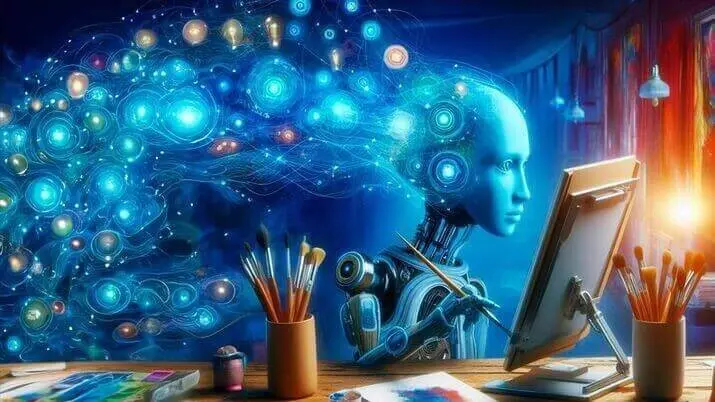
Digital creativity has entered a fascinating new era, and few innovations have transformed it as rapidly as AI image generation. What once required years of artistic training, expensive software, and countless hours of manual effort can now be explored in minutes with the help of intelligent systems. From marketers and designers to hobbyists and entrepreneurs, people everywhere are embracing this technology to produce original visuals, experiment with ideas, and expand creative possibilities.
One of the biggest reasons for this shift is the growing accessibility of AI image generation tools. These platforms allow users to turn text prompts into illustrations, concept art, product visuals, and even photorealistic scenes with remarkable speed. Instead of replacing human creativity, they are giving creators new ways to brainstorm, refine concepts, and bring imagination to life.
A New Chapter in Digital Creativity
Creativity has always evolved alongside technology. Traditional painting moved into digital illustration. Photography shifted from film to editing software. Video production became more accessible with affordable tools and online platforms. AI-powered image creation is the next chapter in this progression.
What makes this change different is how quickly ideas can move from concept to visual output. A designer can test multiple styles in minutes. A content creator can generate visuals for blogs, social media, and campaigns without waiting days for production. Artists can use AI as a collaborative assistant for inspiration rather than seeing it as competition.
This acceleration is reshaping the creative process itself. Instead of beginning with a blank canvas, creators can begin with generated concepts, then modify, enhance, and personalize them.
Breaking Down Creative Barriers
For years, quality visual content often required advanced skills or a significant budget. Small businesses, solo creators, and beginners often struggled to compete with larger brands that had design teams.
AI image generation is helping level that playing field.
Someone with no formal design experience can now create:
- Social media graphics
- Product mockups
- Character illustrations
- Marketing visuals
- Blog featured images
- Concept art
- Branding ideas
This democratization of creativity is one of the technology’s biggest strengths. It lowers barriers while opening opportunities for more people to participate in visual storytelling.
Speed Meets Experimentation
Traditional creative workflows can be time-intensive. Sketching ideas, revising drafts, adjusting compositions, and building assets often take hours or days.
AI dramatically shortens those stages.
Creators can explore dozens of styles from a single idea:
- Minimalist artwork
- Futuristic designs
- Watercolor effects
- 3D concepts
- Cinematic compositions
- Fantasy environments
That speed encourages experimentation.
Instead of committing early to one concept, creators can explore many directions before choosing the strongest approach. This often leads to more inventive results.
Ironically, having more options can increase originality rather than reduce it.
Transforming Design Workflows
Professional designers are also integrating AI into their workflows—not to replace expertise, but to enhance efficiency.
Common uses include:
Rapid Concept Development
Designers can generate rough visual ideas before building polished final assets.
Mood Board Creation
Instead of searching endlessly for references, creatives can generate inspiration tailored to a project.
Creative Block Assistance
When ideas stall, AI can spark unexpected directions.
Iteration Support
Testing alternate compositions or styles becomes significantly faster.
Rather than removing human skill, these tools often shift focus toward higher-level creative decision-making.
The Impact on Content Creation
Content creators have become some of the biggest adopters of AI-generated visuals.
Modern content demands constant imagery:
- Blog graphics
- YouTube thumbnails
- Social posts
- Ad creatives
- Email visuals
- Website artwork
Creating original visuals for every piece of content used to be costly or repetitive.
Now creators can produce customized visuals aligned with their brand voice and niche.
This matters because unique visuals often perform better than generic stock images. They improve engagement, strengthen branding, and help content stand out in crowded feeds.
AI as a Creative Partner
A common misconception is that AI replaces creativity.
In practice, many creators use it as a collaborator.
The human still guides:
- Prompt direction
- Artistic choices
- Composition preferences
- Editing decisions
- Final storytelling vision
AI generates possibilities.
Humans curate meaning.
That relationship is why many artists treat these systems less as machines producing finished work and more as tools supporting exploration.
It is closer to collaborating with an assistant than pressing a magic button.
Opportunities for Artists
Traditional artists have had mixed reactions, but many are finding ways to incorporate AI into their practice.
Some use it for:
- Concept exploration
- Reference generation
- Style experimentation
- Background ideas
- Character development
- Visual brainstorming
An illustrator may use AI to generate composition concepts, then paint the final work manually.
A game artist may generate environmental ideas before refining assets.
In these cases, AI becomes part of the creative toolkit, much like digital brushes or photo references.
Expanding Creative Industries
The impact extends far beyond independent creators.
Industries adopting AI-generated imagery include:
Marketing
Brands use it for campaign concepts, ad variations, and promotional visuals.
Publishing
Writers and publishers use generated artwork for covers, illustrations, and promotional content.
E-Commerce
Product visualization and mockups can be produced faster.
Entertainment
Concept art for games, films, and virtual environments is evolving rapidly.
Education
Visual learning materials can be customized and generated at scale.
This broad adoption signals that AI image generation is becoming foundational technology rather than a niche experiment.
The Personalization Revolution
One major advantage of AI-generated visuals is personalization.
Traditional stock imagery often feels generic.
AI allows visuals tailored to specific audiences, themes, moods, or branding styles.
A fitness blog can generate unique workout imagery.
A travel creator can produce destination-inspired illustrations.
A small business can create custom branded visuals without agency-level costs.
This ability to personalize content at scale is changing digital communication.
Challenges and Ethical Questions
Like any transformative technology, AI image generation raises important questions.
Discussions continue around:
- Copyright and training data
- Originality and ownership
- Ethical use of generated content
- Misleading synthetic imagery
- Fair compensation for artists
These conversations matter.
As the technology evolves, responsible use will shape its long-term role in creative industries.
Innovation and ethics need to grow together.
Why Prompting Is Becoming a Creative Skill
One fascinating development is how prompting itself is becoming a creative discipline.
Writing strong prompts involves:
- Visual thinking
- Descriptive precision
- Stylistic direction
- Composition awareness
- Iterative refinement
In many ways, prompt crafting resembles art direction.
The better the prompt, the stronger the output.
This has introduced an entirely new skill layer in digital creativity.
The Future of AI Image Generation
The technology is evolving rapidly.
Future developments may include:
- More advanced editing controls
- Real-time generation workflows
- Better style consistency
- Interactive creative collaboration
- Integration with design software
- Personalized creative assistants
Rather than standalone generators, future systems may function as deeply integrated creative partners.
That could reshape how digital art, branding, media, and visual storytelling are produced.
Why This Shift Matters
Every major creative technology initially sparks skepticism.
Photography did.
Digital illustration did.
Video editing software did.
Yet over time, tools that expand creative possibilities often become standard.
AI image generation appears to be following that path.
Its significance is not simply automation.
It is amplification.
It allows people to visualize ideas faster, explore more possibilities, and create without many of the traditional barriers.
That changes who gets to participate in creative work.
And that may be the biggest transformation of all.
Final Thoughts
The rise of AI image generation is not just a trend—it represents a major evolution in how digital creativity works. From helping beginners create compelling visuals to giving professionals faster ideation workflows, the impact is already widespread.
What makes this movement powerful is not the technology alone, but how humans use it.
Creativity has always adapted to new tools.
Today, AI image generation is becoming one of those tools.
For artists, marketers, designers, entrepreneurs, and everyday creators, it offers something valuable: more ways to turn imagination into reality.
And in the world of digital creativity, that changes everything.