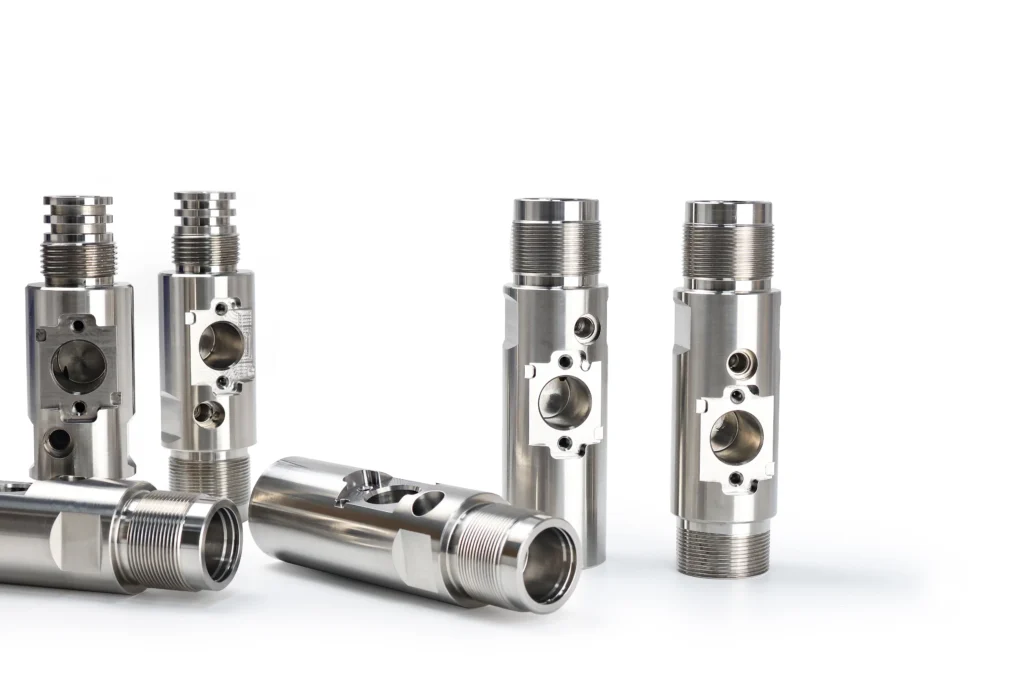
CNC machining, a cornerstone of modern manufacturing, transforms digital designs into precise physical parts with remarkable accuracy. This article delves into the essentials of CNC machining services, exploring its processes, advantages, and why it’s crucial for industries ranging from aerospace to healthcare. Understanding CNC machining can open new possibilities for innovation and efficiency in production.
Defining CNC Machining
Computer Numerical Control (CNC) machining is a manufacturing process in which pre-programmed software dictates the movement of factory tools and machinery. This process can control complex machinery ranging from grinders, lathes, and mills to routers. With CNC machining, 3D cutting tasks can be accomplished with a single set of prompts. CNC machines translate computer-aided design (CAD) models into code, which guides the machinery to create highly precise parts.
History of CNC Machining
CNC machining, developed in the late 1940s and early 1950s, revolutionized manufacturing. Initially, it evolved from numerical control (NC), a system where machine tools were operated through punched tape. By the 1960s, computer integration began enhancing NC capabilities, spawning a new era of CNC. Predominantly used in aerospace and automotive industries during its early years, CNC machining expanded to healthcare and consumer products due to advancements in computing and automation technology. The continuous improvements in software and hardware have made CNC machining a cornerstone of modern manufacturing.
How CNC Machines Work
CNC machines follow a set of operating principles involving software control and mechanical execution.
The Role of CAD and CAM
CAD (Computer-Aided Design) and CAM (Computer-Aided Manufacturing) software play crucial roles in CNC machining. CAD software is used to create precise 2D or 3D models of the parts or components. Once the design is finalized, the CAD file is imported into CAM software, which converts the design into a set of instructions. These instructions dictate how the CNC machine will move, what tools will be used, and the precise path to follow. This seamless integration ensures that the final product closely matches the original design.
Types of CNC Machines
- Milling Machines: Equip cutting tools that rotate to remove material.
- Lathes: Rotate the workpiece against a cutting tool to create cylindrical shapes.
- Plasma Cutters: Use a jet of ionized gas to cut through conductive materials.
- Laser Cutters: Utilize a focused laser beam to cut or engrave materials.
- Electrical Discharge Machines (EDM): Remove material through electrical sparks.
Each machine type is suited for specific tasks, materials, and industries. For instance, lathes are commonly used in metalworking, while laser cutters excel in precision tasks such as engraving.
Operation Process
Once the CAD and CAM files are ready, an operator transfers the instructions to the CNC machine via a computer interface. The machine then executes the programmed movements to shape the material. Sensors monitor the process, ensuring accuracy and consistency. Automated feedback mechanisms adjust the operation if deviations are detected.
Applications of CNC MachiningIn Aerospace
CNC machining is crucial in aerospace for creating parts with high precision. Components like turbine blades, engine parts, and airframe sections require tight tolerances and materials that can withstand extreme conditions. This often includes high-performance alloys and carbon-based materials – particularly graphite, which is regularly used in tooling, electrodes, and heat-resistant components. Many of these common graphite products are well-suited for aerospace applications, where stability, conductivity, and machinability are critical. Additionally, CNC’s role in aerospace extends to prototypes, which helps in testing designs and ensuring functionality before full-scale production. As aerospace demands continue to evolve, CNC machining paired with advanced materials like graphite remains key to achieving consistent performance and innovation.
In Automotive Manufacturing
Automotive manufacturing benefits significantly from CNC machining. Car engines, transmissions, and other vital parts demand consistent accuracy. CNC machines produce these components efficiently, maintaining quality throughout production. In addition to engine parts, CNC machining is used for the creation of custom components, ensuring each one fits perfectly. This process contributes to the overall reliability and safety of vehicles.
Advantages of CNC MachiningPrecision and Accuracy
CNC machining produces components with high precision and accuracy, essential for industries like aerospace and automotive. Machines follow exact specifications from CAD models, ensuring consistent results. With tolerances as tight as ±0.001 inches, CNC machines create intricate parts that manual methods can’t achieve. This precision reduces material waste and improves production efficiency.
Efficiency and Speed
CNC machines operate continuously, only stopping for maintenance or upgrades. This uninterrupted operation boosts production speed significantly. Automated tool changes and multi-axis capabilities allow complex tasks to complete in a fraction of the time compared to manual machining. Programmable nature ensures fast setup times, further enhancing operational efficiency.
Challenges in CNC MachiningCost Concerns
CNC machining often involves significant upfront costs. Businesses need to invest heavily in purchasing CNC machines, which can range from $50,000 to $250,000 depending on the complexity and capabilities. Maintenance costs also run high, requiring regular servicing and replacement of parts like spindles, cutting tools and electronic components. For small businesses, these costs can be prohibitive and limit their ability to adopt CNC technology.
Technical Training and Skills
Operating CNC machines requires specialized technical training. Operators must be proficient in CAD and CAM software, understand machine programming and possess skills for troubleshooting mechanical and software issues. The learning curve is steep, and it often takes months of training and hands-on experience to become adept. Finding skilled CNC operators can be challenging for employers, as there’s a shortage of trained professionals in the industry. Investing in continuous training for employees is necessary, adding to the operational costs.
Conclusion
CNC machining stands out as a transformative technology in modern manufacturing, offering unparalleled precision and efficiency. While the initial investment and ongoing maintenance can be substantial, the benefits often outweigh these costs. Companies leveraging CNC technology can achieve superior product quality and reduced material waste. Continuous training and addressing the skills gap remain crucial for maximizing the potential of CNC machining. As industries evolve, staying updated with advancements in CNC technology will be key to maintaining a competitive edge.
Technology Perspective
Technology continues to transform industries through artificial intelligence, cloud computing, automation, cybersecurity, digital platforms, and data-driven decision making. As organizations increasingly adopt digital solutions, understanding emerging technologies becomes essential for businesses, professionals, and consumers. DGM News regularly covers these developments through expert analysis, technology news, and educational resources.
Innovation Outlook
Rapid advances in artificial intelligence, automation, machine learning, cloud infrastructure, and digital transformation continue reshaping global industries. Monitoring these developments helps organizations adapt to changing technologies, improve efficiency, and prepare for future innovation.
Did you know?
Artificial Intelligence is expected to influence nearly every major industry over the coming decade, from healthcare and finance to transportation, manufacturing, education, and entertainment.
AI, Machine Learning, Deep Learning and Generative AI Explained
Google AI Updates
About DGM News
DGM News is an independent digital publication delivering the latest Technology News, AI News, and FinTech News. We provide expert insights on startups, innovation, cybersecurity, software, business, gadgets, cloud computing, artificial intelligence, and emerging technologies. Our mission is to publish informative, accurate, and regularly updated content that helps readers stay informed in today's rapidly evolving digital landscape.
Since our editorial focus includes technology, artificial intelligence, and financial technology, we continuously expand our coverage as new innovations emerge.
Editorial Standards
Every article published on DGM News undergoes editorial review before publication. We prioritize factual accuracy, clarity, transparency, and reader value while following responsible digital publishing practices.
Research Methodology
Our editorial team researches publicly available information from official announcements, technical documentation, research publications, developer resources, reputable industry reports, and trusted public sources whenever applicable. Information is reviewed to improve clarity and accuracy before publication.
Fact-Checking Policy
We make reasonable efforts to verify factual information before publishing. Articles are reviewed for accuracy, consistency, and relevance. If significant developments occur after publication, content may be revised to reflect updated information.
Update Policy
Technology evolves rapidly. Articles may be reviewed and updated periodically to reflect software releases, AI developments, security advisories, regulatory updates, product launches, and other important industry changes.
Source Verification
Whenever possible, DGM News reviews information using official company announcements, technical documentation, research publications, government resources, publicly available reports, and reputable industry references before updating articles.
Editorial Independence
DGM News maintains editorial independence in all publishing decisions. Editorial content is produced independently and is intended to provide balanced, informative, and reader-focused coverage without influence from advertisers or commercial partnerships.
AI Usage Disclosure
Artificial intelligence tools may assist with research organization, grammar improvement, formatting, or editorial workflows. Every article is reviewed by human editors before publication to help maintain quality, clarity, and factual accuracy.
Corrections Policy
Accuracy is important to us. If readers identify outdated information or factual inaccuracies, they are encouraged to contact our editorial team. Verified corrections are reviewed and incorporated whenever appropriate.
Reader Feedback
Reader feedback helps improve our journalism. We welcome suggestions, corrections, and constructive feedback through our Contact page to continuously improve the quality of our reporting.
Last Editorial Review
This article follows the DGM News editorial review process and may be updated periodically as new information becomes available.
Why Trust DGM News?
DGM News is committed to publishing technology journalism that emphasizes accuracy, transparency, editorial independence, and regularly updated information. Our editorial process is designed to provide readers with reliable coverage of technology, AI, fintech, startups, and digital innovation.
DGM News Resources
Topics We Cover
Artificial Intelligence • AI Tools • Machine Learning • FinTech • Cybersecurity • Cloud Computing • Programming • Software Development • Gadgets • Mobile Technology • Business Technology • Startups • Digital Marketing • Blockchain • Cryptocurrency • Science • Innovation • Consumer Technology • Enterprise Technology • Automation