That’s the sensation. The one where you’ve been stuck in traffic for 45 minutes, you have 200 unread emails and someone stole your lunch from the office fridge again. You want to scream. You want to throw something around. You want to feel something other than this low level simmering teeth clenching stress that seems to follow you around everywhere.
But what if you could make all of that creative? Something that makes you feel lighter and calmer and proud of what you’ve made, strangely?
That’s what rage painting London is for. And this is one of the most interesting, freeing and frankly useful things you can do with a free afternoon and a head full of frustration.
Whether you’re hunting for rage painting in Bristol, looking for rage painting options in Bath, fancy rage painting in Worcester or browsing rage painting options in London, this guide will tell you everything you need to know before you pick up that brush or hurl that paint-filled balloon at a canvas from six feet away.
So, What Is Rage Painting?
Rage painting, or anger painting, stress painting, expressive paint therapy is just about what it sounds like. You paint. And you paint hard. Forget light brush strokes and careful blending. Think throwing, splashing, smashing, flicking.
The whole point is to let go. You are not trying to paint a landscape or copy a portrait. You’re trying to get something out of your chest and onto canvas. That’s part of the problem.” The canvas is a mess. At the end of the session you walk away with a piece of art abstract, raw and all yours.
It’s a little bit of art therapy, a little bit of physical exercise and just a really satisfying way to release.” Studios across the UK have built whole experiences around the concept from rage painting Bristol venues to rage painting London spaces and demand is growing fast.
Where did rage painting come from?
You might be surprised at how far back the roots go. Abstract Expressionism, the art movement that gave us Jackson Pollock’s drip paintings and Mark Rothko’s huge colour fields, was always about feeling over precision. Pollock was famous for working on canvases on the floor, using his whole body to drip and fling paint.
Gutai was a movement that started in Japan in the 1950s. Artists literally threw paint at canvases, stomped on surfaces covered in paint, and used their whole bodies as tools. It was rebellious, physical, messy and deliberate.
Fast-forward to today. Something new has emerged from the collision of the wellness industry, the explosion of experiential activities, and a growing cultural conversation around stress and mental health. Around 2008, rage rooms, where you pay to smash stuff with a baseball bat, became a fad. Painting rage was the more creative, less destructive cousin.
You can now book a rage painting session just like you would a pottery class or spin class. It has a structure. It is safe. And, it’s surprisingly good therapy.
What Really Happens In A Rage Painting Session?
If you’ve never been there, you’re probably thinking it’s a bit crazy, a bit intimidating. But it’s actually far more hospitable than that. This is normally broken down into what you can expect:
You show up, you get kicked out.
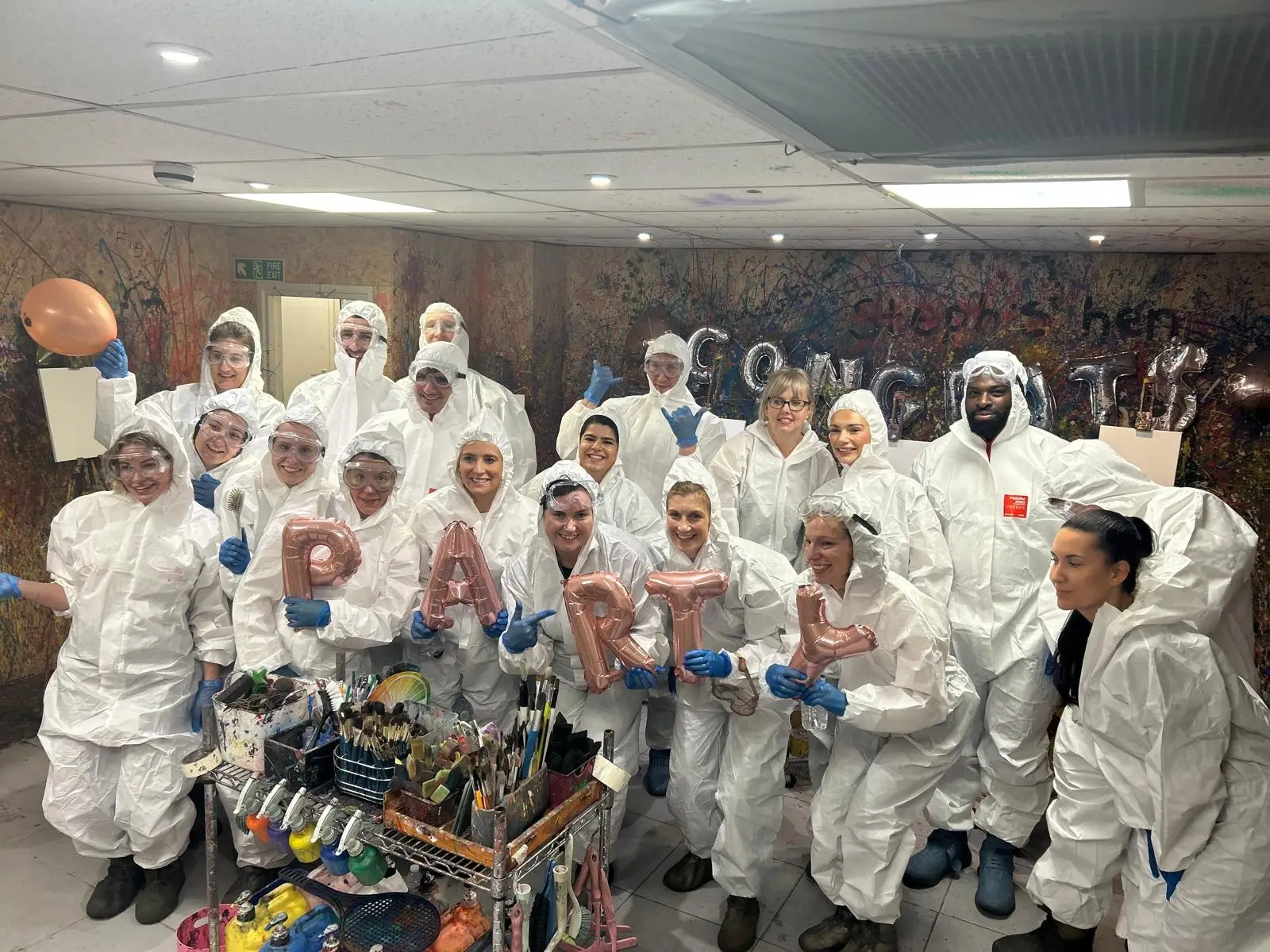
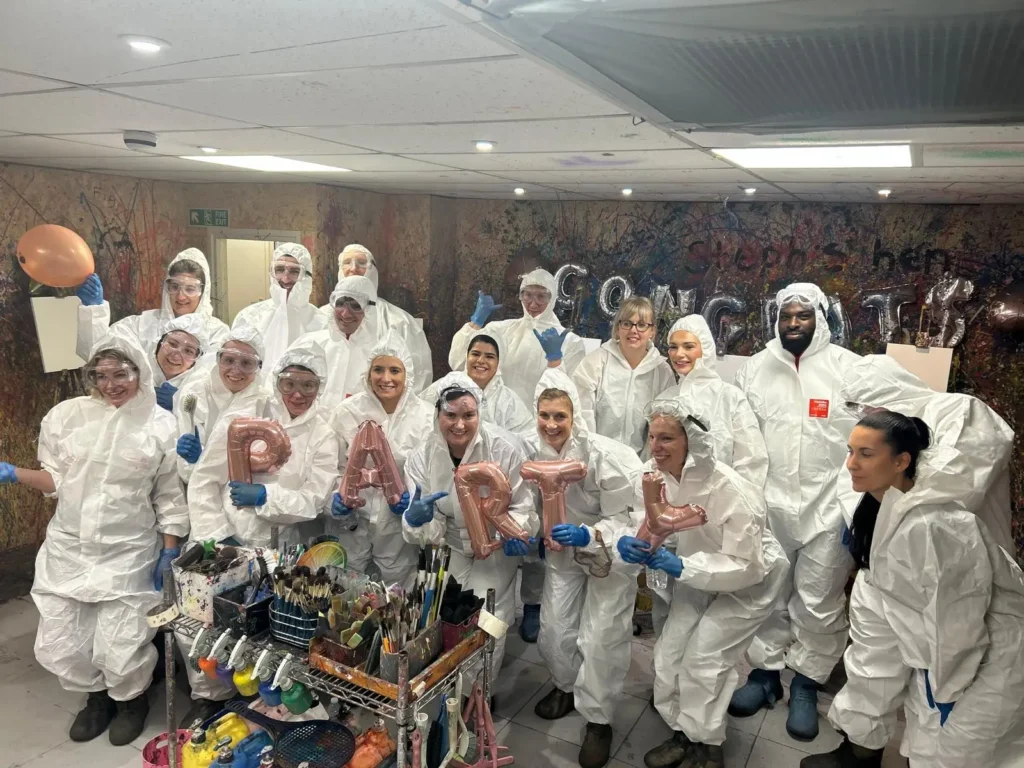
Most studios will provide you with a protective suit, or at least an apron, goggles and gloves. Paint gets everywhere. – That’s not a bug – it’s a feature. But nobody wants to wreck their favourite jumper so the safety gear is non-negotiable and it’s usually included in your session fee.
You Choose Your Colors and Tools
Now it gets interesting. The studios usually give you a selection of paints and a selection of tools – brushes, rollers, sponges, squeeze bottles, and sometimes balloons or bags of paint to chuck at your canvas. Some places have theme nights where you pick colours based on the emotion you are trying to process. Red for anger, black for sorrow, yellow for care.
You Paint — Not As You Were Taught
No instruction. No teacher hovering over you telling you your lines are uneven. You shoot. You splash around. You pull. You stamp. Some people wear headphones in almost silence. Others paint to loud music in the studio overhead. Some cry. Some laugh. Some scream. All of that is true.
Sessions typically last one to two hours. You can go fast and furious all the way through or you may find yourself slowing down as the tension leaves your body and you begin to make more deliberate calm marks. Among the many participants, the transition from frantic to focused is one of the most surprising and meaningful parts of the experience.
Take Your Art Home
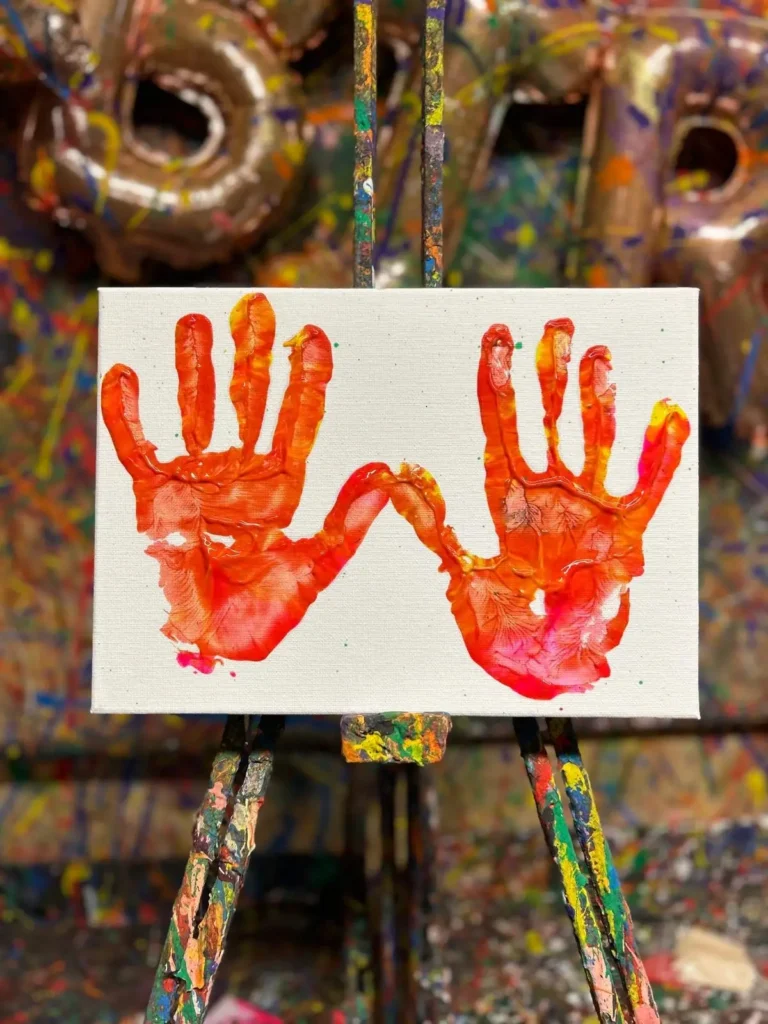
This is the part people don’t always expect. You made something. Your canvas is your own – chaotic, layered, deeply personal. This is where, many participants say, the experience begins to matter. You look at this abstract explosion of colour and energy and you think: that was in me. Now it is not.
The case for rage-painting your mental health
And this is where the fun gets interesting, as rage painting is more than just a fun novelty. There is a legitimate body of research behind what people feel when they walk out of session.
It gives your rage somewhere to go
Anger is not a bad thing. It’s a signal, it’s a feeling that’s there for a reason. Most people’s problem is that they don’t have a suitable place to put it. You can’t yell at your boss. You can’t throw your laptop out the window. But you can chuck a paint-filled balloon at a canvas in a room that has been made for just that purpose.
Psychologists call it catharsis, the emotional release that comes from expressing instead of suppressing strong feelings. Emotion when expressed physically and safely can reduce the physiological symptoms of stress: lower cortisol, slower heart rate, reduced muscle tension.
It brings you into the present moment
This sounds a bit counterintuitive for an activity that begins with rage, but hear this out. “When you are actively creating — when you have paint on your hands and you are making split-second decisions about what to do next — your brain has to be present in the moment. When you’re in the middle of a throw, you can’t worry about tomorrow’s meeting.
It is really mindfulness on the move and creativity. You find the same mental state you may find doing meditation or yoga, just with a lot more mess and noise.
It bypasses your inner critic
One of the biggest barriers to creative expression is the voice that tells you that you are not good enough. “You can’t draw that. That your art isn’t real art. Rage painting makes that voice irrelevant, for there is no standard to be met. You can’t do it wrong. There is nothing wrong.
This can be genuinely liberating for people who struggle with perfectionism or anxiety and that is a lot of people – in a way that other activities are not.
The Rage Painting Scene in Bristol: What’s Going On
Bristol has always been a city of creativity and independence. It’s the city that put street art on the mainstream map and really gets behind unusual, experiential activities. The venues of the Bristol rage painting are generally in that spirit – casual, welcoming and totally unpretentious.
If you’re in Bristol and keen to try rage painting, you’ll find options ranging from dedicated studio sessions to pop-up events. It is a popular choice for hen dos, birthdays, corporate team days and wellness retreats and many venues offer group bookings. It is the sort of thing that brings people together fast, for there is nothing like watching your normally reserved colleague throw red paint on a canvas with real gusto.
Some people will travel between Bath and these two cities for sessions if a certain studio is known for great experiences or themed nights. If you live near Bath, you may want to check out Bath.
Rage Painting in Bath: Where Creativity Meets Wellness
Bath has a wonderful wellness culture. The city takes self-care seriously, with its thermal spa, yoga studios and generally Georgian air of elegance. Rage painting Bath sessions fit into this landscape in a somewhat surprising but very logical way.
Actually, the contrast plays in its favor. You have this beautiful, historic city, and then you walk into a studio and throw paint magenta on a wall. Part of the attraction is the contrast. “Rage painting is where they are at emotionally, and those who may feel a little uncomfortable in a traditional gym or a traditional art class, rage painting is where they are at emotionally.
Bath venues generally attract a blend of locals and tourists, and some studios have begun incorporating rage painting into more general wellness retreat packages — pairing it with sound baths, journaling sessions, or guided breathwork for a more regimented emotional processing experience.
Worcester Rage Painting A Thriving Scene
Worcester might not be the first city that comes to mind when you think of trend-forward wellness activities, but rage painting Worcester is on the rise. A city with a strong independent business scene and a growing population looking for experiences outside of the traditional night out.
Rage painting in Worcester tends to be more exclusive than in larger cities. You’re less likely to be one of twenty in a huge warehouse space and more likely to have a really personal, focused experience with a smaller group. For those who are put off by bigger, louder venues, this can actually make Worcester a great place to start.
The Worcestershire area is also closely connected to the arts, and some venues here adopt a slightly more therapeutic framing of rage painting – linking it to traditions of art therapy and offering sessions specifically designed for people dealing with grief, anxiety or burnout.
Rage Painting Goes Big or Goes Home in London
London gives you the full-scale, high-production rage painting experience if you want that. Rage painting London venues vary from basement studios in Shoreditch to purpose-built rage rooms in repurposed warehouses in East London. Music, UV lighting and a full bar. Kinda like nightclubs.
The capital has wholeheartedly embraced rage painting as a valid recreational pursuit. It will be marketed alongside escape rooms and axe throwing as a premium experiential option. Corporate bookings are particularly popular companies use rage painting team sessions as an unconventional team building, stress relief and creative thinking exercise.
London venues are generally the most innovative when it comes to format. There are themed sessions (rage against the patriarchy night, anyone?)collaborative big pieces that have a group working on one giant canvas, and even photography packages that take pictures of your session in action the options go far beyond what you’ll find in smaller cities.
The trade off is cost. Rage painting in London is not cheap so expect to pay a lot more for a session than you would in Bristol, Bath or Worcester.
Who Is Rage Painting Really For?
Short answer: Almost everyone. Long answer: here’s who gains the most.
Individuals Who Have Chronic Stress
If you’re the type who never truly turns off – who lies awake in bed running through tomorrow’s to-do list in their head, who holds tension in their shoulders and jaw – then rage painting is a proper reset for your nervous system. The physical activity and the emotional expression do something that neither a glass of wine nor a Netflix binge quite manages.
Transitional Peoples
Break ups. Redundancy. Bereavement. Sickness. Divorce. Life hits you in the gut and words cannot capture it. Rage painting provides a physical and creative outlet for those big, shapeless feelings. Many therapists now advocate it as a complement, not a replacement, but a companion to talking therapies.
People Who Believe They Are Not Creative
This is one of the most gratifying groups of people to watch in a session. People who have been telling themselves for decades that they can’t do art that creativity is for others discover in about ten minutes that they were wrong. Creativity is not a skill if you remove the expectation of a finished product. It is a natural condition of man. Rage painting offers a way for people to access that without all the anxiety of typical art classes.
Groups Seeking Something Different
Hen dos, birthday groups, friend reunions, corporate teams – rage painting has become a staple for groups who want a shared experience with a bit of an edge to it. It’s more active than a cooking class, more connective than an escape room and it produces something tangible in the end. Usually, the photos are incredible on their own.
What to wear and what to take
Make it simple. Here’s the practical checklist.
- Even if the studio provides coveralls, wear old clothes that you don’t mind ruining. Paint has a way of finding cracks.
- Leave jewellery at home. Rings and bracelets catch paint and are a nightmare to clean.
- Tie your hair back loose hair and flicked paint is a combination you will regret immediately.
- Most studios are warm, so dress in layers you can remove.
- Bring a towel or a change of clothes for after, especially if you are going anywhere else that day.
- Check in advance whether the studio provides transportation for your artwork or if you need to wait for it to dry before taking it.
Is Rage Painting Actually Safe?
Yes but only because reputable studios take safety seriously. What you should expect any legit venue to have in place is:
Non-Toxic Paints
Every credible rage painting studio uses water-based, non-toxic paints. When paint is flying around the room and inevitably ending up near your face, this is not optional. Always confirm this before booking, especially if you have skin sensitivities or allergies.
Safety Equipment
Goggles, coveralls, and gloves should be standard issue. Eye protection in particular is non-negotiable when paint is being thrown at velocity. If a studio doesn’t give you goggles, that’s a red flag.
Contained Spaces
Sessions take place in rooms designed to contain mess — usually plastic-sheeted walls and floors. You are not painting in a shared studio space. You are in a designated zone where everything is designed to absorb paint and be cleaned between sessions.
Facilitated Environments
Most studios have a member of staff in the room or nearby. For therapeutic sessions especially, this person is trained to hold the space – not to direct your painting but to make sure you are okay and to step in if someone has an unexpectedly strong emotional response. It happens. Paint can open doors inside you that have been closed for a long time.
How to Get the Most From Your Session
Going in with zero expectations is actually the best approach, but a few things can help you get more from the experience.
Thinking of Something (4)
You don’t need a plan. But having a loose intention I want to process this argument I had last week, I want to release the stress of this job search, I want to stop feeling numb and give your session a kind of emotional anchor. You might drift from it, and that is fine. But having something in mind when you start generally leads to a more meaningful experience than just showing up and hoping for the best.
Don’t start slow because you’re self conscious.
You feel a little silly for the first five minutes. You look at the blank canvas and all of a sudden you’re eight years old again and you’re afraid you’re going to do it wrong. And just push through. Grab the first paint you see, throw it and see what happens. Once you make the first mark, the whole world opens up.
Alter the Speed of the Session
The best sessions aren’t all frenetic. They begin with big, explosive energy, then move into something more controlled and deliberate as the session progresses. Follow that natural rhythm. If you want to make smaller, more deliberate marks after an initial burst of energy, do that. Your body and mind are processing in real time.
Bring a Friend or Come Alone
Both work, for different reasons. To go with a friend means you get to do it together, and have a little fun with it. There’s something about someone else also throwing paint that makes the whole thing feel safer. To go alone is a different kind of experience. It is more introspective, more personal, sometimes, more powerful.
What Rage Painting Is Not
There are a couple of things that are worth addressing head-on because misconceptions abound.
Rage painting is no replacement for therapy. This is not a replacement for professional help if you are experiencing serious mental health issues, but a supplement. It’s a really powerful tool in a bigger toolkit, but please don’t use it as an excuse not to get professional help if you need it.
Rage painting isn’t just for angry people. Despite the name, people come to sessions feeling all sorts of things grief, anxiety, frustration, numbness, creative blocks, and sometimes just wanting to do something totally different on a Saturday afternoon. The anger framing is a useful entry point, but the experience is much wider than that.
Rage painting is NOT meant for children. Most reputable venues require a minimum age of 16 or 18. The emotional intensity of the experience, along with the physical setting, render it unsuitable for young children. There are art studios that cater to families and children; this is not one of them.
Rage Painting vs. Other Stress Relief Experiences
People often ask how rage painting compares to rage rooms (where you smash objects) or more traditional wellness activities. So here’s an honest comparison.
Rage Painting and Rage Rooms:
Rage rooms are all about destruction, smashing plates, electronics and furniture with bats and crowbars. It’s visceral and satisfying in the moment, but nothing tangible is created, and some leave feeling hollow after. Rage painting adds a creative dimension. “You destroy the white canvas with paint, but you make something in the process, too.” This usually extends the emotional payoff for most people.
Rage Painting or Classic Art Classes?
Art classes are good skill builders, but there is the pressure to improve and make something that is aesthetically pleasing. Rage painting gets rid of all that. There is no skill being taught or tested. It is for people who would never take an art class and it serves a completely different emotional function.
Rage Painting vs Exercise
Exercise is one of the best supported tools we have for managing stress. But it can only address the physiological symptoms of stress, not the emotional content. Rage painting does both simultaneously – the physical work of throwing and moving, as well as the emotional processing of creative expression. They don’t compete. They work well together.
The Painting Community of Rage
Another surprise for first-timers is the warmth of the community surrounding this activity. Studios host regular events, build repeat-customer bases, and create really tight-knit communities of people who come back month after month.
Rage painting is a developing trend online, particularly on Instagram and TikTok, where both the finished items and videos of sessions in progress are doing extremely well. There’s something so satisfying about watching someone throw paint with complete abandon, even as a spectator.
Booking into a group session is a really low pressure way to meet people if you are a person who is prone to loneliness or isolation. You are not forced into conversation. You are simply sharing space and experience, and connection often follows naturally.
What’s the Cost of Rage Painting?
Prices vary considerably by location, length of session and what is included. As a rough guide for the UK:
- Solo sessions are around £25-£60 per person for a one hour session.
- Group bookings: often discount per person, discount for 4+ people.
- Venues that host Rage painting in London tend to be on the high end of the scale.
- Rage painting venues in Bristol rage painting venues in Bath rage painting venues in Worcester tend to be cheaper.
- Premium or therapeutic are longer, smaller groups, facilitated processing, cost more and are worth it if that is what you need.
Most studios include all paint and equipment in the session fee. Some charge extra for additional canvases or specialty tools. Always check what is included before you book.
Questions to ask before booking:
Not all rage painting studios are the same. Ask yourself these questions before you part with your money.
- Is the paint water-based? Is the paint non-toxic?
- What kind of protective gear do you have?
- How many people will attend the session?
- Do you have a facilitator, or are you on your own?
- Can I take my painting home today or does it need to dry overnight?
- What are your cancellation policies?
- What is the lowest age?
What People Are Saying After Their First Appointment
The feedback from first time participants tends to fit into a few consistent themes. People use words like lighter, emptied out, surprised, proud. Many say they laughed more than they thought they would. Many said they cried more than they expected.
What is the most common feedback, from people who were hesitant before? This is something I should have done long ago.
There is often also a real sense of achievement. Well, you did something. You might not be in the Tate but it came from somewhere real inside you and that counts for more than aesthetic polish.
The Bigger Picture: The Importance of Rage Painting Today
The world we live in is very good at giving us things to stress about and very bad at giving us legitimate healthy ways to process that stress. The standard remedies – exercise, therapy, meditation – have their place, but they don’t work for everyone, and they don’t cover all the bases.
Rage painting has its own niche. It’s physical, it’s non-competitive. It’s creative, non-judgmental. It’s not clinical but it’s emotional. It’s a place that allows people to feel things fully and to express things fully and not only allows it but it actively encourages it.
For a generation who have been told to manage, contain and perform wellness, rather than actually experience it, rage painting offers something radical: the chance to actually let it out.
Your Next Move Book a Session This Week
That’s the thing about rage painting. You can read about it for days. You can watch the videos, flip through the Instagram feeds and tell yourself that you’ll give it a go one day. But you don’t know what it is like until you do it. There is a difference between throwing paint with your whole arm, and words describing what it feels like to throw paint with your whole arm.
So, the one thing to do right now is this. Go looking for a rage painting session near you – whether that is rage painting Bristol, rage painting Bath, rage painting Worcester, rage painting London or anywhere else in the UK – pick a date in the next two weeks and book it. And don’t wait for the next “stressful event” to do so. You don’t have to be at your breaking point to deserve a release.
Schedule your session. Put on old clothes. Forget the paint. Then look at what you made, and feel how you feel.
That’s the whole story. That’s Rage Paint.