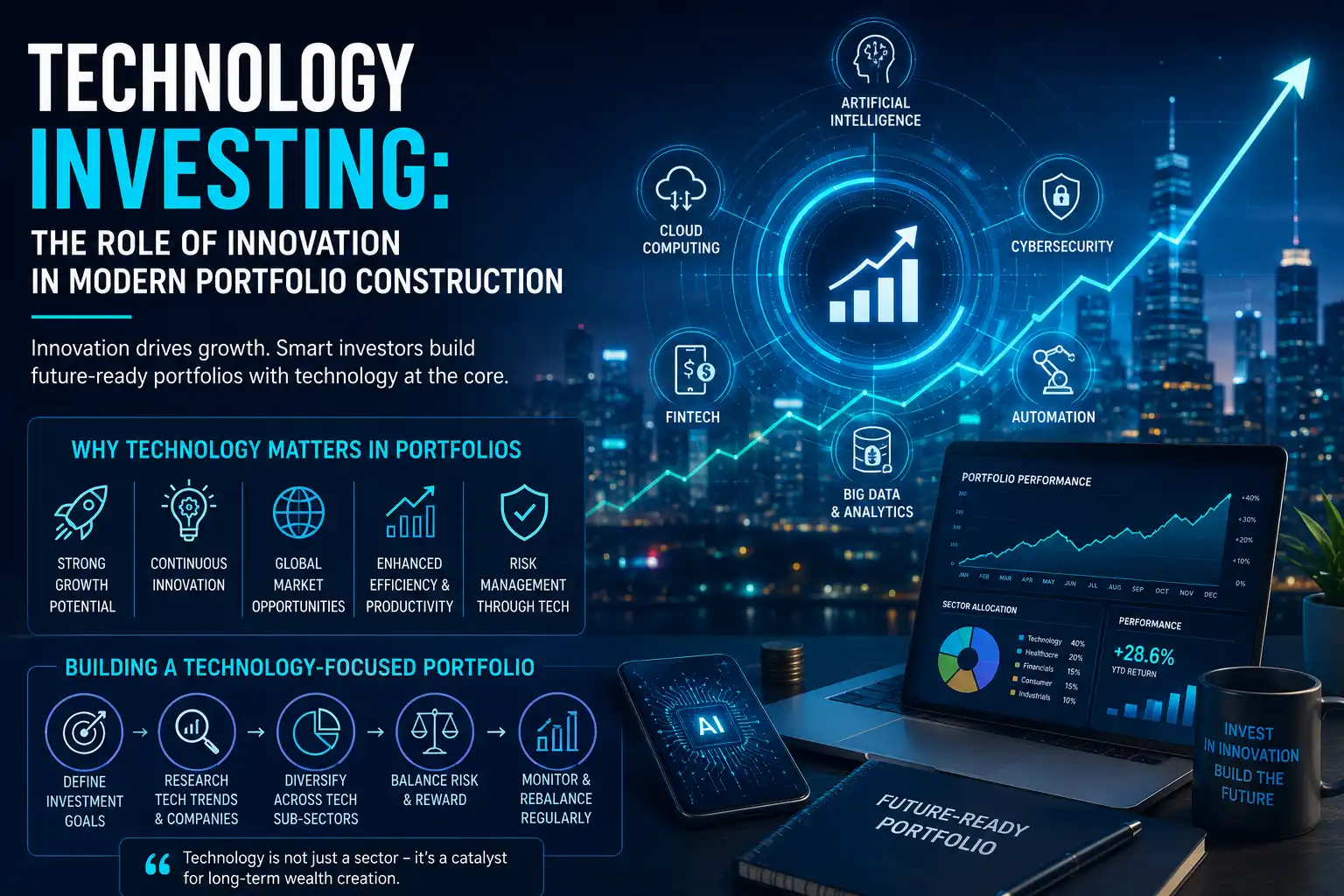
Technology is among the most influential forces behind financial markets. That has long been the case. From the rise of personal computing to the emergence of cloud services and AI, innovation has generated opportunities for businesses to grow and investors to benefit.
That’s why, with modern portfolio construction, an increasingly vital component is technology investing.
Why Technology Remains a Key Growth Driver
It’s no secret that technology companies sit at the center of economic transformation. Businesses that develop new solutions don’t just improve efficiency and reduce costs. They also create entirely new markets.
Investors are naturally drawn to these opportunities. The reason is simple: successful innovators can deliver prominent revenue and earnings growth in a relatively short period of time.
However, technology investing is not only about identifying the next breakthrough company. It’s also about recognizing wider trends. Consider the following areas:
- Artificial intelligence
- Cybersecurity
- Semiconductor manufacturing
- Cloud computing
- Digital infrastructure
Each of these continues to attract attention because they support long-term changes in how people live and work.
The Balance Between Opportunity and Risk
Technology offers strong growth potential. It also introduces unique risks. Rapid innovation means market leaders can be challenged by new competitors, while changing regulations and economic conditions can affect valuations. Technology stocks are also liable to experience higher levels of volatility than companies operating in more established sectors.
For this reason, savvy investors seek diversified exposure rather than concentrating their portfolios in a small number of companies. By combining technology investments with holdings across different sectors and asset classes, it reduces risk while retaining growth potential.
Ultimately, portfolio construction should balance opportunity with resilience. If you’re an investor who recognizes both the rewards and challenges of technology, you are better positioned to navigate changing market conditions.
The Importance of Risk Management
Technology is becoming a larger part of many portfolios. Consequently, risk management has become increasingly vital. Investors can benefit from strategies aiming to participate in market growth while also limiting exposure to significant downturns.
Take Markin, for example. They incorporate risk management principles and optional hedge overlays within their investment strategies. This reduces exposure to large drawdowns. The firm’s approach combines growth-oriented investing with systematic downside protection, allowing investors to gain exposure to long-term themes while keeping a focus on capital preservation.
This is a growing movement among asset managers. They’re seeking to balance innovation-driven returns with disciplined risk oversight.
Looking Beyond Individual Stocks
As an investor, one of the biggest mistakes you can make is to stick solely with a handful of well-known technology companies. Yes, major firms dominate the headlines. Yet innovation occurs across a much wider landscape. Smaller companies developing the likes of specialized software and the latest AI applications can also be key in future growth.
There’s another reason to take a diversified approach: it allows you to capture opportunities across different segments of the technology sector. Firstly, this reduces your reliance on a single company to make significant gains for your investment to be worthwhile. Secondly, it increases exposure to a wider range of innovation-driven trends.