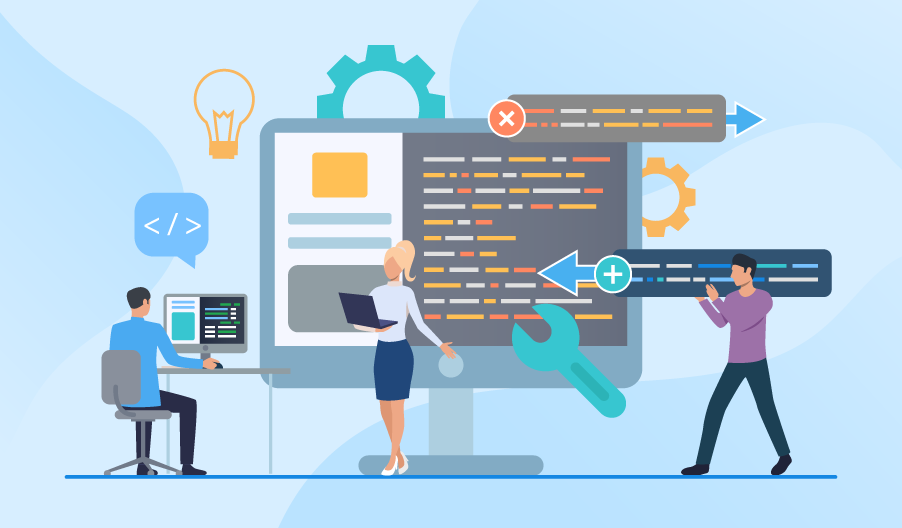
It is obvious, that staying ahead of the competition requires constant innovation and adaptability. As businesses grow and evolve, so do their software needs. However, many organizations still rely on legacy systems that may have been cutting-edge years ago but now struggle to meet modern demands. This is where application re-engineering comes into play, offering a powerful solution to breathe new life into outdated software systems.
What is Application Re-Engineering?
Application re-engineering is the process of updating, modifying, or transforming existing software systems to enhance their functionality, improve performance, and align them with current business needs. Unlike a complete overhaul or replacement, re-engineering focuses on preserving the core components of the software while modernizing and optimizing them for better efficiency.
The Benefits of Application Re-Engineering
- Cost-Effective Solution
- Re-engineering existing software is often more cost-effective than developing a new application from scratch. By leveraging the foundation of your legacy system, you can save both time and resources, allowing your business to allocate funds to other critical areas.
- Improved Performance and Scalability
- Legacy systems may struggle to handle increased data loads and user demands. Application re-engineering can optimize the performance of your software, ensuring it runs smoothly and efficiently. Additionally, modernizing your software allows for greater scalability, enabling your system to grow alongside your business.
- Enhanced Security
- As cyber threats evolve, so must your software’s security measures. Re-engineering provides an opportunity to address vulnerabilities and implement up-to-date security protocols, safeguarding your data and protecting your business from potential breaches.
- Adaptation to Modern Technologies
- The technology landscape is constantly changing, with new tools, frameworks, and platforms emerging regularly. Application re-engineering enables your software to integrate with these modern technologies, ensuring compatibility and improving overall functionality.
- Increased User Satisfaction
- User experience is a critical factor in the success of any software application. Re-engineering allows you to update the user interface (UI) and user experience (UX) design, making your software more intuitive, user-friendly, and aligned with current design standards. This leads to higher user satisfaction and better adoption rates.
- Preservation of Business Logic
- One of the significant advantages of application re-engineering is the preservation of business logic that has been built into your legacy system over the years. Rather than starting from scratch, re-engineering allows you to retain and enhance the valuable knowledge and processes embedded in your existing software.
The Application Re-Engineering Process
The process of application re-engineering typically involves several key steps:
- Assessment and Analysis
- The first step is to assess the current state of your software system. This involves analyzing the codebase, identifying areas of improvement, and determining the overall feasibility of re-engineering.
- Planning and Strategy Development
- Based on the assessment, a detailed re-engineering plan is developed. This includes defining the scope of the project, setting objectives, and creating a timeline for implementation.
- Code Refactoring and Optimization
- Code refactoring involves restructuring and optimizing the existing code without changing its external behavior. This step improves the maintainability, performance, and readability of the software.
- Technology Integration
- As part of the re-engineering process, modern technologies and tools are integrated into the software. This may involve upgrading the programming language, adopting new frameworks, or integrating with cloud services.
- Testing and Quality Assurance
- Rigorous testing is conducted to ensure that the re-engineered software meets the desired performance and functionality standards. Quality assurance checks are also performed to identify and fix any bugs or issues.
- Deployment and Monitoring
- Once the re-engineering process is complete, the updated software is deployed. Continuous monitoring is essential to ensure that the system operates smoothly and any issues are promptly addressed.
Conclusion
In our competitive business environment, relying on outdated software can hinder growth and innovation. Application re-engineering offers a powerful solution to modernize your legacy systems, improve performance, and enhance user satisfaction. By embracing re-engineering, businesses can stay ahead of the curve, adapt to new technologies, and maximize the value of their existing software investments.
Technology Perspective
Technology continues to transform industries through artificial intelligence, cloud computing, automation, cybersecurity, digital platforms, and data-driven decision making. As organizations increasingly adopt digital solutions, understanding emerging technologies becomes essential for businesses, professionals, and consumers. DGM News regularly covers these developments through expert analysis, technology news, and educational resources.
Innovation Outlook
Rapid advances in artificial intelligence, automation, machine learning, cloud infrastructure, and digital transformation continue reshaping global industries. Monitoring these developments helps organizations adapt to changing technologies, improve efficiency, and prepare for future innovation.
Did you know?
Artificial Intelligence is expected to influence nearly every major industry over the coming decade, from healthcare and finance to transportation, manufacturing, education, and entertainment.
AI, Machine Learning, Deep Learning and Generative AI Explained
Google AI Updates
About DGM News
DGM News is an independent digital publication delivering the latest Technology News, AI News, and FinTech News. We provide expert insights on startups, innovation, cybersecurity, software, business, gadgets, cloud computing, artificial intelligence, and emerging technologies. Our mission is to publish informative, accurate, and regularly updated content that helps readers stay informed in today's rapidly evolving digital landscape.
Since our editorial focus includes technology, artificial intelligence, and financial technology, we continuously expand our coverage as new innovations emerge.
Editorial Standards
Every article published on DGM News undergoes editorial review before publication. We prioritize factual accuracy, clarity, transparency, and reader value while following responsible digital publishing practices.
Research Methodology
Our editorial team researches publicly available information from official announcements, technical documentation, research publications, developer resources, reputable industry reports, and trusted public sources whenever applicable. Information is reviewed to improve clarity and accuracy before publication.
Fact-Checking Policy
We make reasonable efforts to verify factual information before publishing. Articles are reviewed for accuracy, consistency, and relevance. If significant developments occur after publication, content may be revised to reflect updated information.
Update Policy
Technology evolves rapidly. Articles may be reviewed and updated periodically to reflect software releases, AI developments, security advisories, regulatory updates, product launches, and other important industry changes.
Source Verification
Whenever possible, DGM News reviews information using official company announcements, technical documentation, research publications, government resources, publicly available reports, and reputable industry references before updating articles.
Editorial Independence
DGM News maintains editorial independence in all publishing decisions. Editorial content is produced independently and is intended to provide balanced, informative, and reader-focused coverage without influence from advertisers or commercial partnerships.
AI Usage Disclosure
Artificial intelligence tools may assist with research organization, grammar improvement, formatting, or editorial workflows. Every article is reviewed by human editors before publication to help maintain quality, clarity, and factual accuracy.
Corrections Policy
Accuracy is important to us. If readers identify outdated information or factual inaccuracies, they are encouraged to contact our editorial team. Verified corrections are reviewed and incorporated whenever appropriate.
Reader Feedback
Reader feedback helps improve our journalism. We welcome suggestions, corrections, and constructive feedback through our Contact page to continuously improve the quality of our reporting.
Last Editorial Review
This article follows the DGM News editorial review process and may be updated periodically as new information becomes available.
Why Trust DGM News?
DGM News is committed to publishing technology journalism that emphasizes accuracy, transparency, editorial independence, and regularly updated information. Our editorial process is designed to provide readers with reliable coverage of technology, AI, fintech, startups, and digital innovation.
DGM News Resources
Topics We Cover
Artificial Intelligence • AI Tools • Machine Learning • FinTech • Cybersecurity • Cloud Computing • Programming • Software Development • Gadgets • Mobile Technology • Business Technology • Startups • Digital Marketing • Blockchain • Cryptocurrency • Science • Innovation • Consumer Technology • Enterprise Technology • Automation