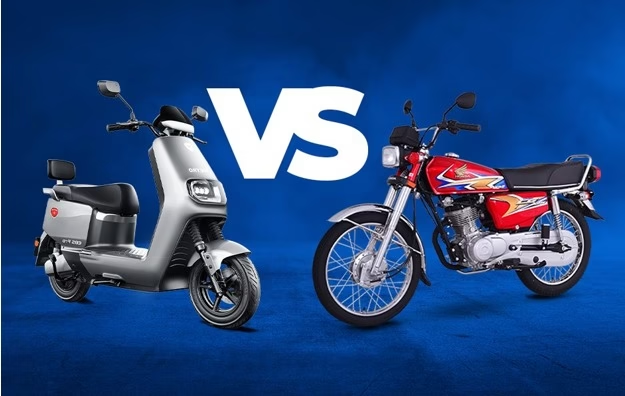
When it comes to choosing between a scooter and a motorbike, most riders face the same question — which one offers the best balance of performance, comfort, and cost? Both have their own advantages depending on your riding needs, but recent advancements in electric scooter technology have changed the game entirely.
If you’re considering a modern, eco-friendly commuting solution, iScooter provides a premium range of electric scooters designed to deliver power, efficiency, and portability — all while staying environmentally conscious.
1. Scooter vs Motorbike: The Core Difference
The main difference between a scooter and a motorbike lies in their design, power system, and usability.
Scooter:
- Usually features a step-through frame and automatic transmission.
- Powered by a small petrol engine or an electric motor.
- Built for short-to-medium city rides, offering convenience and easy handling.
Motorbike:
- Has a manual transmission with higher engine capacity (typically 125cc–1000cc+).
- Geared toward long-distance rides and high-speed performance.
- Requires more maintenance and rider skill.
In short, scooters are designed for convenience and urban practicality, while motorbikes are built for speed and endurance.
2. Design and Ease of Use
Scooters are known for their comfort and accessibility. Their step-through design allows easy mounting and dismounting, making them especially popular among commuters and new riders.
Motorbikes, on the other hand, have a straddle seat design and manual gear system, requiring coordination and experience. While this makes them powerful, it can also be intimidating for beginners.
Electric scooters — like those from iScooter — take simplicity to the next level with push-to-start systems, foldable frames, and zero-fuss controls.
3. Power and Performance
If speed is your priority, a motorbike will outperform any scooter. Most motorcycles can reach speeds well above 100 mph, while traditional scooters average 25–30 mph.
However, electric scooters are closing the gap with impressive performance metrics:
- Motor Power: 350W to 1200W (depending on model).
- Top Speed: Up to 28 mph.
- Range: 25–45 miles per charge.
For most city riders, these speeds are more than enough, especially when combined with instant torque and smooth acceleration — signature features of modern e-scooters.
4. Running Costs and Maintenance
When it comes to affordability, scooters win hands down.
| Aspect | Scooter | Motorbike |
| Fuel Type | Electric or petrol | Petrol |
| Running Cost | Extremely low (charge for pennies) | High (fuel + maintenance) |
| Insurance | Minimal for e-scooters | Required and often costly |
| Servicing | Simple, low-cost | Frequent and more expensive |
Electric scooters are particularly budget-friendly. No fuel, oil changes, or mechanical upkeep — just plug in, charge, and ride.
5. Portability and Storage
A major benefit of scooters is portability. Most models are foldable and lightweight, allowing you to:
- Carry them indoors or on public transport.
- Store them in tight spaces like hallways or under desks.
- Avoid parking fees altogether.
Motorbikes, while powerful, require dedicated parking space and can’t match the flexibility of scooters for everyday urban mobility.
6. Safety and Comfort
Safety depends heavily on rider behavior and environment, but scooters are generally safer for beginners due to their:
- Lower speeds.
- Stable center of gravity.
- Automatic braking and cruise control systems.
However, riders should always wear a helmet, reflective gear, and follow UK traffic laws — regardless of the vehicle type.
Comfort-wise, scooters provide a smoother ride for city roads thanks to suspension systems and ergonomic decks designed for both stability and ease.
7. Environmental Impact
In the sustainability debate, electric scooters clearly outperform motorbikes. They produce zero tailpipe emissions, run quietly, and have minimal energy consumption.
Motorbikes still rely on fossil fuels, contributing to noise and air pollution. Transitioning to electric scooters not only saves money but also supports a cleaner and quieter environment — aligning with the UK’s push for greener urban mobility.
8. Which Should You Choose?
The right choice depends on how you plan to ride:
- Choose a Scooter if you:
- Want easy, lightweight mobility.
- Prioritize affordability and simplicity.
- Commute short to medium distances.
- Prefer eco-friendly transportation.
- Choose a Motorbike if you:
- Need higher speed for long journeys.
- Have experience with manual transmission.
- Don’t mind paying extra for fuel and maintenance.
For urban riders, scooters offer unmatched practicality, efficiency, and comfort — making them the modern answer to smart commuting.
Conclusion
In the scooter vs motorbike comparison, scooters emerge as the smarter and more sustainable choice for modern city life. They’re cheaper to maintain, easier to use, and eco-friendly — making them the go-to option for commuters and casual riders alike.
If you’re ready to experience the next generation of mobility, explore the latest range of electric scooters from iScooter. Designed for performance, safety, and convenience, iScooter models redefine what urban transport should feel like — smart, sustainable, and stylish.
Frequently Asked Questions (FAQ)
1. Which is faster — a scooter or a motorbike?
Motorbikes are faster, but scooters provide adequate speed for urban commuting and safer control at lower speeds.
2. Do scooters require a licence in the UK?
Privately owned scooters can only be used on private property for now, but rental scooters are legal under government trials.
3. Which is more cost-effective to run?
Electric scooters are significantly cheaper to run and maintain compared to petrol-powered motorbikes.
4. Are scooters safer than motorbikes?
For city speeds, scooters tend to be safer due to their stability and automatic braking systems.
5. What makes electric scooters better for the environment?
They produce zero emissions, require no fuel, and consume minimal electricity — making them one of the most eco-friendly transport options available.