Croatia rewards those who go off-script
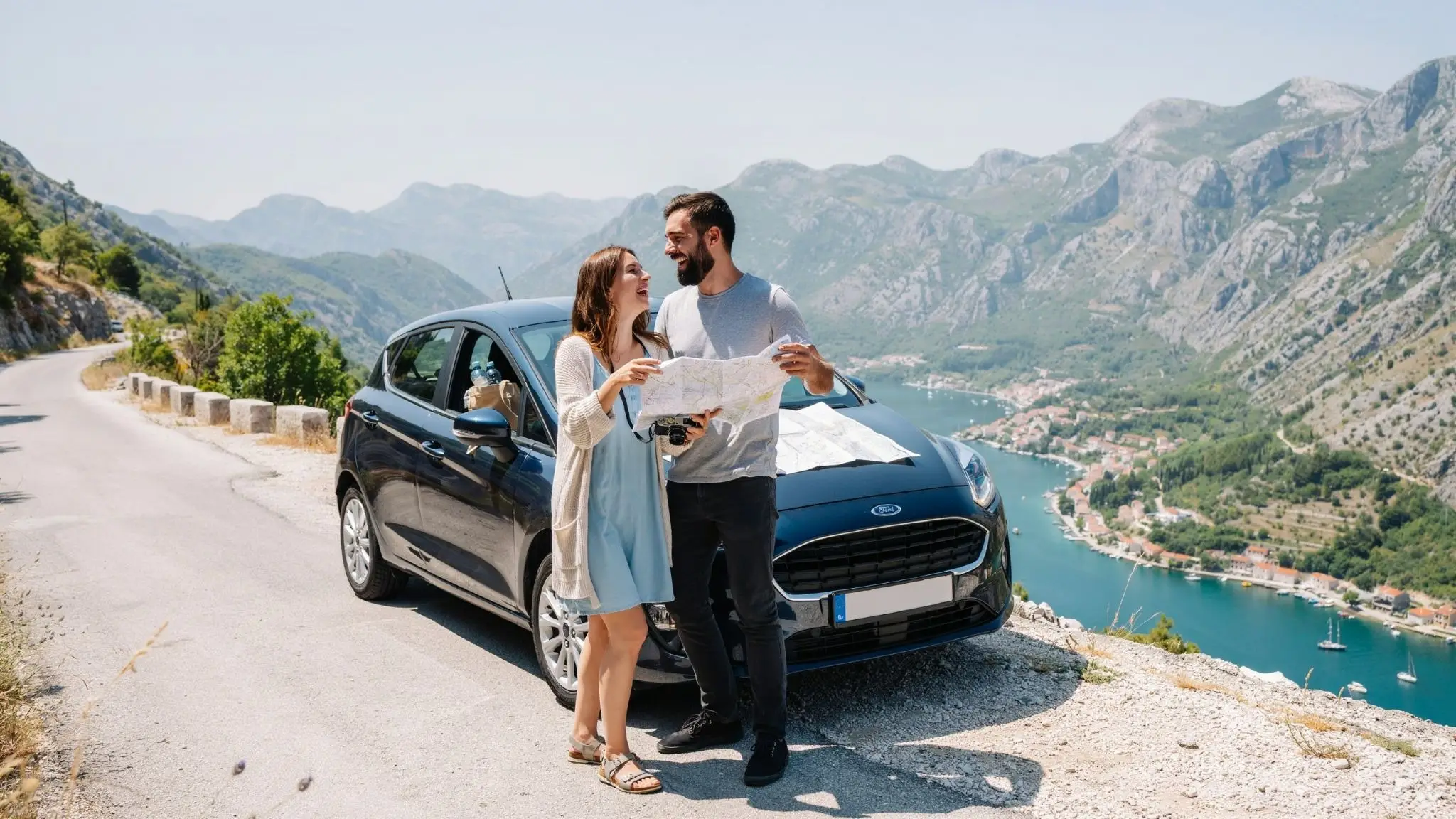
The best way to see Croatia is by car. Full stop. Buses skip the unmarked villages, ferries have schedules, and tour groups – well, they move in herds. A self-driven Croatia road trip puts the Plitvice detours, the last-minute island ferry catches, and the sunset pulls into a traveler’s own hands.
Croatia welcomed over 20 million tourists in 2024, yet somehow manages to hide entire stretches of coastline from the crowds. That paradox only makes sense from a car window.
The country stretches roughly 560 km from Istria in the northwest down to Dubrovnik near the Montenegrin border – a distance that looks modest on paper but conceals somewhere between 50 and 1,000 reasons to stop, depending on appetite.
Getting wheels sorted before anything else
Before mapping routes or booking accommodation, the transport question needs an answer. Public transit is genuinely fine for Zagreb-to-Split corridor travel – but it stops working the moment anyone wants to reach Krka falls on a Tuesday morning, or sleep in a village in the Pelješac peninsula.
Those visiting Croatia by car for the first time often underestimate how much geography shapes the itinerary. Roads hug cliffs. Hairpin bends are standard issue. The A1 motorway is excellent; the coastal D8 – known as the Adriatic Highway – is slower, narrower, and approximately 40 times more beautiful.
Travelers planning a Croatia itinerary 2026 should rent a car Croatia in advance, especially between June and August, when availability tightens fast and airport pickup queues test anyone’s patience. Comparing options across multiple suppliers through an aggregator typically saves 15–25% versus walk-up rates, according to travel industry analysts tracking Southern European car rental markets.
Manual transmission is the norm. Automatic availability exists but costs more and books out quicker – worth noting for drivers who’ve spent years in North American traffic.
The routes that actually deliver
The Dalmatian coast drive is the obvious one, and it earns the reputation. Split to Dubrovnik via the D8 – roughly 230 km – takes three hours without stops. With stops, it takes a day, or three, or a week. The math depends entirely on willpower.
A few Croatia scenic routes that often get overlooked:
- Istria interior loop – Motovun, Grožnjan, Rovinj in a single day. Hilltop medieval towns, truffle country, and almost no crowds before 10am.
- Krka to Šibenik corridor – Waterfalls, a UNESCO-listed old town, and the kind of light that makes average photographers look talented.
- Pelješac Peninsula – Wine country, oyster farms in Ston, and a bridge (opened 2022) that finally connects Dubrovnik to the rest of Croatia without crossing Bosnia.
- Plitvice to Zadar – Underrated. The interior roads through Lika region pass through quiet karst landscapes that feel genuinely remote.
“Driving in Croatia is manageable for most international visitors,” notes Marko Benić, a certified Croatian driving instructor based in Split, “but the coastal roads require full attention – scenic views are distracting by design.”
What driving in Croatia actually involves
Toll roads cover most of the A1 motorway. Budget approximately €20–35 for a full Zagreb-to-Dubrovnik run on the motorway, depending on vehicle category. The Učka tunnel between Rijeka and Istria adds a separate toll – roughly €7–9.
Speed limits: 130 km/h on motorways, 90 km/h on secondary roads, 50 km/h in urban areas. Enforcement is consistent. Fines start at €70 and climb sharply for significant violations.
A few Croatia travel tips that save real headaches:
- Vignettes are not required – Croatia uses toll booths, not sticker systems.
- Headlights must be on at all times, year-round, regardless of conditions.
- A reflective vest and first aid kit are legally required in the vehicle.
- Parking in Dubrovnik Old Town is essentially impossible by design – use the Gruž or Ilijina Glavica garages and walk.
- The border crossing into Bosnia at Neum (Pelješac pre-bridge era routes) no longer applies for mainland Croatia travel, but ferry routes to islands still require some planning around sailing schedules.
Fuel prices in 2025 averaged around €1.60–1.75 per litre for unleaded – comparable to the broader EU average, slightly below Italy and Germany.
The timing question nobody thinks about early enough
June is excellent. July and August are magnificent and absolutely hectic. September is – and this is not a contrarian opinion, just math – probably the best month. Sea temperatures remain high (24–27°C), school holidays end, and the best roads in Croatia stop functioning as slow-moving tourist queues.
October pushes it. Some islands reduce ferry frequency after mid-October. A handful of coastal restaurants close. But for those interested in Croatia scenic routes without the ambient chaos of peak summer, early October still works remarkably well.
April and May offer something different entirely: waterfalls at maximum flow (Plitvice in spring is a genuinely different experience than August), wildflower-covered roadsides, and accommodation prices that reflect reality rather than demand.
The road doesn’t end at Dubrovnik
Here’s the thing about a Croatia road trip – the destination logic doesn’t quite apply. Dubrovnik gets treated as the finish line, partly because of geography (it’s at the southern end), partly because of cultural saturation (the walls, the Game of Thrones legacy that still draws visitors five years on). But the most memorable stretches often happen before the famous stuff: a random konoba in a village outside Šibenik, a rest stop overlooking Brač island that appears on no itinerary, a gas station conversation that turns into a three-hour lunch.
Car rental Croatia data from 2024 showed that the average rental period for international visitors was 8.3 days – enough time to cover serious ground, but not enough to feel rushed if the route is planned with some breathing room built in.
Croatia in 2026 is not undiscovered. But it remains – stubbornly, wonderfully – a country where the best version of the trip still belongs to the people who take the unplanned left turn.