Few flooring patterns have the instant visual impact of fishbone flooring. The interlocking arrangement of rectangular boards creates a dynamic, geometric surface that draws the eye across a room and gives any space a sense of movement and craft. It has been used in interiors for centuries, yet it continues to feel current, relevant, and genuinely considered in modern residential and commercial projects alike.
This guide covers what fishbone flooring is, how it differs from related patterns, where it works best, and how to choose the right boards and species for your project.
What is fishbone flooring?
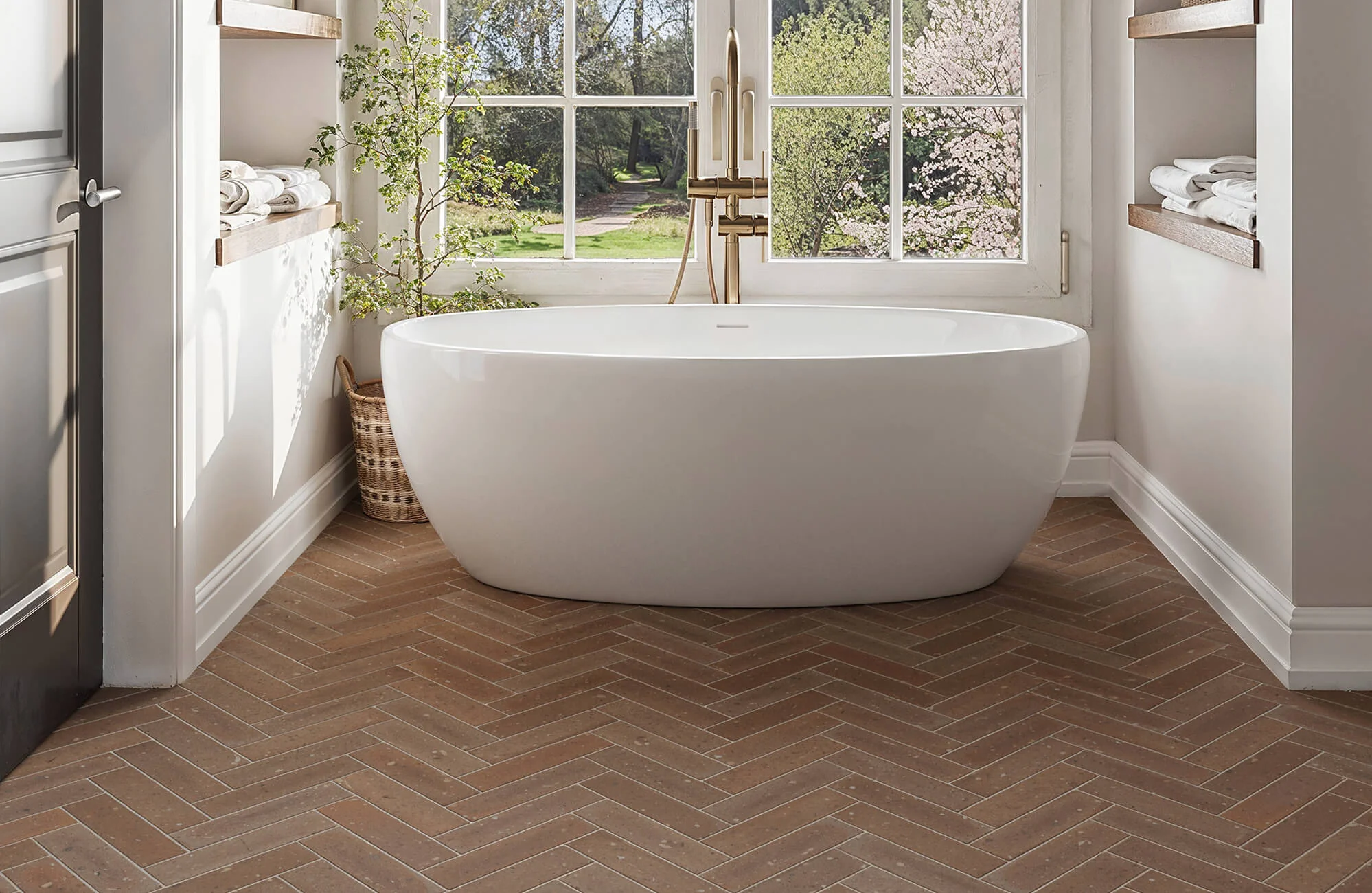
Fishbone flooring is a wood flooring pattern in which rectangular boards are laid at opposing 45-degree angles to create a V-shaped zigzag that runs down the length of the floor. The name comes from the visual resemblance to the skeleton of a fish, where each side of the pattern fans outward from a central axis, much like ribs branching from a spine.
The result is a floor with a strong directional energy. Unlike straight plank installations, which draw the eye toward the far wall of a room, fishbone flooring creates lateral movement and visual rhythm that makes a space feel broader and more active.
The pattern is sometimes used interchangeably with the term herringbone flooring, and for most practical purposes the two describe the same installation. Both involve boards meeting at right angles in a zigzag arrangement. The distinction matters slightly in how the pattern terminates at the edges and walls of a room, but in everyday use, fishbone and herringbone refer to the same characteristic look.
Fishbone vs chevron: understanding the difference
The two most popular diagonal wood flooring patterns are fishbone (herringbone) and chevron, and they are frequently confused. Understanding the difference helps when specifying a floor and ensures the result matches the intended design.
In a fishbone or herringbone pattern, the boards are cut with square ends. They meet at 90-degree angles within the pattern, creating the staggered zigzag effect. Because the ends are square, the boards from each side of the pattern do not align cleanly at the peak of each V. Instead, the long edge of one board meets the short end of the next. This produces the characteristic interrupted, energetic quality of fishbone flooring.
In a chevron pattern, the boards are cut at an angle at each end, typically 45 degrees. This means when two boards meet at the peak of the V, they form a clean, continuous point with no interruption. The result is a smoother, more flowing zigzag that feels more refined and precise.
Both patterns are beautiful, and both suit different design intentions. Fishbone flooring tends to read as more dynamic and characterful. Chevron has a cleaner, more architectural quality. For spaces that need energy and visual complexity, fishbone is often the stronger choice.
A pattern with centuries of history
The fishbone or herringbone pattern has one of the longest histories of any flooring arrangement. It was used in ancient Roman road construction, where the interlocking diagonal layout gave paved surfaces greater structural strength than parallel arrangements. By the Renaissance period, the pattern had moved indoors, appearing in the palaces and grand residences of France and Italy where it was installed in oak parquet and became associated with formal, high-status interiors.
In the twentieth century, fishbone flooring moved into a wider range of residential and commercial settings. Today it is specified everywhere from apartment renovations and boutique hotels to restaurants and retail spaces. Its longevity as a pattern is a reflection of how well it works visually across a range of scales, interior styles, and timber species.
The effect of board width on the pattern
One of the most important decisions when specifying fishbone flooring is the width of the boards used. This single variable significantly changes how the finished pattern reads in a space.
Narrower boards, typically in the range of 80mm to 120mm wide, produce a finer, more intricate pattern. The individual boards are closer to square in proportion, which gives the fishbone arrangement a tighter, more detailed quality. This scale suits smaller rooms where a bold pattern might overwhelm the space, and it also works well in more traditional or period interiors where a fine, detailed floor is in keeping with the architecture.
Wider boards, from 140mm upward, produce a bolder, more graphic version of the fishbone pattern. The individual boards are more clearly rectangular, the V-shapes are larger, and the overall floor has more visual presence. Wide board fishbone flooring is particularly effective in large open-plan spaces where the floor needs to hold its own at scale, and in contemporary interiors where the brief calls for a statement floor.
At Havwoods, herringbone and fishbone products are available in a range of widths and board lengths, giving architects, designers, and homeowners genuine control over the scale and character of the finished pattern.
Choosing the right species for fishbone flooring
The species of timber used in a fishbone floor affects both its visual character and its practical performance. Different species bring different grain structures, natural color ranges, and hardness levels to the pattern.
European Oak
European Oak is the most widely used species for fishbone flooring and for good reason. Its clear, defined grain travels predictably along the length of each board, which means the alternating grain directions in a fishbone installation create a subtle light-and-dark play across the floor as the grain catches light at opposing angles. This effect is one of the distinctive pleasures of a well-laid fishbone floor in oak, and it shifts throughout the day as natural light moves through the space.
Oak is also a naturally hard timber that responds well to a wide range of finishes, from pale UV oiled treatments that preserve its natural blonde tone to deeper stained and smoked options. The breadth of color possibilities makes it the most versatile choice for fishbone flooring across different interior directions.
American Black Walnut
American Black Walnut brings a richness and depth to fishbone flooring that oak does not naturally have. Its chocolate tones and tight, flowing grain create a floor with considerable warmth, and the fishbone pattern gives the surface enough visual movement to prevent a dark floor from feeling heavy. Walnut fishbone flooring works particularly well in living rooms, dining areas, and hospitality settings where warmth and character are the design brief.
Ash
Ash has a bold, open grain with a pale natural color and strong growth ring definition. In a fishbone pattern, the alternating grain directions of ash boards produce a pronounced optical effect, with the natural lines of the grain forming broad chevron-like echoes within each V. Ash fishbone flooring is a striking choice for contemporary interiors where a light, airy palette is combined with visual interest at floor level.
Where to use fishbone flooring
Fishbone flooring is one of the most versatile parquet patterns in terms of the spaces it suits. Its diagonal orientation and visual energy work across a wide range of room types and scales.
Hallways and entrances
A hallway is the ideal space for fishbone flooring. The diagonal orientation of the pattern draws the eye down the length of the corridor, making the space feel longer and more purposeful. In a narrow hallway where a straight plank floor can feel tight, fishbone flooring adds breadth and interest without requiring more physical space. It also signals a considered approach to the whole home from the moment you enter.
Living rooms
In a living room, fishbone flooring provides a strong visual foundation that anchors the furniture arrangement and gives the space a sense of occasion. It works well in both formal and relaxed living rooms, and its ability to make a space feel larger makes it particularly effective in apartments and city homes where square footage is at a premium.
Open-plan spaces
In open-plan kitchens, dining areas, and living spaces, fishbone flooring running continuously through all zones creates visual flow and cohesion. The pattern’s directional energy helps define the space without physical partition, and the diagonal orientation reads differently when viewed from the kitchen versus the seating area, giving the floor a dynamic quality that flat plank cannot match.
Commercial and hospitality environments
Fishbone flooring is a natural fit for restaurants, boutique hotels, and retail environments where the floor is expected to contribute to the atmosphere of the space. The pattern has been used to great effect in hospitality design, where it adds a layer of craft and detail that elevates the overall experience of a room. Havwoods herringbone products have featured in restaurant and hotel projects where the floor was a key element of the design concept.
Installation considerations for fishbone flooring
Fishbone flooring is more complex to install than a straight plank floor, and this should be factored into project planning.
The most significant consideration is waste. Because the boards are laid diagonally, there is more cutting required at the edges and walls of the room, particularly in rooms that are not perfectly square. A waste allowance of 10 to 15 percent is commonly recommended for fishbone and herringbone installations, compared to around 5 to 10 percent for straight plank.
The starting point of the installation also matters more than it does with straight planks. The central axis of the fishbone pattern should be established carefully in relation to the room’s main focal point, whether that is a fireplace, a doorway, or a window. Getting this right from the outset ensures the pattern is symmetrical and balanced within the space.
Engineered wood is generally better suited to fishbone installations than solid hardwood. The dimensional stability of engineered boards means they are less prone to movement with changes in humidity, which is important in a pattern where the interlocking arrangement leaves little room for the kind of expansion and gapping that can occur with solid timber in challenging conditions.
Selecting a finish for fishbone flooring
The finish applied to a fishbone floor works in direct relationship with the pattern to create the final visual effect.
An oiled finish, particularly a UV oiled treatment, enhances the natural grain of the timber and allows the alternating board directions in the fishbone pattern to create their characteristic light-catching effect. The matte quality of an oiled surface also tends to suit fishbone flooring well, as it prevents glare that might visually flatten the pattern.
A lacquered finish produces a harder, cleaner surface with a slightly higher sheen. In a fishbone floor, this can make the geometric quality of the pattern more pronounced and graphic, which suits contemporary interior schemes where precision and clarity are the design language.
Whatever finish is chosen, it should be considered alongside the species and color of the timber to ensure the overall effect is intentional rather than accidental.
Getting the most from a fishbone floor
Fishbone flooring rewards careful specification. The board width, species, grade, finish, and installation direction all interact to determine the final character of the floor. Taking time to consider each of these variables together, rather than in isolation, is what separates a fishbone floor that is merely good from one that genuinely defines a space.
Ordering samples and viewing them in the actual room where they will be installed is always worthwhile. The way a floor reads under the specific light conditions of a space, and at the scale the room demands, can only be properly assessed in situ.