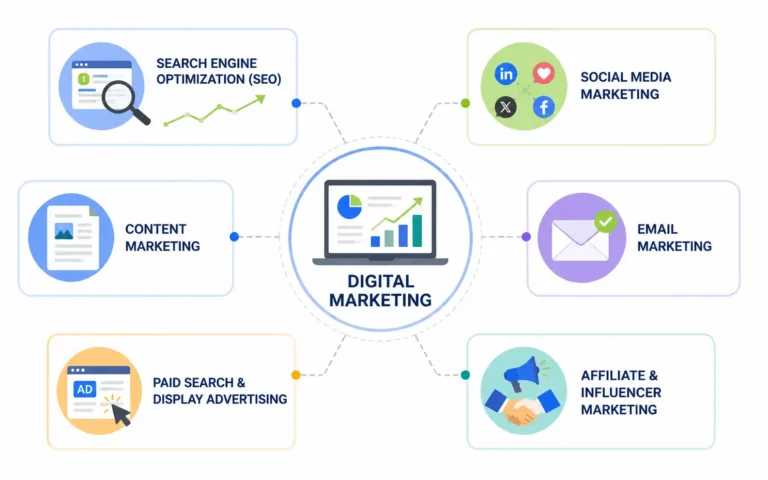
The COVID-19 pandemic has significantly accelerated the shift towards online shopping, with e-commerce sales surging as consumers adapted to lockdowns and social distancing measures. About 48% of consumers report that their shopping habits have been permanently changed by the pandemic, with a greater emphasis on e-commerce, contactless payments, and home delivery services.
The Rise of Hybrid Shopping Models
The pandemic has also accelerated the adoption of hybrid retail models, blending online and offline shopping experiences to meet evolving consumer preferences. Hybrid retail combines the convenience of e-commerce with the tactile benefits of physical stores, offering customers multiple shopping possibilities and experiences.
This model includes features like click-and-collect services, which are expected to be worth £42.4 billion in the UK in 2025, accounting for 8.4% of total retail spending. Retailers are adapting by redesigning store spaces, implementing touchless payment systems, and leveraging technologies such as augmented reality and 3D hologram displays to enhance the shopping experience.
The shift towards hybrid retail is driven by changing consumer behaviors, with 59% of shoppers anticipating that over half of retail space will be dedicated to creating experiences by 2025.
Impact on Supply Chain Dynamics
The COVID-19 pandemic has significantly disrupted global supply chains, forcing businesses to reevaluate and transform their supply chain dynamics. This disruption has accelerated the adoption of technologies such as Big Data Analytics, Additive Manufacturing, and Blockchain to enhance supply chain resilience and responsiveness.
Companies are now focusing on developing more flexible and adaptable supply networks, with a shift towards multi-sourcing strategies and localized production to mitigate risks. The pandemic has also highlighted the importance of supply chain visibility and real-time data sharing among partners to better manage inventory and respond to demand fluctuations.
As a result, many organizations are investing in digital technologies and automation to improve supply chain agility and reduce dependence on manual processes, ultimately aiming to create more robust and resilient supply networks capable of withstanding future disruptions.
The Role of Social Media in E-commerce Growth
Social media has become a crucial driver of e-commerce growth, transforming how businesses market products and engage with customers. Platforms like Facebook, Instagram, and Twitter allow e-commerce stores to increase brand awareness, reach wider audiences, and drive website traffic cost-effectively.
Social media enables direct customer engagement through comments, messages, and user-generated content, fostering loyalty and community. It also serves as a valuable customer service channel and provides insights into consumer preferences through analytics. Additionally, social commerce features on platforms like Instagram and Facebook allow for seamless in-app purchasing, further blurring the lines between social media and e-commerce.
With nearly half the world’s population using social media regularly, its integration into e-commerce strategies has become essential for businesses looking to thrive in the digital marketplace.
Online Shopping Trends
While online shopping has become increasingly popular for a wide range of products, there are still certain items that consumers are more hesitant to purchase online. Products that require a precise fit, such as shoes or clothing, or items that consumers prefer to see, touch, or try on in person before buying, like makeup or furniture, are less frequently bought online.
However, one product category that has seen significant growth in online sales is lingerie, particularly bras. Despite the challenges of finding the perfect fit, many women are now turning to online retailers to purchase their bras. This shift can be attributed to the convenience of shopping from home, the wider selection of sizes and styles available online, and the development of better sizing guides and virtual fitting tools by online lingerie retailers.
While online bra shopping has its advantages, it’s essential for consumers to be cautious when purchasing from unfamiliar websites. By shopping with reputable retailers and taking advantage of their sizing guides and customer support, women can successfully find well-fitting, comfortable bras online.
Integration of AI in Shopping
Artificial Intelligence (AI) is revolutionizing the retail industry, transforming the way consumers shop and how businesses operate. AI technologies are being integrated into various aspects of the retail experience, from personalized product recommendations to inventory management and customer service.
One of the most significant applications of AI in retail is personalization. By analyzing vast amounts of customer data, including purchase history, browsing behavior, and demographic information, AI algorithms can provide highly targeted product recommendations to individual shoppers. This not only enhances the customer experience but also drives sales and loyalty.
AI is also being used to optimize inventory management and demand forecasting. Machine learning algorithms can analyze historical sales data, weather patterns, and other variables to predict future demand for products accurately. This enables retailers to maintain optimal stock levels, reducing the risk of overstocking or stockouts.
Another area where AI is making an impact is customer service. Chatbots powered by natural language processing (NLP) can handle a wide range of customer inquiries, from product information to order tracking and returns. These AI-powered chatbots can provide 24/7 assistance, reducing the workload on human customer service representatives and improving response times.
AI is also being applied to in-store experiences. Computer vision technology can analyze customer behavior and movement within a store, providing insights into product placement, store layout, and customer preferences. This data can be used to optimize store design and improve the overall shopping experience.
The integration of AI in retail is not without challenges. Concerns around data privacy and the ethical use of AI must be addressed to maintain consumer trust. Retailers must also invest in the necessary infrastructure and talent to effectively implement and manage AI systems.
Despite these challenges, the potential benefits of AI in retail are significant. By leveraging AI technologies, retailers can provide more personalized, efficient, and engaging shopping experiences, ultimately driving growth and profitability in an increasingly competitive industry.
Omnichannel Retail Strategies
Omnichannel retail strategies have become increasingly important as consumers expect seamless shopping experiences across multiple channels. These strategies aim to provide a unified and consistent customer experience whether shopping online, in-store, through mobile apps, or via social media platforms.
A key aspect of omnichannel retail is the integration of online and offline channels. Retailers are focusing on creating a cohesive brand experience across all touchpoints. For example, customers can browse products online, check in-store availability, and pick up purchases at a physical location. This “click and collect” or “buy online, pick up in-store” (BOPIS) model has gained significant traction, with 73% of retail consumers using multiple channels to shop.
Personalization is another crucial element of successful omnichannel strategies. By leveraging customer data and analytics, retailers can provide tailored product recommendations, personalized marketing messages, and customized shopping experiences. This approach not only enhances customer satisfaction but also drives sales and loyalty.
Mobile optimization is essential in omnichannel retail. With the increasing use of smartphones for shopping, retailers must ensure their mobile websites and apps provide a seamless experience. This includes features like mobile payments, location-based services, and augmented reality for virtual try-ons.
Social commerce is becoming an integral part of omnichannel strategies. Retailers are leveraging social media platforms not just for marketing but also as direct sales channels. Features like shoppable posts on Instagram and Facebook Shops allow customers to purchase products without leaving the social media app.
Inventory management across channels is a critical challenge in omnichannel retail. Retailers need to implement systems that provide real-time visibility of inventory across all locations and channels. This ensures accurate product availability information for customers and enables efficient order fulfillment.
Customer service in an omnichannel environment requires a unified approach. Retailers must ensure that customer service representatives have access to a customer’s complete history across all channels. This enables them to provide more personalized and efficient support.
Data analytics plays a crucial role in omnichannel strategies. By collecting and analyzing data from various touchpoints, retailers can gain insights into customer behavior, preferences, and trends. This information can be used to optimize marketing efforts, improve product offerings, and enhance the overall customer experience.
Lastly, retailers are exploring innovative technologies to enhance the omnichannel experience. This includes the use of augmented reality for virtual try-ons, RFID technology for inventory tracking, and AI-powered personalization engines. These technologies help bridge the gap between online and offline experiences, creating a more engaging and interactive shopping journey for customers.
In conclusion, successful omnichannel retail strategies require a holistic approach that integrates various channels, leverages data and technology, and focuses on delivering a seamless and personalized customer experience. As consumer expectations continue to evolve, retailers must adapt and innovate their omnichannel strategies to remain competitive in the rapidly changing retail landscape.
Consumer Behavior Shifts
Consumer behavior has undergone significant changes in recent years, driven by technological advancements, societal shifts, and global events like the COVID-19 pandemic. Here are some key consumer behavior shifts that are impacting marketing and business strategies:
- Increased comfort with social media shopping: 41% of social media users now feel comfortable purchasing products through platforms like Instagram Shop or Facebook Marketplace, up from just 12% in May 2022.
- Older generations embracing social commerce: 29% of Gen X and 16% of Boomers now prefer social media for product discovery, representing significant increases from previous years.
- Growing support for small businesses: 42% of consumers have chosen products from small businesses in the last three months, up 8% from May 2022.
- Rising demand for corporate responsibility: Consumers are increasingly supporting businesses that take stands on issues like racial justice, climate change, and LGBTQ+ rights.
- Shift to digital-first approach: Online shopping has become a preference rather than just a convenience for many consumers.
- Emphasis on transparency and trust: Consumers are gravitating towards brands that prioritize open communication and transparency.
- Focus on experiences over possessions: Consumers are increasingly investing in experiences rather than material goods.
- Preference for authentic, less-produced content: Marketing content that feels more genuine and less polished is resonating with consumers.
- Expectation of multiple payment options: Consumers now expect a variety of payment methods, including “Buy Now, Pay Later” options.
- Demand for home delivery of all products: Even items traditionally bought in-store, like mattresses and
plants, are now expected to be available for home delivery. - Increased interest in health and wellness: Consumers are more focused on products and services that promote physical and mental well-being.
- Growing importance of sustainability: There’s an increased demand for ethical and sustainable products across various industries.
- Rise of subscription-based services: Consumers are embracing subscription models for convenience and personalized experiences.
- Shift towards minimalism and decluttering: Many consumers are prioritizing quality over quantity in their purchases.
- Adoption of voice-activated shopping: With the rise of smart speakers, voice commerce is becoming more prevalent.
- Expectation of personalized experiences: Consumers now expect tailored recommendations and experiences from brands.
These shifts highlight the need for businesses to adapt their strategies to meet evolving consumer expectations and preferences in areas such as digital engagement, social responsibility, and personalized experiences.
Technology Perspective
Technology continues to transform industries through artificial intelligence, cloud computing, automation, cybersecurity, digital platforms, and data-driven decision making. As organizations increasingly adopt digital solutions, understanding emerging technologies becomes essential for businesses, professionals, and consumers. DGM News regularly covers these developments through expert analysis, technology news, and educational resources.
Innovation Outlook
Rapid advances in artificial intelligence, automation, machine learning, cloud infrastructure, and digital transformation continue reshaping global industries. Monitoring these developments helps organizations adapt to changing technologies, improve efficiency, and prepare for future innovation.
Did you know?
Artificial Intelligence is expected to influence nearly every major industry over the coming decade, from healthcare and finance to transportation, manufacturing, education, and entertainment.
AI, Machine Learning, Deep Learning and Generative AI Explained
Google AI Updates
About DGM News
DGM News is an independent digital publication delivering the latest Technology News, AI News, and FinTech News. We provide expert insights on startups, innovation, cybersecurity, software, business, gadgets, cloud computing, artificial intelligence, and emerging technologies. Our mission is to publish informative, accurate, and regularly updated content that helps readers stay informed in today's rapidly evolving digital landscape.
Since our editorial focus includes technology, artificial intelligence, and financial technology, we continuously expand our coverage as new innovations emerge.
Editorial Standards
Every article published on DGM News undergoes editorial review before publication. We prioritize factual accuracy, clarity, transparency, and reader value while following responsible digital publishing practices.
Research Methodology
Our editorial team researches publicly available information from official announcements, technical documentation, research publications, developer resources, reputable industry reports, and trusted public sources whenever applicable. Information is reviewed to improve clarity and accuracy before publication.
Fact-Checking Policy
We make reasonable efforts to verify factual information before publishing. Articles are reviewed for accuracy, consistency, and relevance. If significant developments occur after publication, content may be revised to reflect updated information.
Update Policy
Technology evolves rapidly. Articles may be reviewed and updated periodically to reflect software releases, AI developments, security advisories, regulatory updates, product launches, and other important industry changes.
Source Verification
Whenever possible, DGM News reviews information using official company announcements, technical documentation, research publications, government resources, publicly available reports, and reputable industry references before updating articles.
Editorial Independence
DGM News maintains editorial independence in all publishing decisions. Editorial content is produced independently and is intended to provide balanced, informative, and reader-focused coverage without influence from advertisers or commercial partnerships.
AI Usage Disclosure
Artificial intelligence tools may assist with research organization, grammar improvement, formatting, or editorial workflows. Every article is reviewed by human editors before publication to help maintain quality, clarity, and factual accuracy.
Corrections Policy
Accuracy is important to us. If readers identify outdated information or factual inaccuracies, they are encouraged to contact our editorial team. Verified corrections are reviewed and incorporated whenever appropriate.
Reader Feedback
Reader feedback helps improve our journalism. We welcome suggestions, corrections, and constructive feedback through our Contact page to continuously improve the quality of our reporting.
Last Editorial Review
This article follows the DGM News editorial review process and may be updated periodically as new information becomes available.
Why Trust DGM News?
DGM News is committed to publishing technology journalism that emphasizes accuracy, transparency, editorial independence, and regularly updated information. Our editorial process is designed to provide readers with reliable coverage of technology, AI, fintech, startups, and digital innovation.
DGM News Resources
Topics We Cover
Artificial Intelligence • AI Tools • Machine Learning • FinTech • Cybersecurity • Cloud Computing • Programming • Software Development • Gadgets • Mobile Technology • Business Technology • Startups • Digital Marketing • Blockchain • Cryptocurrency • Science • Innovation • Consumer Technology • Enterprise Technology • Automation