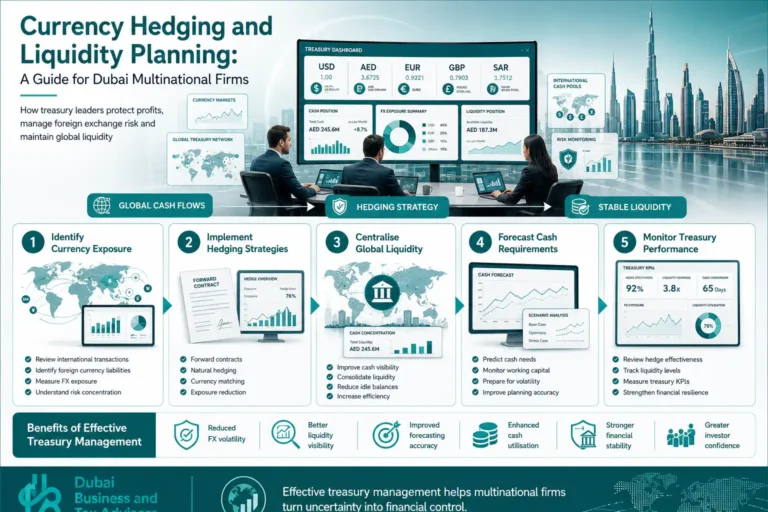
Understanding currency market charts is essential for traders and investors in the forex market. These charts provide a visual representation of price movements and trends, helping traders make informed decisions. For those seeking expert guidance in understanding these charts and improving their trading strategies, finance-phantom.org offers valuable educational resources. This guide will walk you through the essentials of reading currency market charts, covering basic components, candlestick patterns, technical indicators, and more.
Basics of Currency Market Charts
Currency market charts display the price movements of currency pairs over time. A currency pair shows the value of one currency relative to another, such as EUR/USD (Euro/US Dollar). The three main types of charts are:
- Line Charts: Simple and easy to understand, line charts connect closing prices over time with a continuous line.
- Bar Charts: Represent each period’s open, high, low, and close prices with vertical bars and horizontal lines.
- Candlestick Charts: Offer a more detailed view with “candles” representing open, high, low, and close prices. Candlestick charts are popular due to their visual appeal and the wealth of information they convey.
Understanding Chart Components
To effectively read currency charts, familiarize yourself with these key components:
- Price Axis: Located on the right side, this axis shows the currency pair’s price.
- Time Axis: Found along the bottom, it represents the timeframe for each data point (e.g., minutes, hours, days).
- Price Levels: Each candlestick or bar provides four crucial price points: open, high, low, and close. These levels help gauge market sentiment and price movement.
- Volume Bars: Displayed at the bottom of the chart, volume bars indicate the number of trades or contracts. High volume often signifies strong interest and potential price movement.
Reading Candlestick Patterns
Candlestick patterns are vital for predicting market behavior:
- Basic Anatomy: Each candlestick consists of a body and wicks. The body shows the open-to-close range, while the wicks (or shadows) extend to the high and low prices.
- Common Patterns:
- Doji: Indicates market indecision, with the open and close prices being nearly the same.
- Hammer: A bullish reversal pattern with a small body at the upper end and a long lower wick.
- Engulfing Patterns: A reversal pattern where a large candlestick completely engulfs the previous one, signaling a change in direction.
Patterns like these help traders anticipate potential market reversals or continuations based on historical behavior.
Technical Indicators and Their Uses
Technical indicators are tools that help analyze price movements and trends:
- Moving Averages (MA): Smooth out price data to identify trends over time.
- Simple Moving Average (SMA): The average price over a specific period, like 50 or 200 days.
- Exponential Moving Average (EMA): Gives more weight to recent prices, making it more responsive to price changes.
- Relative Strength Index (RSI): Measures momentum by comparing the magnitude of recent gains to recent losses, ranging from 0 to 100. An RSI above 70 suggests overbought conditions, while below 30 indicates oversold conditions.
- MACD (Moving Average Convergence Divergence): Combines moving averages to show changes in the strength, direction, momentum, and duration of a trend. It includes a MACD line, signal line, and histogram.
Chart Trends and Trendlines
Identifying and analyzing trends is crucial for trading success:
- Trends: Trends are categorized as uptrends (higher highs and higher lows), downtrends (lower highs and lower lows), and sideways trends (prices move within a range).
- Drawing Trendlines: Trendlines connect significant highs or lows. An upward trendline connects higher lows, while a downward trendline connects lower highs. These lines help visualize the direction and strength of a trend.
- Trend Reversals: Recognizing potential reversals involves watching for trendline breaks, pattern formations, and changes in indicator signals.
Support and Resistance Levels
Support and resistance levels are crucial for understanding price behavior:
- Support: A price level where a downtrend is expected to pause due to buying interest. It acts as a floor for prices.
- Resistance: A price level where an uptrend is likely to pause due to selling interest. It acts as a ceiling for prices.
- Role Reversals: When support levels are breached, they can become resistance, and vice versa. This shift can signal significant changes in market sentiment.
Chart Patterns and What They Reveal
Chart patterns provide insights into future price movements:
- Head and Shoulders: Indicates a reversal of the current trend. The pattern consists of a peak (head) between two smaller peaks (shoulders). An inverse head and shoulders signals a potential bullish reversal.
- Double Top and Double Bottom: Double tops suggest a bearish reversal after a strong uptrend, while double bottoms indicate a bullish reversal after a downtrend.
- Triangles and Flags: Triangles (ascending, descending, symmetrical) represent consolidation phases that often precede a breakout. Flags are short-term continuation patterns that occur after a strong price move.
Combining Multiple Indicators for Better Analysis
Using multiple indicators can enhance chart analysis:
- Integrating Indicators: Combining indicators like moving averages, RSI, and MACD provides a fuller picture of market conditions. For example, a moving average crossover combined with an RSI signal can offer more reliable trade signals.
- Avoiding Overload: Too many indicators can create conflicting signals and confusion. Focus on a few key indicators that complement each other.
Practical Tips for Analyzing Charts
To effectively use currency market charts:
- Backtesting Strategies: Apply your strategies to historical data to assess their effectiveness before live trading.
- Staying Updated: Regularly review and adjust your strategies based on current market conditions and new information.
- Risk Management: Use chart analysis to set stop-loss and take-profit levels, managing potential risks effectively.
Conclusion
Mastering currency market charts involves understanding their components, patterns, and indicators. By analyzing trends, support and resistance levels, and chart patterns, traders can make more informed decisions and improve their trading strategies. Practice and experience are key to developing a keen eye for chart analysis and succeeding in the forex market.
Technology Perspective
Technology continues to transform industries through artificial intelligence, cloud computing, automation, cybersecurity, digital platforms, and data-driven decision making. As organizations increasingly adopt digital solutions, understanding emerging technologies becomes essential for businesses, professionals, and consumers. DGM News regularly covers these developments through expert analysis, technology news, and educational resources.
Innovation Outlook
Rapid advances in artificial intelligence, automation, machine learning, cloud infrastructure, and digital transformation continue reshaping global industries. Monitoring these developments helps organizations adapt to changing technologies, improve efficiency, and prepare for future innovation.
Did you know?
Artificial Intelligence is expected to influence nearly every major industry over the coming decade, from healthcare and finance to transportation, manufacturing, education, and entertainment.
AI, Machine Learning, Deep Learning and Generative AI Explained
Google AI Updates
About DGM News
DGM News is an independent digital publication delivering the latest Technology News, AI News, and FinTech News. We provide expert insights on startups, innovation, cybersecurity, software, business, gadgets, cloud computing, artificial intelligence, and emerging technologies. Our mission is to publish informative, accurate, and regularly updated content that helps readers stay informed in today's rapidly evolving digital landscape.
Since our editorial focus includes technology, artificial intelligence, and financial technology, we continuously expand our coverage as new innovations emerge.
Editorial Standards
Every article published on DGM News undergoes editorial review before publication. We prioritize factual accuracy, clarity, transparency, and reader value while following responsible digital publishing practices.
Research Methodology
Our editorial team researches publicly available information from official announcements, technical documentation, research publications, developer resources, reputable industry reports, and trusted public sources whenever applicable. Information is reviewed to improve clarity and accuracy before publication.
Fact-Checking Policy
We make reasonable efforts to verify factual information before publishing. Articles are reviewed for accuracy, consistency, and relevance. If significant developments occur after publication, content may be revised to reflect updated information.
Update Policy
Technology evolves rapidly. Articles may be reviewed and updated periodically to reflect software releases, AI developments, security advisories, regulatory updates, product launches, and other important industry changes.
Source Verification
Whenever possible, DGM News reviews information using official company announcements, technical documentation, research publications, government resources, publicly available reports, and reputable industry references before updating articles.
Editorial Independence
DGM News maintains editorial independence in all publishing decisions. Editorial content is produced independently and is intended to provide balanced, informative, and reader-focused coverage without influence from advertisers or commercial partnerships.
AI Usage Disclosure
Artificial intelligence tools may assist with research organization, grammar improvement, formatting, or editorial workflows. Every article is reviewed by human editors before publication to help maintain quality, clarity, and factual accuracy.
Corrections Policy
Accuracy is important to us. If readers identify outdated information or factual inaccuracies, they are encouraged to contact our editorial team. Verified corrections are reviewed and incorporated whenever appropriate.
Reader Feedback
Reader feedback helps improve our journalism. We welcome suggestions, corrections, and constructive feedback through our Contact page to continuously improve the quality of our reporting.
Last Editorial Review
This article follows the DGM News editorial review process and may be updated periodically as new information becomes available.
Why Trust DGM News?
DGM News is committed to publishing technology journalism that emphasizes accuracy, transparency, editorial independence, and regularly updated information. Our editorial process is designed to provide readers with reliable coverage of technology, AI, fintech, startups, and digital innovation.
DGM News Resources
Topics We Cover
Artificial Intelligence • AI Tools • Machine Learning • FinTech • Cybersecurity • Cloud Computing • Programming • Software Development • Gadgets • Mobile Technology • Business Technology • Startups • Digital Marketing • Blockchain • Cryptocurrency • Science • Innovation • Consumer Technology • Enterprise Technology • Automation