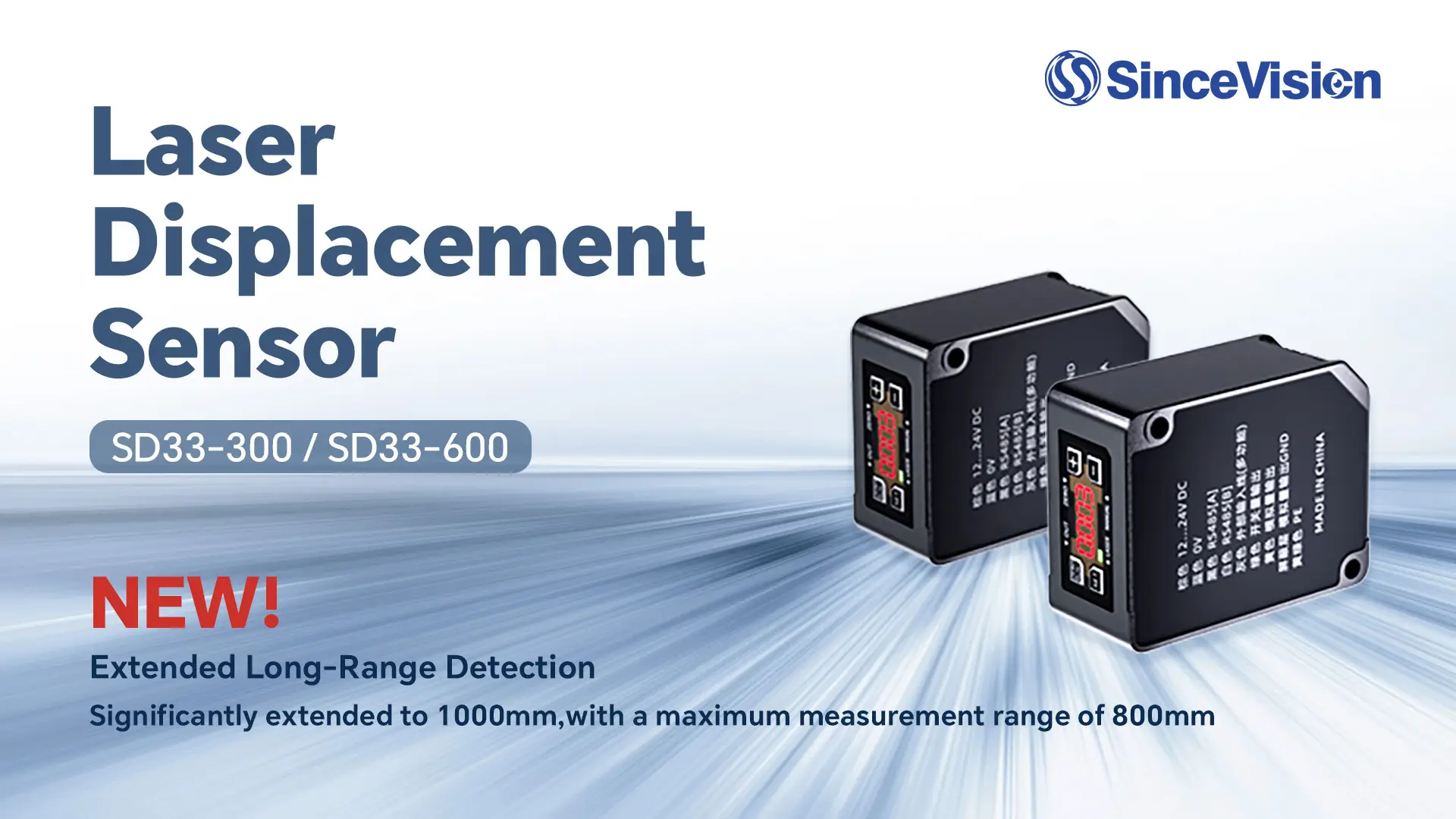
Explore the capabilities and applications of laser distance sensors, a key technology for accurate measurement in industrial automation and beyond.
Introduction: The Need for Precise Measurement
In many industrial and automation settings, knowing exact distances is not just useful, it’s critical. Imagine a manufacturing line where components need to be placed with millimeter accuracy, or a logistics system that must precisely track the height of pallets. Traditional methods can be slow, prone to error, or simply not feasible for the demands of modern operations. This is where advanced sensing technology becomes indispensable, offering reliable and continuous data for complex tasks.
What is a Laser Distance Sensor?
A laser distance sensor uses a laser beam to measure the distance to an object. The principle is straightforward: the sensor emits a pulse of light, which then reflects off the target surface. By measuring the time it takes for the light to return, or by analyzing the phase shift of the reflected light, the sensor can accurately calculate the distance. Different technologies exist, such as time-of-flight (ToF) and phase-shift measurement, each suited for different applications and ranges. These sensors are valued for their non-contact operation, high accuracy, and speed.
Deep Dive: Key Aspects of Laser Distance Sensing
How Laser Distance Sensors Work
The core of a laser distance sensor relies on optical principles. Most employ a triangulation method or time-of-flight.
- Triangulation: A laser beam is projected onto the target, and a sensor element detects the reflected light at an angle. The position of the reflected light on the sensor element determines the distance. This method is often used for shorter ranges and high precision.
- Time-of-Flight (ToF): This method measures the time it takes for a laser pulse to travel to the target and back. Since the speed of light is constant, this time directly correlates to distance. ToF sensors are generally suitable for longer ranges.
Types of Laser Technologies Used
Different laser types offer varying advantages in terms of wavelength, beam divergence, and power.
- Class 1 Lasers: Considered eye-safe under all conditions of normal use. They are suitable for general applications where user exposure is a possibility.
- Class 2 Lasers: These are visible light lasers where the blink reflex of the human eye provides protection. They are also safe for most industrial applications with proper handling.
- Class 3 Lasers: Require more caution and are typically used in specialized industrial equipment where direct eye exposure is strictly controlled.
The choice of laser class impacts safety protocols and the types of applications the sensor can be used in.
Performance Characteristics to Consider
When selecting a laser distance sensor, several performance metrics are crucial.
- Range: The maximum and minimum distances the sensor can reliably measure. This is a primary factor determining suitability for an application.
- Accuracy: The degree to which the sensor’s measurement deviates from the true distance. This is often specified as a fixed value or a percentage of the measured distance.
- Resolution: The smallest change in distance that the sensor can detect and report. Higher resolution means finer detail can be captured.
- Repeatability: The consistency of measurements when the sensor is placed at the same distance multiple times. High repeatability is vital for stable automation.
- Measurement Rate: How frequently the sensor can take and output a distance reading. Faster rates are needed for dynamic applications.
Common Mistakes and Misconceptions
* Assuming all lasers are the same: Laser classes and wavelengths have significant implications for safety and performance on different surfaces. * Ignoring surface reflectivity: Shiny, dark, or angled surfaces can significantly impact measurement reliability. Some sensors have specialized modes for difficult targets. * Overlooking environmental factors: Dust, fog, extreme temperatures, or ambient light can interfere with sensor performance. * Using the wrong sensor for the range: A sensor designed for short distances will not perform well at long ranges and vice versa. * Not considering mounting limitations: The physical size and mounting requirements of a sensor can be critical in constrained spaces.
Practical Takeaways for Implementation
When implementing a laser distance sensor, start by clearly defining your measurement needs. What is the target object, what is the required range, and what level of accuracy is acceptable? Always check the sensor’s specifications against your application requirements, paying close attention to how it handles challenging surfaces and environmental conditions. Understanding the output signals (e.g., analog voltage, current, digital protocols like IO-Link) is also key for seamless integration into your control system.
Decision-Making Perspective
From an operational standpoint, the decision to use a laser distance sensor often comes down to a balance between cost, performance, and reliability. For many, the ability to achieve precise, non-contact measurements, especially on difficult-to-detect materials, justifies the investment. The ease of integration, particularly with modern digital interfaces, further simplifies adoption. For those looking to enhance automation and quality control, it’s worth to know about laser distance sensor capabilities.
Looking Ahead: Evolving Technologies
The field of distance sensing is continuously evolving. Innovations are focused on increasing measurement speed, improving accuracy on highly reflective or transparent surfaces, and miniaturizing sensor footprints for even tighter integration. Expect to see more advanced sensor fusion techniques and AI-driven signal processing to overcome complex environmental challenges and deliver even more robust performance in demanding applications.